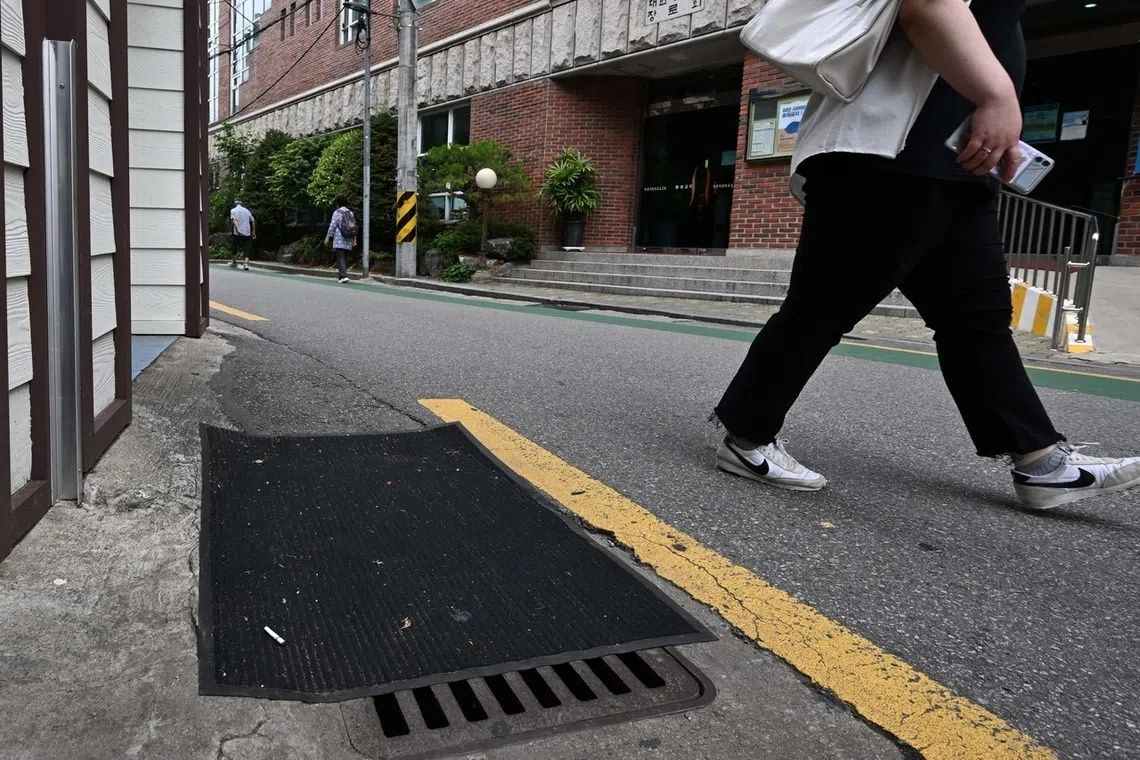
An unpleasant odour occasionally assails pedestrians on Seoul's sidewalks or lingers at bus stops across South Korea, a temporary but recurring nuisance that has prompted widespread complaints among both residents and international visitors. Though the smell typically dissipates within seconds, the frequency of such incidents has kept the issue alive in Korean and international online forums, where residents regularly document these sudden bursts of foul air. The persistence of this problem in one of Asia's most developed cities has raised questions about whether existing infrastructure management meets the standards expected of a global metropolitan centre.
The Seoul Institute's 2025 report confirms what residents have long suspected: sewer-related odours constitute approximately half of all civil complaints regarding poor air quality in the capital. This finding underscores the scale of a problem that extends beyond mere inconvenience to affect quality of life across the city. Interestingly, Seoul had made apparent progress on this front, with complaints dropping from 3,095 in 2015 to a low of 1,660 in 2020 following the launch of comprehensive odour reduction measures. However, this improvement proved temporary; complaints surged again to 2,302 by 2024, suggesting that initial solutions addressed only surface-level symptoms rather than root causes.
The culprit behind Seoul's malodorous reputation is hydrogen sulfide, a colourless gas that produces the distinctive rotten egg smell familiar to anyone who has encountered it. This gas emerges during the natural decomposition process when organic matter in sewage breaks down in environments starved of oxygen, a common occurrence within underground sewer networks. What complicates matters is that Seoul's sewer infrastructure has fundamentally struggled to keep pace with the city's explosive urbanisation over recent decades. Many buildings throughout the metropolitan area rely on interim septic tank solutions before wastewater enters the underground sewer network, a temporary arrangement that persists due to the city's inability to expand centralised sewage capacity fast enough.
While septic tanks successfully remove solid waste before discharge into underground pipes, they cannot eliminate dissolved organic matter suspended in wastewater. This organic material eventually enters the main sewer system where, under anaerobic conditions, it decomposes and generates hydrogen sulfide. The relationship between weather patterns and odour intensity reveals another layer of complexity: during periods of heavy rainfall, increased water flow naturally flushes sewage through the system and prevents the accumulation of odour-causing gases. Conversely, during hot, dry spells with minimal precipitation, hydrogen sulfide accumulates within sewer pipes and escapes through openings such as storm drains and maintenance access holes, creating the sudden odour bursts that catch pedestrians off-guard.
Seoul officials acknowledge that odour problems stem from multiple overlapping factors requiring nuanced, site-specific responses. A spokesperson from the Seoul city government indicated that the municipality is exploring structural modifications to the sewer system and sediment dredging as potential remedies, recognising that low wastewater flow rates and accumulated sediment deposits both contribute to odour generation. A critical underlying issue is Seoul's combined sewer system, inherited from earlier urban planning paradigms, in which both sanitary wastewater from buildings and stormwater runoff from streets flow through identical underground pipes. This arrangement creates particular problems during weather variations, as the ratio of wastewater to stormwater constantly shifts, disrupting the conditions necessary for proper sewage management.
Since the early 1990s, Seoul has contemplated separating these two flows into distinct piping networks, a solution that would fundamentally improve odour management by preventing the mixing and stagnation that characterises current arrangements. However, progress has remained glacial, with only 20.4 per cent of the city's total sewer network converted to separate systems by 2025. The obstacles blocking this transition are substantial: replacing underground sewer networks across a densely developed metropolitan area requires excavation of major streets, disruption to businesses and residents, and expenditures running into billions of won. The technical and financial barriers explain why Seoul, despite its wealth and technological sophistication, has not pursued this solution more aggressively.
The regulatory framework governing sewer odour management reveals another structural weakness in Seoul's approach. Current legislation focuses primarily on managing odours that exceed established acceptable limits rather than mandating proactive prevention strategies by municipal authorities. This reactive posture means Seoul addresses complaints after they arise rather than systematically eliminating sources before residents detect them. Experts contend that a city of Seoul's stature and resources should operate under more stringent standards, taking anticipatory measures to prevent persistent odour problems altogether rather than responding to public dissatisfaction. Ki Dong-won, a researcher at the Seoul Institute, emphasises that this complaint-driven model has prevented the establishment of consistent, long-term solutions based on standardised protocols.
A significant gap in Seoul's odour management infrastructure is the absence of predictive modelling for how sewer odours disperse above ground or travel through urban neighbourhoods. Without understanding diffusion patterns, city planners cannot identify areas most vulnerable to recurring problems or allocate resources strategically. Efforts to create detailed sewer odour maps are underway, yet these remain disconnected from performance metrics or evaluation standards that would determine whether specific odour reduction facilities actually function effectively. This disconnect between data collection and actionable management strategies represents a missed opportunity for systematic improvement.
Park Seok-soon, an environmental engineering professor emeritus at Ewha Womans University, proposes that artificial water circulation through sewer pipes could prevent the sewage stagnation that generates hydrogen sulfide, bypassing the need for the extensive and costly conversion to separate systems. Water from fire hydrants or other municipal sources could be periodically introduced into sewers to maintain flow and prevent decomposition of organic matter. This approach acknowledges that many major Japanese and other developed country cities continue operating combined sewer systems while maintaining stricter operational discipline and maintenance standards. The implication is that Seoul's odour problem may ultimately reflect not the inherent deficiency of its infrastructure design but rather insufficient management intensity and resource allocation.
For Malaysian and Southeast Asian readers, Seoul's experience offers cautionary lessons about the challenges facing rapidly urbanising cities in the region. As metropolitan areas across Southeast Asia expand, older infrastructure systems struggle to accommodate growth, and the same hydrogen sulfide problems emerging in Seoul could plague cities here if proactive planning and investment falter. Seoul's situation demonstrates that technological advancement and economic development do not automatically solve environmental quality issues if management approaches remain fundamentally reactive. The rebound in complaint numbers after initial improvements suggests that quick fixes cannot substitute for comprehensive system redesign and sustained operational commitment, a principle applicable wherever urban infrastructure must serve expanding populations.

