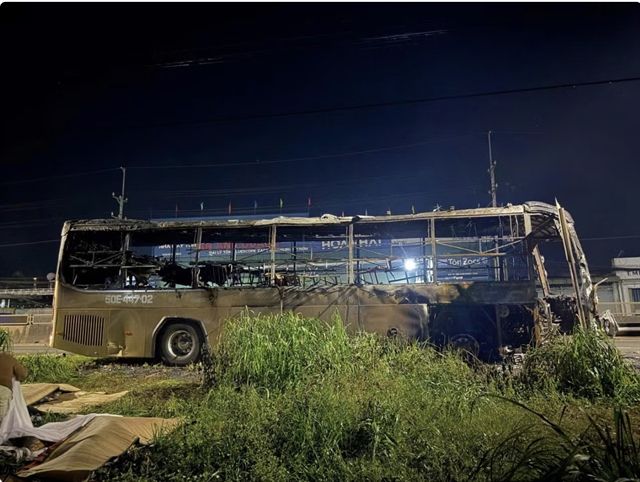
A tragic accident unfolded in the pre-dawn hours along Vietnam's major north-south transport corridor when a sleeper bus burst into flames, claiming seven lives and marking yet another catastrophic incident on the country's roads. The vehicle, operated by 41-year-old driver Tran Thanh Hai from Khanh Hoa Province, veered onto a roadside embankment along National Highway 1 in Hung Thinh Commune at approximately 2:30am while en route from Dong Nai to Ho Chi Minh City. After striking the initial embankment, the driver managed to regain control momentarily, but the bus struck a second embankment before finally coming to a halt.
The sequence of events that followed occurred with terrifying speed. Flames erupted at the front section of the bus and rapidly consumed the passenger compartment, transforming what seconds earlier had been a crowded transport vessel into an inferno. The bus carried 33 people in total, including the driver, many of whom were likely in deep sleep given the early morning hour. While some passengers managed to scramble free of the burning vehicle, others found themselves trapped as the fire advanced faster than escape routes could be cleared, their fates sealed by the intensity of the blaze.
Local residents in the Hung Thinh Commune area responded with admirable urgency, rushing to the scene armed with whatever firefighting equipment they could find. Armed with portable fire extinguishers and improvised tools, these civilians made valiant attempts to contain the spreading flames and assist trapped passengers. Their efforts, however, proved insufficient against a fire that had already gained significant momentum. The flames continued their devastating progression, consuming the entire structure of the bus and destroying any remaining hope of saving those still trapped inside the burning wreckage.
Emergency services received notification of the disaster and mobilised a comprehensive response. Firefighters, rescue personnel, and specialised equipment were dispatched to the scene with urgency appropriate to the scale of the unfolding tragedy. Emergency crews worked to extinguish the raging fire, conduct rescue operations, and manage traffic disruption on the busy highway corridor. By the time the blaze was brought under control, the bus had been reduced to a charred skeleton, its structural integrity completely compromised.
Authorities later confirmed that seven individuals had perished in the fire, according to the Hung Thinh Commune People's Committee. The surviving passengers who sustained injuries were transported to Thong Nhat General Hospital, where they received treatment for burns and smoke inhalation. The medical response was thorough enough that one passenger with only minor injuries was subsequently discharged, suggesting that rapid evacuation and medical intervention may have prevented additional fatalities.
Investigators have cordoned off the accident site to conduct detailed forensic examinations. The authorities face the substantial challenges of determining the precise cause of the fire, identifying the seven victims, and reconstructing the exact sequence of events that transformed a routine overnight journey into a mass casualty event. Questions will inevitably focus on whether the fire originated from a mechanical malfunction, electrical fault, or external cause, and whether any preventive measures could have reduced the tragedy's severity.
This incident represents a grimly significant pattern in Vietnamese transport safety. Within a span of merely seven days, the country experienced its second major sleeper bus catastrophe. On July 17, another sleeper bus travelling from Thien Cam beach in Ha Tinh Province toward Thai Nguyen in the north deviated from an expressway in Ha Noi and overturned, resulting in five deaths and dozens of injuries. The proximity of these two disasters within a week underscores systemic vulnerabilities in long-distance bus operations that demand urgent attention from authorities and the transport industry.
For readers across Southeast Asia, particularly in Malaysia and other countries where sleeper buses represent a significant transport mode for budget-conscious travellers, these incidents carry sobering implications. Long-distance sleeper buses operate extensively throughout the region, and their safety records deserve scrutiny. The rapid spread of fire in confined spaces, limited emergency exit options, and the vulnerability of sleeping passengers create inherent hazards that require rigorous regulatory oversight, regular vehicle maintenance standards, and comprehensive driver training protocols.
The tragedy highlights broader questions about transport regulation, vehicle maintenance standards, driver fatigue management, and passenger safety protocols in Vietnam's burgeoning long-distance bus industry. As economic pressures drive operators to extend routes and increase service frequency, the temptation to cut corners on vehicle maintenance, driver rest periods, and safety equipment installation becomes pronounced. Investigators must determine whether systemic failures contributed to this disaster and whether similar vulnerabilities exist across the regional transport network that could precipitate future tragedies.

