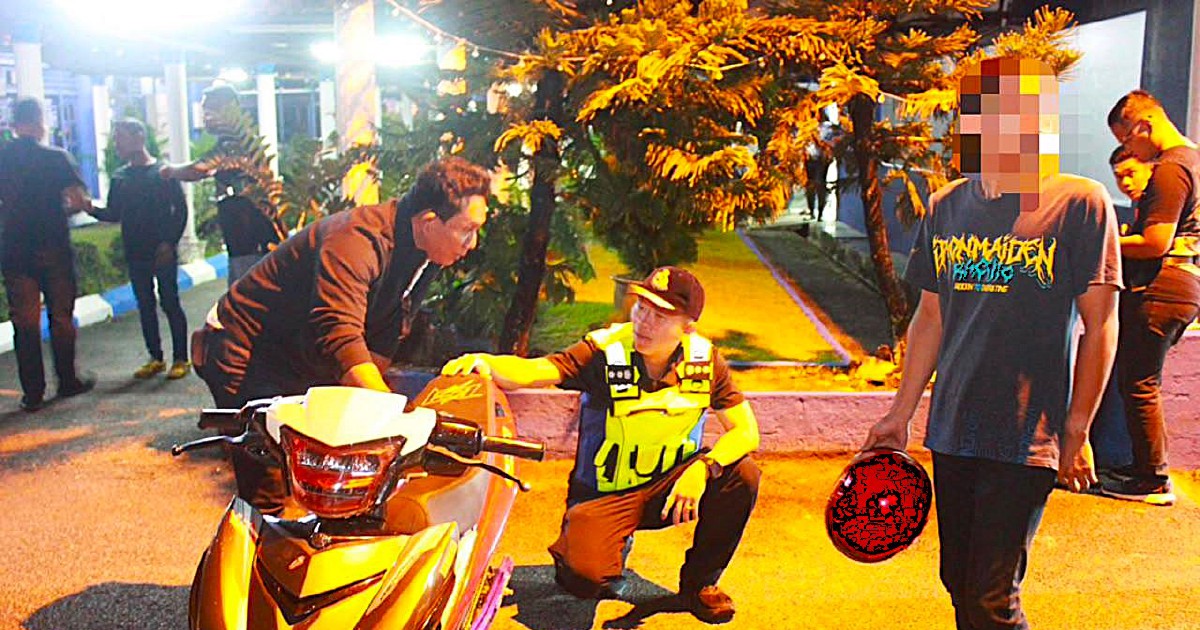
Law enforcement authorities in Klang conducted a targeted street-level operation in the early hours of the morning, resulting in the seizure of seven motorcycles and the opening of a formal investigation against one rider accused of reckless and dangerous driving. The enforcement action represents an intensified effort by police to stamp out the growing problem of organised illegal street racing activities that have been plaguing the district and putting public safety at risk.
The operation highlights an escalating concern among Malaysian authorities over street racing culture, which has become increasingly visible in urban centres across the Klang Valley. Illegal motorcycle racing not only disrupts public order and creates noise pollution for residents, but also poses a significant danger to the riders themselves, innocent bystanders, and other road users who happen to be in the vicinity when these dangerous activities take place.
Police presence in Klang has been enhanced significantly in recent months as part of a broader strategy to combat traffic-related offences and reckless behaviour on public roads. The early-morning timing of this particular operation suggests a deliberate tactical approach designed to catch street racing participants when they are most likely to congregate and engage in their activities, typically during late-night and early-morning hours when traffic volumes are lower and law enforcement activity is less visible.
The seizure of motorcycles serves multiple enforcement purposes. Beyond removing the immediate tools used for illegal racing from circulation, the impoundment creates a financial and logistical burden for riders attempting to recover their vehicles through proper legal channels. This mechanism acts as both a deterrent and a consequence, encouraging compliance with traffic laws and discouraging participation in organised street racing networks.
Investigation into the specific rider charged with reckless and dangerous driving will likely examine the circumstances surrounding the operation, including speed, riding behaviour, and the degree of danger posed to others on the road. Such cases typically proceed through the traffic courts system, where penalties can include substantial fines, licence suspension, and in serious cases, imprisonment, depending on the severity of the offence and the discretion of the presiding judge.
The problem of illegal street racing extends beyond Klang, affecting communities throughout Selangor and the wider Klang Valley region. Residents in affected areas have frequently complained about the noise, fear for their safety, and the disruption caused by these activities, which often occur during nighttime hours when most people are attempting to sleep. The phenomenon has created a significant challenge for law enforcement agencies tasked with balancing traffic management, public safety, and community relations.
Police operations targeting street racing require careful coordination and intelligence gathering. Officers must identify hotspots where racing activity concentrates, understand the social networks and organisational structures that facilitate participation, and deploy resources strategically to maximise impact while ensuring officer and public safety. The specialised nature of these operations reflects the sophistication of illegal racing organisations, which often employ lookouts, communication networks, and planned routes to evade detection.
For Malaysian riders and the motorcycling community more broadly, distinguishing between legitimate recreational riding and illegal street racing remains important. Organised clubs and track-based racing activities provide lawful outlets for enthusiasts to pursue their passion for motorcycling in controlled environments. The distinction matters because overzealous enforcement could potentially affect legitimate riders and create tension between authorities and the broader motorcycling community.
The Klang operation underscores the commitment of the Royal Malaysia Police to maintain traffic safety and public order within the district. Such targeted enforcement activities are resource-intensive and require sustained effort to be genuinely effective. Authorities typically combine such operations with awareness campaigns and community engagement initiatives designed to discourage participation in illegal racing activities and build support among residents affected by the problem.
Moving forward, the success of efforts to eliminate illegal street racing will likely depend on maintaining consistent enforcement pressure, gathering intelligence from community members and within rider networks, and exploring preventative approaches that address the underlying appeal of street racing for participants. Understanding the motivations—whether thrill-seeking, social belonging, or status within peer groups—may help inform more comprehensive long-term strategies beyond simple enforcement and seizure operations.
The seven motorcycles seized during this morning's operation will undergo standard police procedures, with vehicles remaining impounded during investigation and court proceedings. Owners may attempt to recover them through legal channels, though this process can be lengthy and expensive, adding further consequences to participation in illegal street racing activities.

