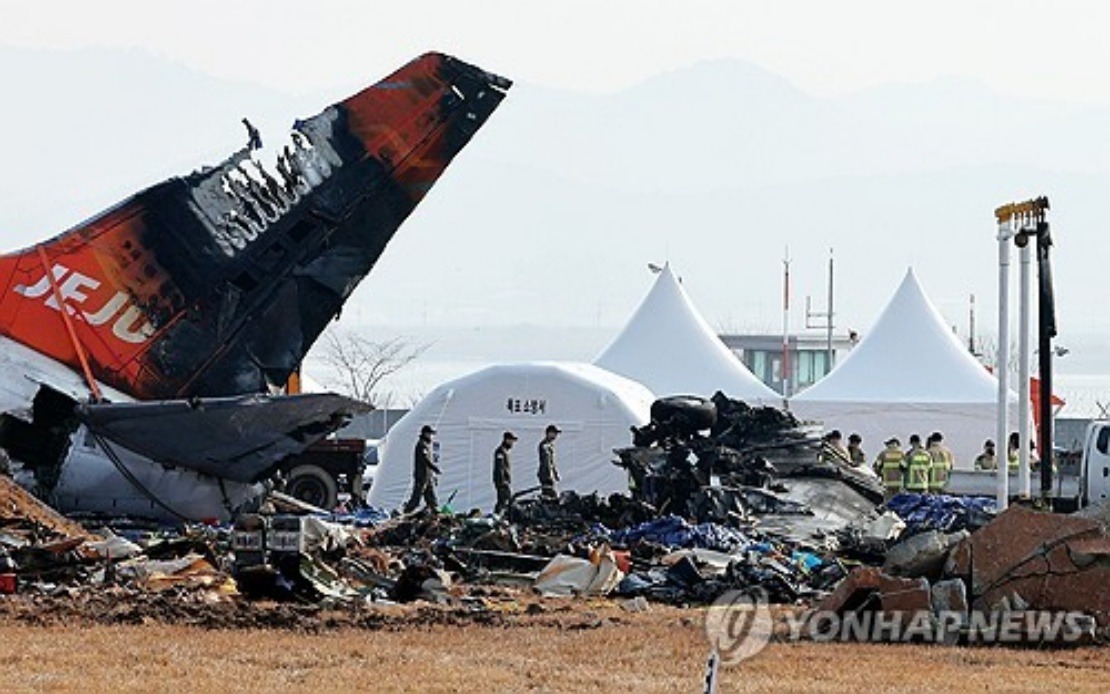
South Korea's transport ministry faces a serious accountability crisis following revelations that seven senior officials deliberately misled the public about safety compliance in the aftermath of one of the country's deadliest aviation disasters. The December 29, 2024 Jeju Air crash, which claimed 179 lives, has triggered a criminal investigation into whether government misconduct compounded an already catastrophic tragedy. Police investigators have now referred the officials to prosecutors on charges of conspiring to conceal critical information about equipment failures that may have directly contributed to the high death toll.
The Jeju Air passenger jet crashed at Muan International Airport, approximately 290 kilometres south of Seoul, during what should have been a routine emergency landing. The aircraft executed a belly landing but subsequently struck a concrete structure housing a localiser—a sophisticated navigation aid system designed to guide planes to safe landings in poor visibility conditions. The impact with this concrete installation proved devastating, transforming what might have been a survivable emergency into a mass casualty event. The positioning and integrity of this localiser installation have become central to understanding how the incident escalated from a managed emergency to a national tragedy.
According to a special police investigation unit, the seven officials deliberately fabricated official communications to obscure the fact that the localiser did not meet required safety and regulatory standards. The officials prepared and distributed press statements asserting that the navigation system had been installed in full compliance with relevant aviation regulations, knowing these claims were false. This calculated deception was designed to shield the ministry from responsibility and prevent public scrutiny of safety procedures that had apparently been compromised or inadequately enforced. The revelation suggests a systemic problem where institutional reputation protection took priority over transparent disclosure of potential hazards.
The role of the localiser's positioning within the concrete mound has emerged as a pivotal issue in determining whether the crash outcome could have been prevented or mitigated. Aviation safety engineers have questioned whether standard protective barriers should have been in place around such installations, or whether the localiser itself should have been mounted in a location where impact would be less catastrophic. The concrete structure's presence at Muan Airport—and the apparent acceptance of this arrangement by responsible authorities—raises serious questions about how aviation safety standards are monitored and enforced in South Korea. The crash has forced a reckoning with procedures that were apparently deemed acceptable despite significant risks.
For Malaysia and other Southeast Asian nations operating modern commercial aviation infrastructure, this scandal carries instructive implications. The case demonstrates how governance failures and accountability lapses at the administrative level can multiply the human cost of technical incidents. Malaysian aviation authorities, working through the Civil Aviation Authority of Malaysia, must ensure that similar pressures to prioritize institutional protection do not compromise the rigorous safety cultures that protect millions of regional air travellers annually. The incident underscores why transparency in safety compliance and willingness to acknowledge system weaknesses are essential components of aviation governance.
The referral of these seven officials to prosecutors represents a significant step toward accountability, though questions remain about whether the investigation will extend to senior leadership who may have set the institutional tone that encouraged such misconduct. South Korean authorities must determine whether this was an isolated case of official dishonesty or symptomatic of broader cultural problems within transport ministry divisions responsible for aviation oversight. The scope and seriousness of the prosecution will signal to the international aviation community how severely South Korea treats governmental failures that compound tragedy.
This case also highlights the vulnerability of families seeking answers and accountability following aviation disasters. Bereaved relatives who lost loved ones in the December crash initially had no way of knowing that the very officials tasked with investigating the incident had already begun constructing false narratives. The emotional and moral dimension of discovering that government representatives engaged in cover-up operations compounds the trauma of loss. Aviation incidents demand complete transparency, not selective disclosure designed to manage political fallout.
The investigation team's determination to pursue these charges despite potential political pressure reflects the importance of independent police and prosecutorial institutions in holding government accountable. In the months following the crash, as families demanded explanations and safety advocates called for systemic reforms, these officials were actively obscuring facts rather than facilitating independent investigation. Their actions represent a betrayal of public trust that extended beyond the immediate families to encompass the entire travelling public who depend on aviation authorities to enforce uncompromising safety standards.
For Southeast Asian aviation professionals and safety regulators, the Jeju Air case provides a cautionary example of how institutional pressures can corrupt safety governance from within. The incident reinforces why independent accident investigation bureaus, insulated from ministry politics, are essential components of aviation safety architecture. Malaysian authorities should examine whether similar conflicts of interest exist domestically, where transport ministry officials might face incentives to downplay safety failures rather than confront them transparently. Professional isolation of safety investigators from political pressure represents a best practice that protects both public safety and institutional integrity.

