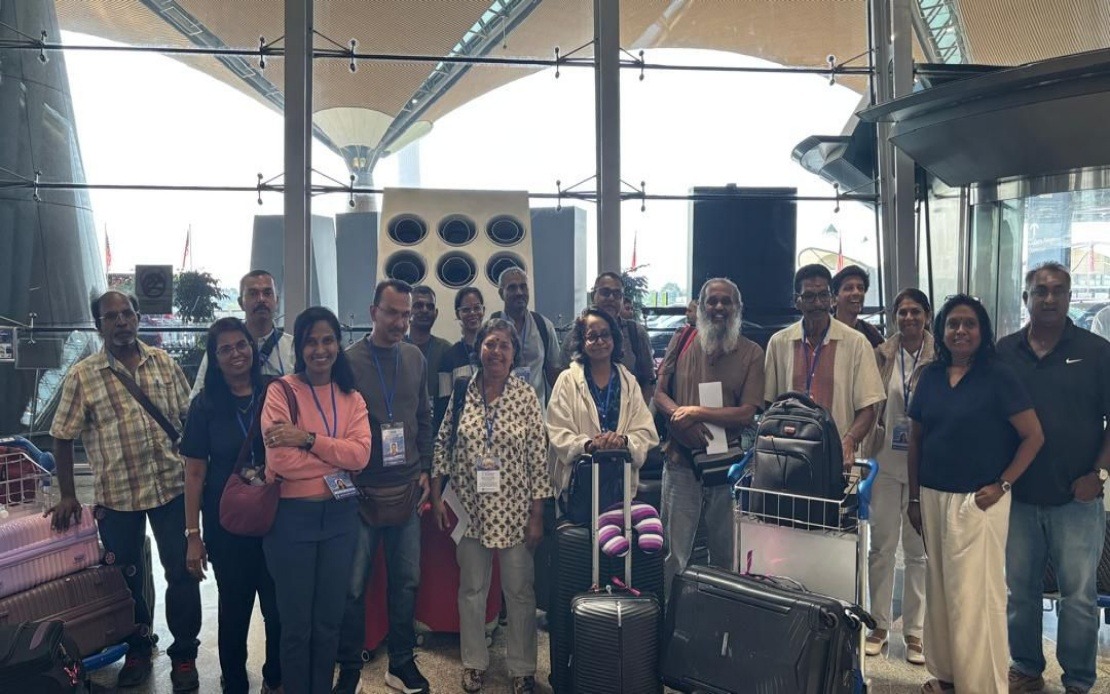
Seventeen Malaysians participating in a religious pilgrimage to Mount Kailash in Tibet have gone unreachable for more than a day following catastrophic flash floods that struck the Nepal-Tibet border region, prompting urgent concerns from their families and triggering a coordinated government response. The group, which was being guided through the mountainous terrain by Nepal-based travel company Fishtail Tours & Travels, was last heard from on the morning of August 26 when they were positioned approximately two kilometres from the Nepal-Tibet Immigration Checkpoint, according to accounts provided by family members to local authorities.
The sudden loss of communication has created considerable anxiety among relatives waiting for word from their loved ones. R. Logadashini reported that four members of her immediate family—her father S. Raman aged 59, mother M. Neelavany aged 54, uncle S. Murukan aged 60, and aunt G. Padmahwathi aged 58—were part of the missing pilgrimage group. The family's last confirmed contact came via a WhatsApp message received at approximately 8.40 am Malaysian time, though the tour group had reported their position hours earlier at around 8.18 am Nepal time, which corresponded to 10.33 am Malaysian Standard Time. Since that moment, all attempts to establish reconnection with the travellers have yielded no results, and inquiries directed toward the travel agency and the Malaysian Embassy have produced no substantive updates.
The broader scope of the situation extends beyond the single tour group. Wisma Putra, Malaysia's Foreign Ministry, confirmed that approximately 55 Malaysians had registered with the Malaysian Embassy in Kathmandu and remain unreachable in the wake of the disaster. However, the ministry stated that no official confirmation of Malaysian fatalities has yet been received, leaving the situation in a state of uncertainty. The embassy in Kathmandu has been actively coordinating with Nepalese government officials, search and rescue operations, tour operators, and other stakeholder organisations to determine the safety status and current locations of all affected Malaysians in the region.
Responding to the crisis, Prime Minister Datuk Seri Anwar Ibrahim issued explicit directives to relevant government agencies to prioritise locating and establishing contact with Malaysians impacted by the flooding. This directive mobilised Malaysia's diplomatic missions stationed in both Kathmandu and New Delhi to provide immediate assistance and facilitate communication between affected families and rescue operations. The governmental response reflects the severity with which authorities are treating the situation, given the remote and challenging terrain in which the missing pilgrims are believed to be located.
The natural disaster itself resulted from an unusually severe combination of meteorological and geological factors. Heavy rainfall combined with a glacial collapse triggered the flash floods across the Rasuwa and Nuwakot districts in Nepal, creating widespread destruction that extended beyond the immediate impact zone. The flooding severed critical transportation infrastructure, isolating communities and cutting off major roads that connect the affected zones to Kathmandu, the capital city. This geographical isolation has significantly complicated search and rescue operations by limiting the routes through which emergency personnel and supplies can reach stranded individuals and by restricting communication capabilities in the affected areas.
The location where the flooding occurred holds considerable significance for religious and adventure tourism throughout the region. This particular route serves as a critical passage for devout pilgrims journeying toward Mount Kailash, one of Asia's most sacred mountains and a destination that draws spiritual seekers from across the world. Additionally, the same route funnels trekkers making expeditions toward Mount Everest, making it a crucial corridor for tourism activities in the Himalayan region. The disruption of this passage therefore affects not only the specific Malaysian group but potentially numerous other pilgrimages and trekking expeditions in progress throughout the broader area.
A contrasting development emerged from a separate Malaysian pilgrimage group that had already advanced further into Tibet at the time of the disaster. This group, consisting of 56 individuals in total—comprising 39 Malaysians, four Singaporeans, and three Canadians—has been confirmed by organisers to have remained completely unaffected by the flooding. The group was being led by Datuk N. Mohanadas, a legendary figure in Malaysian mountaineering circles whose achievements in climbing Mount Everest have earned him considerable renown within the regional climbing community. Mohanadas communicated that his expedition party had observed the severe weather conditions and was fully aware of the humanitarian tragedy unfolding at the border, but their chosen route and geographical position kept them removed from the immediate danger zone.
The confirmed safety of Mohanadas' group provided at least one source of reassurance amid the broader crisis. The expedition leader explained that while his group had monitored reports of the sudden torrential rainfall, the resulting flash floods, and tragic casualty figures emerging from the border region, their specific pilgrimage route had been spared from direct impact. He stated that the group was proceeding with their scheduled religious activities and had commenced the first of three planned days of circumambulation around Mount Kailash, the sacred ritual that defines the spiritual purpose of their pilgrimage. This statement served to confirm that tourism and pilgrimage activities in other parts of Tibet were continuing normally despite the disaster affecting the border region.
The incident underscores the inherent risks associated with mountaineering and pilgrimage activities in the Himalayan region, where extreme weather events can develop with little warning and where geographical isolation can severely hamper rescue response capabilities. For Malaysian pilgrims and trekkers operating in Nepal and Tibet, the flooding represents a sobering reminder of environmental hazards present in these high-altitude regions. The tragedy also highlights the critical importance of robust communication systems and clear protocols for emergency situations, particularly for organised groups operating in remote areas with limited infrastructure and unreliable telecommunications networks.
For Malaysian families maintaining anxious vigils for news, the situation reflects the challenging reality of undertaking spiritual journeys in some of the world's most geographically unforgiving environments. While authorities continue their efforts to establish contact with the missing pilgrims and provide assistance, the lack of concrete information has created prolonged uncertainty for relatives. The government's mobilisation of diplomatic resources and coordination with international partners demonstrates Malaysia's commitment to supporting its citizens abroad during crises, though the practical limitations imposed by geography and logistics remain significant obstacles to rapid resolution.

