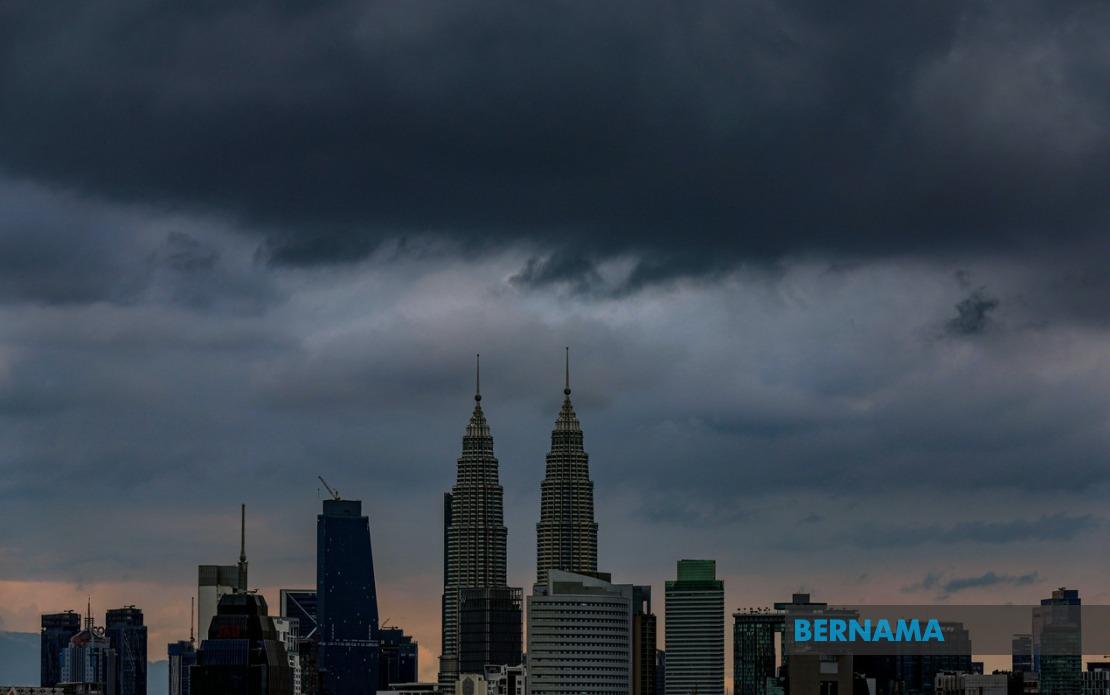
The Malaysian Meteorological Department has issued a significant weather advisory affecting a broad swathe of the country, warning of dangerous atmospheric conditions spanning from the northern peninsular states down through the central regions and into East Malaysia. The alert, released on June 28, covers Kuala Lumpur and Putrajaya alongside ten states, with all forecasted disruptions expected to peak before 7 pm that day. This widespread alert underscores the volatile weather patterns currently dominating the Malaysian weather system, with multiple fronts converging to create hazardous conditions across diverse geographical zones.
Northern peninsular Malaysia faces particular vulnerability, with Perlis, Penang and Kedah all positioned under the warning zone. Within Kedah, the alert specifically targets the districts of Langkawi, Kubang Pasu, Padang Terap, Kuala Muda and Kulim, suggesting that the brewing system is particularly concentrated in these areas. These northern zones serve as critical economic and tourism hubs, making such weather disruptions consequential for transportation networks and daily commerce across the region.
The warning extends substantially into Perak, encompassing seven distinct districts: Hulu Perak, Kuala Kangsar, Manjung, Kinta, Perak Tengah, Kampar and Bagan Datuk. This penetration into central Perak indicates that the weather system has gained sufficient strength to impact the state's interior regions, where mountainous terrain can amplify rainfall and create flash-flood conditions. The inclusion of industrial and mining zones in this warning carries implications for workplace safety protocols and potential operational disruptions across the state's manufacturing and resource extraction sectors.
Moving eastward, Kelantan experiences coverage through Gua Musang district, while Terengganu faces broader exposure across five separate areas: Besut, Setiu, Kuala Nerus, Hulu Terengganu and Dungun. This concentration along Malaysia's eastern seaboard reflects the directional flow of the weather system, which appears to be channelling moisture and instability across the peninsula's windward slopes. Pahang similarly braces for impact across four highland and central districts—Cameron Highlands, Raub, Bentong and Rompin—regions that are particularly susceptible to waterlogging and landslide hazards when subjected to intensive rainfall events.
Within the Klang Valley and surrounding areas, Selangor confronts warnings across six districts: Hulu Selangor, Gombak, Petaling, Kuala Langat, Hulu Langat and Sepang. This configuration directly threatens Malaysia's most densely populated and economically vital region, where infrastructure congestion and concentrated urban populations amplify the impact of severe weather. Disruptions across Selangor inevitably cascade through regional transportation hubs and commercial networks that extend throughout the broader Klang Valley corridor.
East Malaysia receives equally comprehensive coverage, with Sarawak identified as facing substantial risk across multiple divisions. The affected zones span from Kuching Division in the state capital region, through Serian and Samarahan, extending south to Betong, and covering significant sections of the central divisions including Sri Aman, Sarikei, and components of Sibu and Kapit divisions. The alert even encompasses peripheral areas including Tatau in Bintulu Division and Subis and Miri in Miri Division, indicating that the weather system maintains considerable geographical reach across Sarawak's expansive territory.
Sabah experiences targeted warnings concentrated in specific interior and coastal zones. The Interior Division faces exposure in Keningau and Tambunan, while the West Coast Division braces for conditions affecting Ranau. Most significantly, the Sandakan Division confronts alerts across four districts—Telupid, Kinabatangan, Beluran and Sandakan itself—suggesting that the state's eastern coastal regions and interior plateaus face particularly intense atmospheric instability. These areas, encompassing both development zones and conservation areas, warrant heightened vigilance for potential flooding and associated hazards.
The comprehensive nature of this alert reflects the substantial meteorological system currently dominating Malaysia. Rather than a localized disturbance, the warning pattern suggests a widespread tropical convergence zone or monsoon-influenced weather pattern capable of delivering hazardous conditions across diverse topography and climate zones simultaneously. The simultaneous coverage of peninsular Malaysia and both East Malaysian states indicates that the system maintains sufficient coherence and intensity to generate thunderstorm activity, torrential rainfall and dangerous wind conditions across an area spanning thousands of square kilometers.
For residents and businesses across affected regions, the afternoon timeframe represents a critical preparation window. The seven-hour warning period allows for implementation of precautionary measures including securing loose objects, closing windows and doors, and preparing for potential flooding in susceptible areas. Transportation authorities can adjust schedules and routing to accommodate expected visibility reductions and hazardous road conditions, while utility companies can position response teams for rapid intervention should infrastructure suffer damage.
The specificity of MetMalaysia's district-level designations provides communities with actionable intelligence for localized emergency preparedness. Rather than applying a blanket state-level warning, the granular approach acknowledges that weather systems maintain spatial boundaries, allowing residents outside designated zones to proceed with normal activities while those within alert areas activate precautionary protocols. This precision-targeted methodology represents an evolution in tropical weather forecasting, where high-resolution prediction systems enable meteorologists to delineate risk zones with increasing accuracy.
The June timing of this alert aligns with Malaysia's transition period between monsoon seasons, a climate window historically characterized by unstable atmospheric conditions and increased thunderstorm frequency. During this transitional phase, conflicting wind patterns and moisture convergence create ideal conditions for explosive thunderstorm development, particularly across elevated terrain and coastal regions where topographic forcing can amplify atmospheric lifting. The concentration of warnings across such diverse geographical zones reflects this seasonal meteorological reality, with the weather system capitalizing on seasonal instability to generate widespread severe weather impacts.
As the alert period approached, residents throughout the affected regions faced the familiar challenge of balancing routine activities with weather preparedness. Schools, workplaces and commercial establishments across the warning zone required contingency planning, while outdoor events scheduled for the afternoon period faced potential disruption. The convergence of monsoon-transition weather patterns with the peninsula's densely populated urban zones and East Malaysia's expanding development corridors meant that this singular weather event possessed implications extending far beyond simple rainfall statistics, touching upon infrastructure reliability, public safety and economic continuity across multiple Malaysian states and federal territories.

