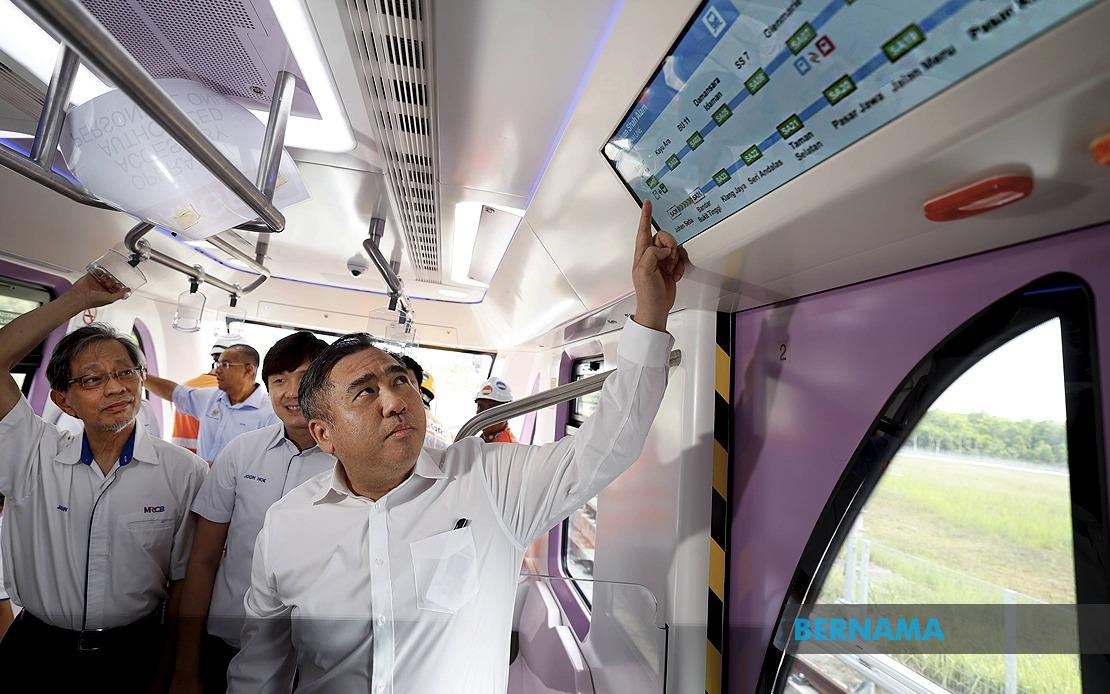
Malaysia's long-awaited Light Rail Transit 3 (LRT3) line is set to commence service on Monday, June 29, marking a significant expansion of the Klang Valley's public transportation network. Transport Minister Anthony Loke announced the milestone development on Saturday, confirming that Prime Minister Datuk Seri Anwar Ibrahim will officiate the official launch ceremony the day before operations begin. The announcement came during Loke's visit to the newly opened Road Transport Department (JPJ) Bandar Tasik Selatan branch at Terminal Bersepadu Selatan.
The 37.8-kilometre LRT3 corridor represents a substantial infrastructure investment designed to bridge connectivity gaps across the western portion of the Klang Valley conurbation. Stretching from Bandar Utama in the north to Johan Setia in Selangor's southwestern reaches, the line directly addresses longstanding transportation challenges that have plagued the region's commuters for years. The route encompasses several strategically important zones, including residential neighbourhoods, commercial districts, and industrial parks that have experienced rapid urbanisation without corresponding improvements to public transit infrastructure.
Projections suggest the new rail service will directly serve approximately two million residents within the catchment areas adjacent to its stations. This figure underscores the population density and demographic significance of the western Klang Valley, a region that has experienced explosive growth over the past two decades but has historically suffered from inadequate public transport options. The LRT3's arrival should substantially reshape commuting patterns and reduce vehicular congestion along major arterial roads that have become increasingly overwhelmed during peak hours.
The line's strategic positioning within the wider Klang Valley metropolitan area makes it a crucial component of the region's transportation hierarchy. Rather than competing with existing rail networks, LRT3 complements the established LRT1 and LRT2 systems by serving areas previously underserved by rapid transit infrastructure. This layered approach to public transport development reflects evolving urban planning philosophy that recognises the necessity of interconnected rather than isolated transit corridors.
For Malaysian commuters accustomed to traffic congestion and lengthy commute times, LRT3 promises tangible improvements in journey times and travel reliability. The rail line's separation from vehicular traffic ensures consistency in service delivery regardless of road conditions or congestion levels. Residents in Shah Alam and surrounding municipalities will gain access to time-predictable transport for the first time, potentially enabling lifestyle and employment decisions previously constrained by connectivity limitations.
The infrastructure project carries particular significance for industrial and commercial stakeholders operating within the western corridor. Enhanced connectivity typically stimulates economic activity by improving worker accessibility and facilitating supply chain efficiency. Industrial parks along the LRT3 route may experience increased investment and business relocations as transportation barriers diminish, potentially generating substantial economic multiplier effects for the broader region.
From an environmental perspective, the introduction of LRT3 contributes to Malaysia's broader sustainability objectives by offering low-carbon transportation alternatives to private vehicle use. Each commuter shifted from automobile travel to rail transit reduces individual and aggregate emissions, improving air quality across the densely populated Klang Valley. This environmental benefit extends beyond immediate health advantages, supporting Malaysia's commitments under international climate frameworks and domestic emission reduction targets.
The June 29 operational commencement represents the culmination of extensive planning, construction, and testing phases that have spanned several years. The formal involvement of the Prime Minister in the launch ceremony underscores the project's importance within the national infrastructure development agenda. Such high-level political participation typically precedes major media engagement and public awareness campaigns designed to familiarise potential users with stations, routes, and operational procedures.
Looking ahead, the LRT3's successful integration into the regional transport network will largely depend on passenger adoption rates and operational efficiency during the critical initial months. Transit authorities will be monitoring passenger volumes, safety metrics, and service reliability to identify optimisation opportunities. The line's performance will provide valuable data for future transit expansion decisions across other Malaysian urban centres seeking to replicate successful models.