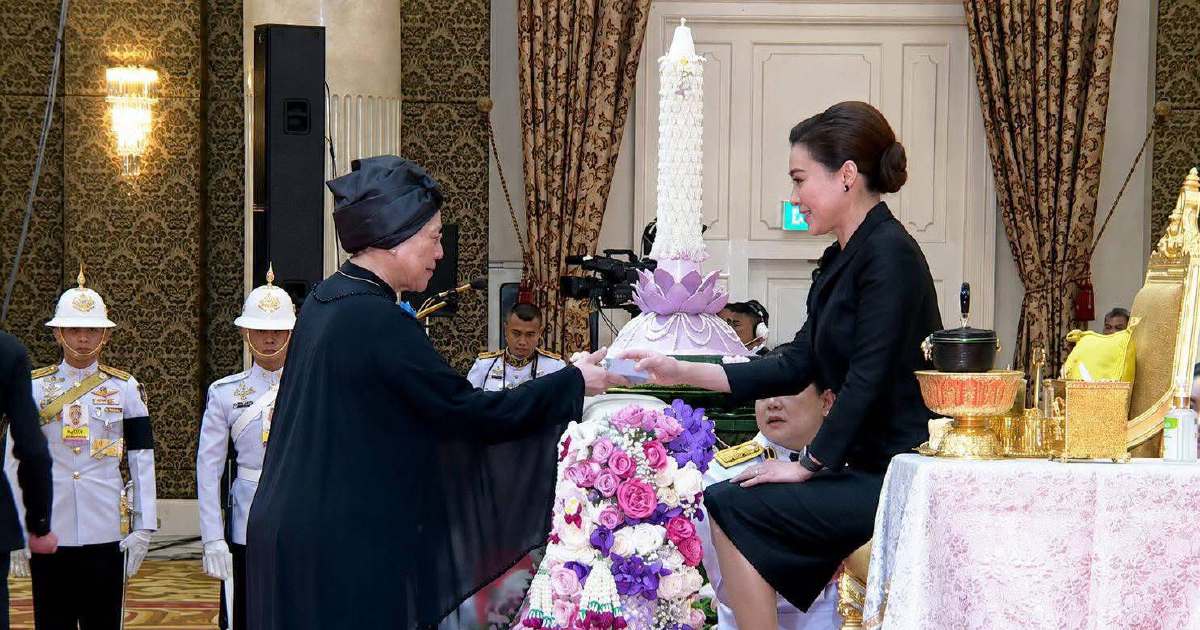
Prime Minister Datuk Seri Anwar Ibrahim and his wife Datuk Seri Dr Wan Azizah Wan Ismail have extended their congratulations to Prof Emerita Tan Sri Datuk Seri Dr Sharifah Hapsah Syed Hasan Shahabudin following her recognition as recipient of the 'Outstanding Woman Award for Social Development'. The honour represents a significant acknowledgement of individual excellence within Malaysia's broader landscape of women's leadership and societal contribution.
The conferment of such recognition carries particular relevance for Malaysia's development trajectory. At a time when nations across Southeast Asia are increasingly focused on harnessing the full potential of their female population, formal acknowledgements of outstanding female achievers serve an important function in visibility and institutional validation. The award mechanism itself reflects growing global and regional emphasis on identifying and celebrating women whose work has tangibly influenced social structures and community welfare.
Sharifah Hapsah's career trajectory illustrates the multifaceted nature of contemporary women's leadership in Malaysia. Her attainment of emeritus status alongside her formal title indicates sustained contribution spanning decades, suggesting her influence has embedded itself within institutional frameworks and policy discussions. This pattern of long-term engagement differs from episodic involvement and demonstrates the compound effect of consistent advocacy and professional dedication.
The social development dimension of the award proves particularly instructive for understanding Malaysia's strategic priorities. Social development encompasses education, healthcare accessibility, poverty alleviation, and community resilience—domains where women's participation has demonstrably enhanced policy effectiveness and implementation outcomes. When recognition explicitly identifies contributions to these areas, it implicitly validates women's expertise in solving complex societal challenges that affect household economies and intergenerational wellbeing.
From a regional perspective, Malaysia's celebration of female achievers in social sectors aligns with ASEAN-wide commitments to gender equality and women's empowerment embedded within the ASEAN Comprehensive Investment Agreement and various human development frameworks. The visibility afforded to recipients like Sharifah Hapsah contributes to normalising female leadership across governance, academia, and civic participation—a necessary precondition for sustainable institutional change throughout the region.
The symbolic weight of prime ministerial acknowledgement merits consideration alongside the award itself. When sitting government leadership explicitly endorses recognition of female achievers, it sends institutional signal regarding priority allocation and value attribution. This messaging becomes particularly consequential in contexts where women's professional contributions sometimes remain underappreciated within traditional hierarchical structures or inadequately represented in succession planning and mentorship systems.
Sharifah Hapsah's recognition occurs within Malaysia's broader demographic and economic context. With female labour force participation rates that have risen substantially over recent decades, Malaysia possesses a significant cohort of educated, professionally engaged women whose capabilities extend across all sectors. Yet research consistently demonstrates that women remain underrepresented in senior decision-making positions relative to their educational attainment and workforce contributions. Awards honouring specific achievers help counterbalance this structural visibility gap and provide exemplars for emerging female professionals across generations.
The social development focus of this particular award reflects pragmatic understanding of where women's leadership generates measurable outcomes. Educational institutions, healthcare delivery systems, poverty reduction programmes, and community development initiatives have all benefited from female leadership that frequently emphasises collaborative problem-solving, stakeholder engagement, and attention to implementation challenges affecting marginalised populations. These outcomes-oriented contributions deserve recognition distinct from rhetorical commitments to gender equality.
Looking forward, the significance of such awards extends beyond individual honour. They create institutional memory of female excellence, establish benchmarks for aspiring professionals, and contribute to gradually shifting cultural narratives around women's capacity for complex professional and intellectual leadership. Within Malaysian institutional contexts, where formal recognition carries weight in career advancement and societal perception, explicit acknowledgement of outstanding female achievers operates as practical as well as symbolic gesture.
The broader implication for Malaysia's development agenda involves leveraging the full spectrum of human capital available within its population. When women's contributions across social development domains receive formal institutional recognition, it facilitates more effective recruitment, retention, and advancement of female talent into positions where their expertise can address pressing societal challenges. This represents not merely progressive values but pragmatic human resource strategy aligned with evidence regarding what works in tackling complex developmental problems affecting the nation's future competitiveness and social cohesion.

