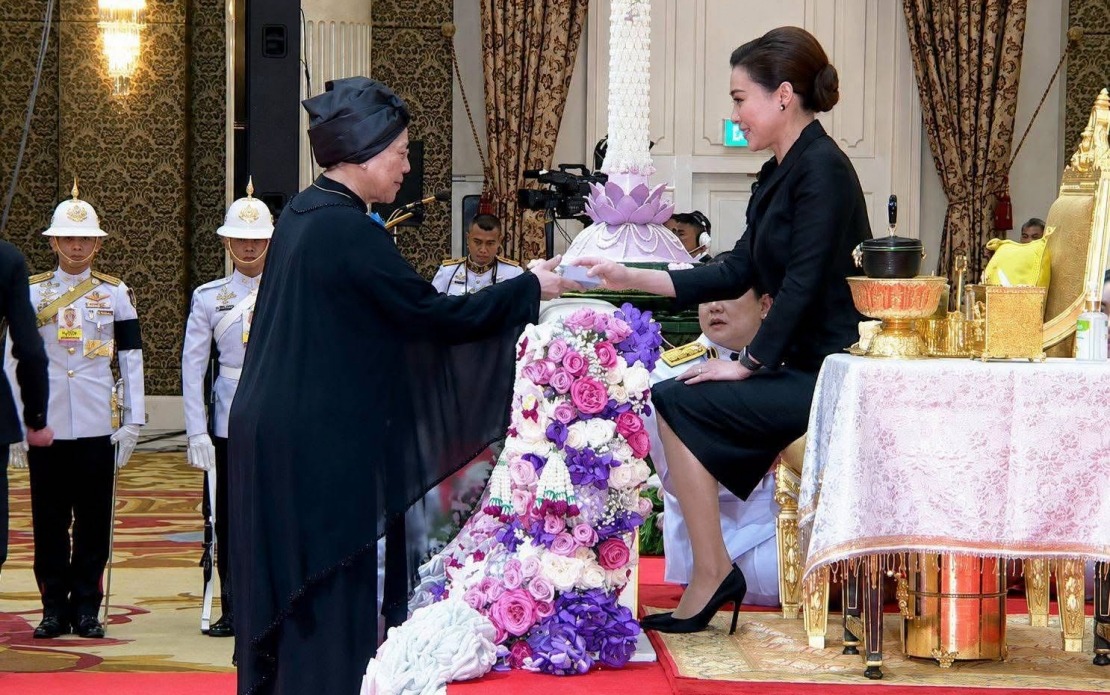
Prime Minister Datuk Seri Anwar Ibrahim and his wife Datuk Seri Dr Wan Azizah Wan Ismail have extended their congratulations to Prof Emerita Tan Sri Datuk Seri Dr Sharifah Hapsah Syed Hasan Shahabudin following her receipt of the Outstanding Woman Award for Social Development, which was bestowed by Queen Suthida Bajrasudhabimalalakshana of Thailand. The accolade represents a significant milestone for Malaysian representation in regional and international honours, particularly those recognising contributions to social advancement.
In his remarks, Anwar positioned the award as extending beyond personal accomplishment, viewing it instead as validation of the broader capacity and impact of Malaysian women across multiple spheres of society. He emphasised that the recognition, conferred at a regional level by one of Southeast Asia's prominent monarchs, demonstrates the calibre of female professionals and leaders the nation continues to produce and nurture. This framing reflects a deliberate governmental strategy to highlight women's achievements as markers of national progress and international standing.
The Prime Minister articulated his vision for leveraging such recognition as inspiration for expanding female participation across professional sectors. His statement called upon women to engage further through knowledge application, exercise of leadership, and demonstration of compassion in community building and advancement. This rhetorical approach connects individual achievement to collective national aspiration, positioning women's involvement as integral to broader developmental goals rather than as peripheral or supplementary to national progress.
Anwar's comments explicitly linked the award to the government's MADANI agenda, which represents the administration's overarching development framework. By situating Sharifah Hapsah's achievement within this context, the Prime Minister underscored the alignment between recognising women's capabilities and executing his administration's policy priorities. The connection serves to legitimise the MADANI initiative through association with concrete examples of Malaysian excellence and international validation.
The government has committed to maintaining its institutional support for women's advancement across multiple dimensions. Anwar outlined intentions to sustain emphasis on women's roles in national development, expand avenues for their involvement in diverse economic, professional, and civic sectors, and systematically integrate their leadership potential into planning and execution of long-term national objectives. These commitments reflect acknowledgment that gender diversity in decision-making and implementation strengthens developmental outcomes across sectors.
Sharifah Hapsah's career trajectory and the recognition it has attracted carry particular significance for Malaysian professional women, especially those working in social development, academia, and related domains. Her distinction as Prof Emerita indicates sustained scholarly and practical contributions spanning decades, lending credibility to arguments about women's sustained excellence in knowledge creation and application. The award thus becomes emblematic of achievement through dedication to substantive work rather than through tokenistic recognition.
The timing and source of the award carry additional weight within the regional context. Thai recognition of Malaysian female achievement speaks to the cross-border respect and professional networks that exist among female leaders and scholars across Southeast Asia. Such regional acknowledgment reinforces the perception that Malaysian women compete effectively at international standards and maintain standing among their peers in neighbouring countries, countering any notion of parochial limitation in capability or scope.
For Malaysian women navigating professional advancement, Sharifah Hapsah's award functions as practical evidence that sustained excellence, whether in research, policy formulation, institutional leadership, or social contribution, receives acknowledgment beyond domestic borders. This visibility can serve to encourage younger women entering professional life, demonstrating that career trajectories combining expertise with social consciousness attract recognition and validation from prestigious international sources.
The government's emphasis on women's role in MADANI development objectives reflects pragmatic recognition that excluding or underutilising half the population's talents represents strategic inefficiency. By explicitly framing women's advancement as consistent with national development goals rather than in tension with them, the administration positions gender inclusion as aligned with economic productivity, social stability, and knowledge advancement. This framing has become standard across Southeast Asian governments seeking to maximise human capital deployment.
Sharifah Hapsah's achievement also arrives at a moment when Malaysian policymakers continue debating mechanisms for expanding women's participation in boardrooms, legislative bodies, and senior civil service positions. While the award itself does not resolve structural questions about appointment processes or representational equity, it provides institutional leaders with concrete examples of women's capability for senior roles and external validation of their readiness for greater responsibility and visibility.

