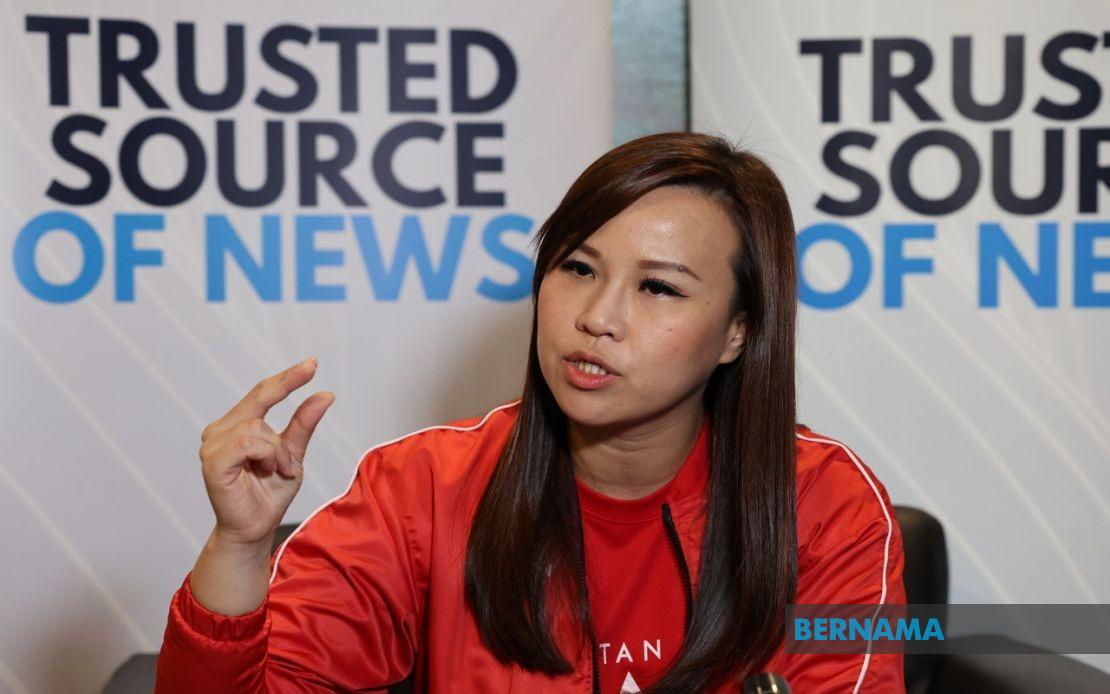
Sharon Teo Siew Hui, the Pakatan Harapan candidate contesting the Permas state seat, has built her political platform on principles learned directly from the late Datuk Seri Salahuddin Ayub, whose mentor relationship with the 36-year-old shaped her vision for responsive and humble governance. Serving as a special officer to the former Minister of Domestic Trade and Cost of Living gave Teo an intimate understanding of what she terms "service-oriented politics," a philosophy she now seeks to translate to voters in one of Johor's competitive constituencies during the 16th state election.
The late Salahuddin Ayub, remembered by supporters as "Bapa Rahmah Malaysia" for his focus on cost-of-living issues, left an indelible mark on Teo's approach to public service. She recalls how he exemplified both accessibility and tireless follow-through, personally monitoring constituent complaints well into the evening hours and dispatching messages at midnight to ensure problems had progressed towards resolution. That level of hands-on accountability represents the standard Teo promises to establish if elected, fundamentally rejecting the notion that elected representatives merely receive grievances without ensuring action reaches completion.
Teo joined Parti Amanah Negara in 2018, moving from voluntary support into formal party membership after deepening her relationship with Salahuddin. Her progression through Amanah's internal structures—beginning as an ordinary member, advancing to Assistant Secretary of Amanah Johor, and eventually leading Amanah Johor Wanita Muda—demonstrates sustained commitment rather than opportunistic nomination. The candidate has directly addressed accusations of being a "parachute candidate" by pointing to this seven-year trajectory of active engagement within party structures and grassroots organising.
Familiarity with Permas itself strengthens Teo's candidacy beyond theoretical knowledge. She accompanied Salahuddin during multiple election cycles and community outreach programmes throughout the constituency, accumulating on-the-ground understanding of local conditions and voter concerns. This prior exposure distinguishes her from candidates parachuted into unfamiliar terrain, though political opponents may continue challenging her local roots.
The early campaign reception has reinforced Teo's confidence in her message and approach. During the first five days of door-to-door engagement, residents consistently raised practical infrastructure grievances: potholes marring roads, deteriorating laneways behind commercial zones, traffic bottlenecks, and inadequate public facilities. These complaints reveal a constituency where basic urban management has fallen short, creating space for a candidate emphasising systematic resolution over rhetorical commitments.
Young voters represent a particular focus within Teo's strategy, with explicit acknowledgment that first-time voters and school leavers require distinct engagement methods. Rather than relying on traditional ceramah formats, her campaign leverages social media platforms and e-sports initiatives to reach younger demographics who represent an expanding share of Permas voters. This generational targeting reflects broader recognition within opposition politics that digital-native voters respond differently to conventional campaigning.
Teo's promised first 100 days establish measurable benchmarks against which her performance can be evaluated. Prioritising comprehensive data-gathering about pressing issues, conducting infrastructure audits, and developing phased action plans suggests a deliberate shift towards evidence-based policymaking rather than ad-hoc responses. The PermasKu one-stop centre concept directly echoes Salahuddin's methodology, establishing visible infrastructure through which constituents can track resolution progress.
The Permas contest itself mirrors competitive dynamics across urban Johor constituencies where support has fragmented among multiple blocs. The four-way battle between Teo's Pakatan Harapan effort, incumbent Baharudin Mohamed Taib representing Barisan Nasional, Perikatan Nasional's T. Vela, and Parti Bersama Malaysia's Dr Zamil Najwah creates tactical complexity. Baharudin's 2022 majority of 7,926 votes provides a baseline though vote-splitting among opposition and newly-emergent Bersama represent significant variables.
For Malaysian politics more broadly, Teo's candidacy encapsulates a wider phenomenon where younger generation opposition figures emphasise continuity with respected predecessors while simultaneously presenting themselves as change agents. The particular resonance of Salahuddin's legacy—his consistent focus on bread-and-butter economic hardship rather than ideological grandstanding—gives Teo thematic coherence that transcends factional boundaries within Pakatan Harapan.
The outcome in Permas will partly reflect whether voters perceive Teo's emphasis on humble, accessible governance and methodical issue resolution as credible alternatives to incumbent performance. Infrastructure complaints documented during campaigning provide clear benchmarks; if elected, Teo cannot credibly cite these conditions as pre-existing problems without commitment to measurable improvement. The PermasKu centre concept, while administratively straightforward, will become her most visible accountability mechanism.
Teo's positioning also reflects adaptation within Pakatan Harapan to post-2022 election dynamics, where the coalition struggled to consolidate support despite initial momentum. Emphasising continuity with Salahuddin's unifying approach to service delivery—transcending racial divisions through shared commitment to resolving practical problems—offers a counter-narrative to polarised political discourse. Whether such an approach gains traction amid fragmented voter preferences across urban Johor remains uncertain, but Teo's campaign strategy demonstrates sophisticated understanding of contemporary electoral dynamics requiring both grassroots accessibility and strategic digital engagement.

