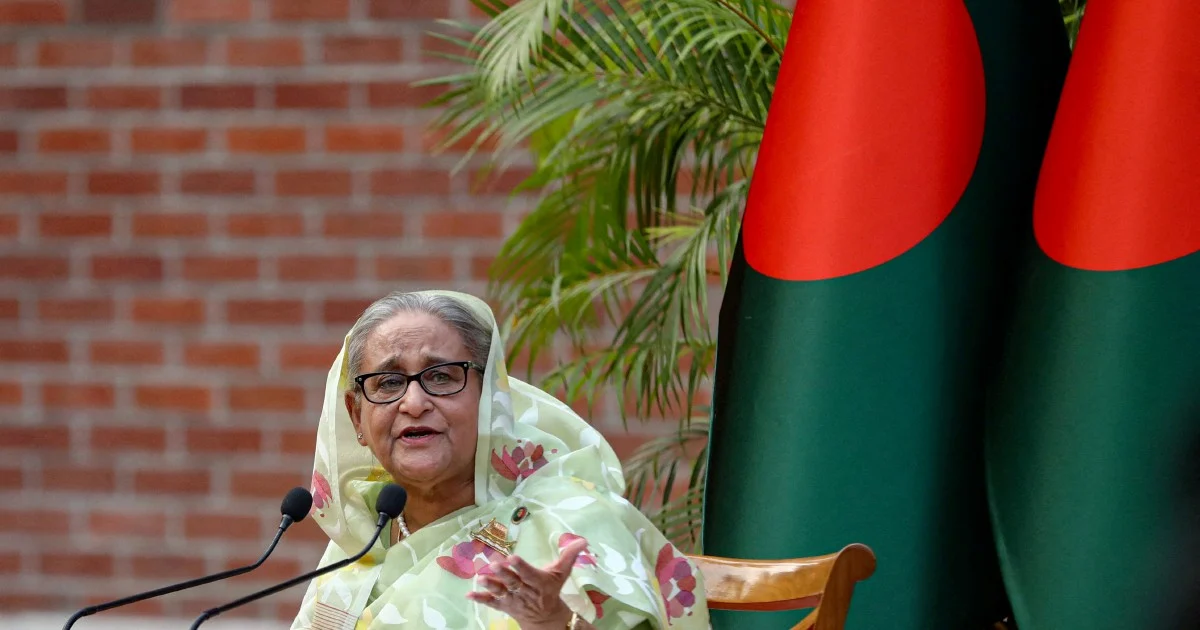
Sheikh Hasina, Bangladesh's ousted Prime Minister, will be detained immediately if she crosses back into her homeland from India, according to a senior minister in the country's interim government. The stark warning came on Monday, marking a dramatic escalation in tensions surrounding the politically fractured nation's path toward fresh elections and democratic renewal after months of civil unrest that forced Hasina from power.
The threat of incarceration directly contradicts Hasina's own statements made just days earlier to international media, in which she expressed a willingness to return within weeks and submit herself to judicial proceedings. Her December timeline suggested a calculated attempt to regain the initiative in Bangladesh's turbulent political landscape, signalling her readiness to face whatever charges her political opponents might levy. The government's swift and forceful rebuttal indicates, however, that any homecoming by the former premier would trigger immediate legal action rather than an orderly court appearance.
Hasina's exile in India represents more than a physical displacement—it symbolises the depth of the rupture between her political movement and the forces that orchestrated her removal from office. Since fleeing to India, she has maintained a defiant posture, suggesting that her departure was temporary and her political career far from concluded. This projection of eventual return has kept her base energised but simultaneously alarmed the transitional authorities seeking to consolidate their grip on governance and reshape Bangladesh's political architecture.
The interim government's hardline stance reflects the precarious position of Bangladesh's current leadership, which lacks the electoral legitimacy of a democratic mandate. By publicly vowing to imprison Hasina upon her return, officials appear to be establishing a clear boundary—one that signals no room for negotiation or compromise with the previous establishment. This posture appeals to the protest movements that mobilised against her administration, but it also risks entrenching Bangladesh in a cycle of political revenge rather than reconciliation.
For Malaysia and other Southeast Asian nations watching Bangladesh's constitutional drama unfold, the implications are instructive. Regional neighbours have long emphasised the importance of institutional stability and orderly transitions of power. Bangladesh's current trajectory—marked by threats of imprisonment and politically motivated prosecutions—underscores the dangers of allowing democratic backsliding to progress unchecked. Malaysia's own experience with leadership transitions and political reconciliation offers a sobering comparison point for Bangladesh's troubled trajectory.
The timing of the warning is particularly significant given that Bangladesh's transitional period has produced considerable uncertainty regarding the future electoral framework and the timeline for restoring democratic governance. International observers and regional partners have expressed concern about whether an interim government, lacking electoral legitimacy, possesses the authority to make binding commitments about the legal fate of predecessors. This question becomes more acute when the threatened prosecution could be perceived as politically motivated rather than grounded in genuine rule of law principles.
Hasina's political movement, the Awami League, maintains considerable organisational strength across Bangladesh despite the turmoil that forced her from office. Her supporters argue that she deserves due process and a fair trial should she face charges, not pre-emptive detention or show trials designed to delegitimise her legacy. This constituency has the potential to become a destabilising force if they perceive that Hasina is being treated as a political prisoner rather than a defendant with legal rights. The government's inflammatory rhetoric regarding imprisonment may inadvertently energise her supporters and complicate the already difficult task of achieving genuine democratic renewal.
The substance of potential charges against Hasina remains largely undefined in public discourse, fuelling speculation about whether prosecutions would address genuine criminal conduct or represent politically charged retribution. This ambiguity undermines both the credibility of any eventual trial and the legitimacy of the interim government itself. Rule of law depends upon procedural transparency and the consistent application of legal standards, not upon the political fortunes of those wielding state power at any given moment.
International pressure on Bangladesh to avoid politically motivated prosecutions will likely intensify should the government proceed with arresting and imprisoning Hasina. Western democracies and regional organisations have demonstrated growing sensitivity to accusations that transitions of power are being weaponised for political ends. Bangladesh's government may discover that international isolation, particularly regarding aid flows and diplomatic recognition, presents significant costs for pursuing what observers characterise as revenge rather than justice.
The standoff between Hasina and Bangladesh's interim authorities reflects deeper questions about the nation's commitment to democratic principles and constitutional governance. Whether Bangladesh can move beyond cycles of political recrimination toward genuine institutional reform remains uncertain. What appears certain is that Hasina's threatened imprisonment, should she attempt to return, will deepen the polarisation afflicting Bangladeshi politics and complicate regional stability across South Asia.

