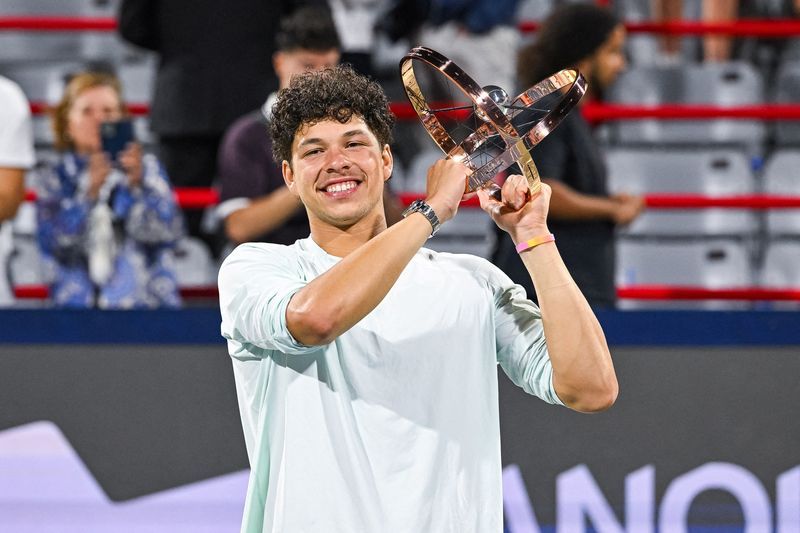
Ben Shelton enters the US Open with a singular objective: to overturn a frustrating pattern of Grand Slam underperformance that has defined his 2024 campaign. The 23-year-old world number nine brings with him the momentum of successfully defending his Canadian Open crown, a tournament where he dropped not a single set in claiming victory over Brandon Nakashima. The New York hard courts represent an opportunity for the American to build upon this breakthrough and finally deliver the kind of major tournament breakthrough that has eluded him through what he describes as an emotional "roller coaster" of a season.
Shelton's 2024 record at tennis's most prestigious events has been decidedly mixed. While he navigated past the quarter-final stage at the Australian Open, his performances subsequently deteriorated markedly. At Roland Garros, he faltered in the second round, unable to sustain the intensity required over multiple matches. The situation worsened at Wimbledon, where a shocking first-round exit raised serious questions about his ability to adapt to different surfaces and tournament demands. Yet these reversals have apparently motivated rather than demoralised the American prospect, who now views the Montreal title as validation that his underlying game remains sound.
During conversations with the press in Canada, Shelton articulated a perception that his technical execution has significantly improved during the hard-court swing. He highlighted his work on serve-breaking patterns and defensive positioning as evidence of genuine progress rather than mere optimism. The player's self-assessment suggests he has identified specific technical weaknesses from earlier in the year and actively addressed them through focused preparation. For Malaysian and Southeast Asian observers of tennis, Shelton's trajectory mirrors the career arcs of other young talents who must eventually prove they can convert Grand Slam potential into tangible results.
The backdrop to Shelton's quest carries considerable weight beyond his individual ambitions. American men have endured a twenty-one year championship drought at their home Grand Slam, with Andy Roddick's 2003 victory over Juan Carlos Ferrero remaining the nation's last triumph in the singles category. This historical context has positioned Shelton as a standard-bearer for American tennis revival, and the expectations attached to such a role inevitably intensify pressure during major tournaments. For a young player still in his early twenties, managing these external demands while maintaining competitive focus represents an ongoing psychological challenge.
Former US Open champion Roddick recently offered qualified endorsement of Shelton's chances, suggesting in a podcast appearance that the American could genuinely contend for the title if the conventional favourites stumbled. Roddick's assessment came before Jannik Sinner, the Italian world number one, withdrew from this year's tournament. The Italian's absence fundamentally alters the competitive landscape, removing perhaps the most dominant hard-court player currently operating at elite level. Alcaraz remains a formidable threat, but the loss of Sinner creates genuine opening for a challenger positioned exactly where Shelton stands in the rankings and form.
Shelton's previous US Open appearance demonstrated his capacity to compete at the highest level, reaching the semi-finals in 2023 and proving he possesses the mental fortitude required for deep tournament runs at Flushing Meadows. That result established him as more than merely a promising prospect; it demonstrated he belonged among the contenders capable of winning Grand Slams. The challenge now involves consistency—translating occasional brilliant performances into predictable excellence across all major competitions. His Canadian Open run suggests such consistency may finally be arriving, though sceptics would reasonably note that one tournament, however impressive, does not constitute definitive evidence of transformation.
The hard-court environment suits Shelton's game more comfortably than the slower surfaces where he has struggled. Hard courts reward aggressive tennis and serve-dominated strategies, both areas where the American has demonstrated proficiency when operating at peak intensity. His acknowledgement that his game possesses untapped potential suggests psychological readiness to push beyond previous limitations, a mindset crucial for athletes attempting to achieve breakthrough performances. The mental aspect often separates contenders from champions, and Shelton appears increasingly focused on this dimension of his development.
Canadiansian observers might note that Shelton's confidence surge comes immediately after defeating a domestic rival in his title defence. Brandon Nakashima's loss provided not merely a trophy but validation of tactical superiority and mental strength when matters most. Such confirmatory experiences often prove disproportionately valuable for young athletes rebuilding confidence following earlier disappointments. The psychological momentum from Montreal will undoubtedly ease Shelton's transition into US Open preparation, providing tangible evidence that his training and strategies are yielding results.
Regional implications of Shelton's potential success extend beyond American national pride. A strong US Open showing would reinvigorate competition at tennis's highest echelon, preventing the sport from becoming excessively dominated by a handful of players from limited geographic areas. For tennis development across Southeast Asia, witnessing competitive American tennis performs an inspirational function, demonstrating that technical excellence and tactical sophistication can emerge from different tennis traditions and coaching methodologies. Shelton's rise represents a particular brand of aggressive American tennis that differs from the baseline-grinding strategies increasingly prevalent among top-ranked players.
Shelton himself characterises tennis as a sport offering perpetual redemption opportunities, acknowledging that a single victory can fundamentally alter competitive trajectories and psychological momentum. This philosophical perspective suggests maturity beyond his years, recognising that professional sport comprises interconnected events rather than isolated competitions. He enters the US Open understanding that the tournament represents merely another chapter in an extended narrative, one where earlier disappointment need not determine ultimate destiny. The Canadian triumph serves as confirmation that transformation remains possible, and New York provides the perfect stage for demonstrating that hard-earned progress has translated into sustained competitive excellence.
For Malaysian tennis enthusiasts monitoring global developments in the sport, Shelton's US Open campaign offers compelling narrative threads. Will the American finally deliver the major championship breakthrough that his talent arguably warrants? Can Sinner's absence open genuine space for a challenger to claim the title? These questions will dominate conversation throughout the tournament. Shelton arrives at Flushing Meadows carrying genuine contention credentials, validated confidence from recent success, and the historical weight of American tennis expectations—a combination that will test both his technical abilities and considerable mental resilience throughout the competition ahead.

