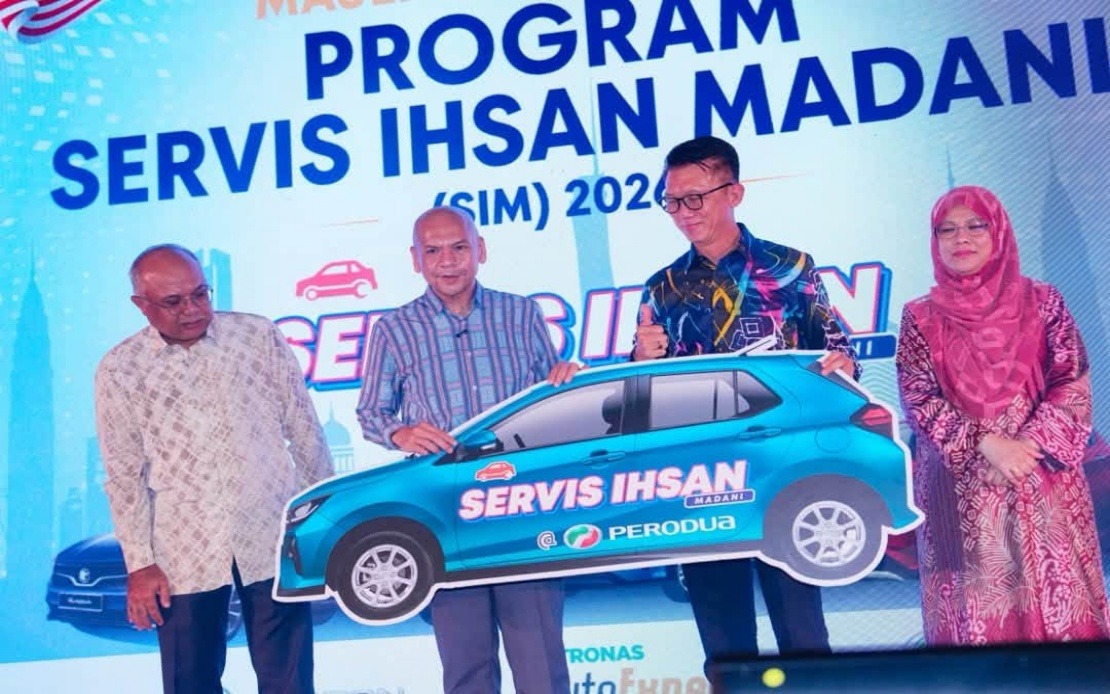
The Ministry of Domestic Trade and Cost of Living has unveiled an expansion of its Subsidy for Individual Maintenance (SIM) programme that will bring cost relief to owners of the country's two locally-made automotive brands. Under the enhanced initiative timed for National Month 2026, motorists visiting authorised Perodua, Proton, and PETRONAS AutoExpert service facilities will receive an RM70 subsidy toward their maintenance expenses, contingent upon meeting stipulated criteria. The move represents a deliberate effort to distribute government support more broadly across Malaysia's automotive ecosystem while reinforcing consumer confidence in regular vehicle upkeep.
According to Minister Datuk Armizan Mohd Ali, the expanded programme encompasses a substantial network of 531 service outlets and workshops distributed throughout the country. This infrastructure comprises 221 Perodua-operated service centres, 186 Proton facilities, and 124 PETRONAS AutoExpert locations, creating widespread accessibility for vehicle owners seeking to participate. The geographic spread ensures that both urban and regional consumers can benefit from the initiative without significant inconvenience, a consideration particularly important for the Malaysian market where service centre concentration varies markedly between metropolitan areas and outlying districts.
Participating consumers can secure their subsidies through a streamlined digital booking mechanism. Vehicle owners are encouraged to use the dedicated applications provided by each service provider—Perodua's own platform, Proton's booking system, and PETRONAS AutoExpert's digital interface—to schedule their maintenance appointments. This technological approach aligns with Malaysia's broader digital transformation agenda and reduces administrative friction, allowing motorists to access benefits with minimal bureaucratic overhead. The shift toward app-based transactions also generates data that helps service providers optimise their scheduling and resource allocation.
The programme sits within the broader Payung RAHMAH MADANI initiative, which frames government subsidies and consumer assistance measures as manifestations of the Malaysia MADANI vision centred on shared prosperity. Minister Armizan characterised the SIM expansion as a collaborative undertaking between the ministry and strategic industry partners, emphasising that such efforts translate national development philosophy into tangible household benefits. This framing suggests that subsidies are not merely fiscal transfers but symbolic commitments to ensuring economic gains reach ordinary Malaysians rather than concentrating among elites.
Beyond the immediate financial relief, the programme serves a secondary objective rooted in vehicle safety and longevity concerns. Officials contend that lower maintenance costs will incentivise car owners to conduct regular servicing, thereby extending vehicle lifespan and reducing accident risks stemming from poor mechanical condition. For Malaysia, where road safety remains a persistent public health challenge and vehicle maintenance standards vary widely, this preventive approach addresses both personal finance and broader societal interests. Well-maintained vehicles consume less fuel, produce fewer emissions, and reduce strain on emergency healthcare systems burdened by traffic-related injuries.
The expansion carries particular significance for Proton and Perodua, which together dominate Malaysia's domestic automotive market. By associating these national champions with government-backed consumer support, the initiative reinforces public perception that locally-made vehicles deserve patronage equivalent to imported alternatives. This symbolic dimension matters considerably in a market where consumers often associate foreign brands with superior quality, a bias that undermines domestic manufacturers' competitiveness despite genuine improvements in recent years. The subsidy programme thus functions partly as a confidence-building mechanism for local industry.
The timing around National Month 2026 reflects a deliberate strategy of linking consumer benefits to patriotic sentiment and national celebration. By launching the initiative during August, when Malaysia commemorates independence and national identity, the government positions economic assistance as an expression of national solidarity. This calendar placement compounds the reach of the SIM expansion, as heightened media attention during National Month amplifies awareness among vehicle owners who might otherwise remain unaware of available subsidies. The psychological association between nationalism and material benefit reinforces citizen-state relationships.
Supporting the broader National Month campaign, the Ministry of Domestic Trade and Cost of Living has coordinated multiple concurrent initiatives. The National Month RAHMAH MADANI Sales Programme offers discounted goods through participating retailers, while cultural competitions including the Batik Hues Exploration Competition and Patriotic Challenge encourage community participation. These parallel initiatives suggest a holistic approach to economic stimulus that addresses maintenance, consumer goods, and cultural expression simultaneously, creating multiplicative effects across household spending patterns.
TikTok Shop Malaysia is contributing to the coordinated effort through the Jualan Ihsan RAHMAH 9.9 online sale scheduled for September 9, which will feature discounts between 10 and 30 per cent on essential commodities. Prime Minister Datuk Seri Anwar Ibrahim previously announced this sales event as a Malaysia Day 2026 celebration component, with explicit government backing designed to extend programme reach beyond automotive sectors into broader household consumption. The involvement of major e-commerce platforms indicates that such initiatives now require private sector participation to achieve meaningful scale, reflecting Malaysia's increasingly digitalised retail landscape.
The coordination across multiple ministries, government agencies, and commercial partners underscores the complexity of modern consumer subsidy programmes. Unlike earlier initiatives that operated within single sectors or involved limited stakeholder involvement, contemporary approaches integrate automotive support, retail discounts, and cultural programming into comprehensive packages. This integration potentially creates confusion regarding eligibility criteria and application procedures, raising questions about whether rural and less digitally-literate segments of the population can access benefits despite formal programme objectives of broad-based coverage.
For Malaysian consumers, the practical implications of the expanded SIM programme centre on timing and planning. Motorists seeking to maximise savings should coordinate their maintenance schedules with the National Month 2026 period, booking appointments through service provider applications to secure their RM70 allocations. However, the subsidy's modest size relative to typical servicing costs—averaging RM200 to RM400 for routine maintenance—suggests the initiative represents supplementary rather than transformative relief, particularly for owners of larger vehicles or those requiring specialised repairs.
The programme's effectiveness ultimately hinges on awareness penetration and service provider cooperation. If marketing efforts fail to reach target demographics, or if service centres prove unwilling to process subsidies smoothly, anticipated benefits will remain unrealised. Similarly, terms and conditions not detailed in initial announcements may constrain access more severely than public communications suggest, creating disappointment among consumers who attempt to participate. These implementation uncertainties are common in Malaysian government programmes but rarely receive adequate attention in launch communications.
Looking beyond immediate National Month 2026 campaigns, the SIM expansion signals the government's recognition that vehicle ownership costs constitute significant household budget items for middle-income Malaysians. As inflation pressures persist and purchasing power concerns dominate political discourse, targeted subsidies for maintenance offer politically palatable alternatives to broader wage increases or structural economic reforms. Whether such targeted measures prove sufficient to meaningfully improve living standards, or whether they represent insufficient responses to deeper affordability challenges, remains contested among economists and policy analysts observing Malaysia's cost-of-living trajectory.

