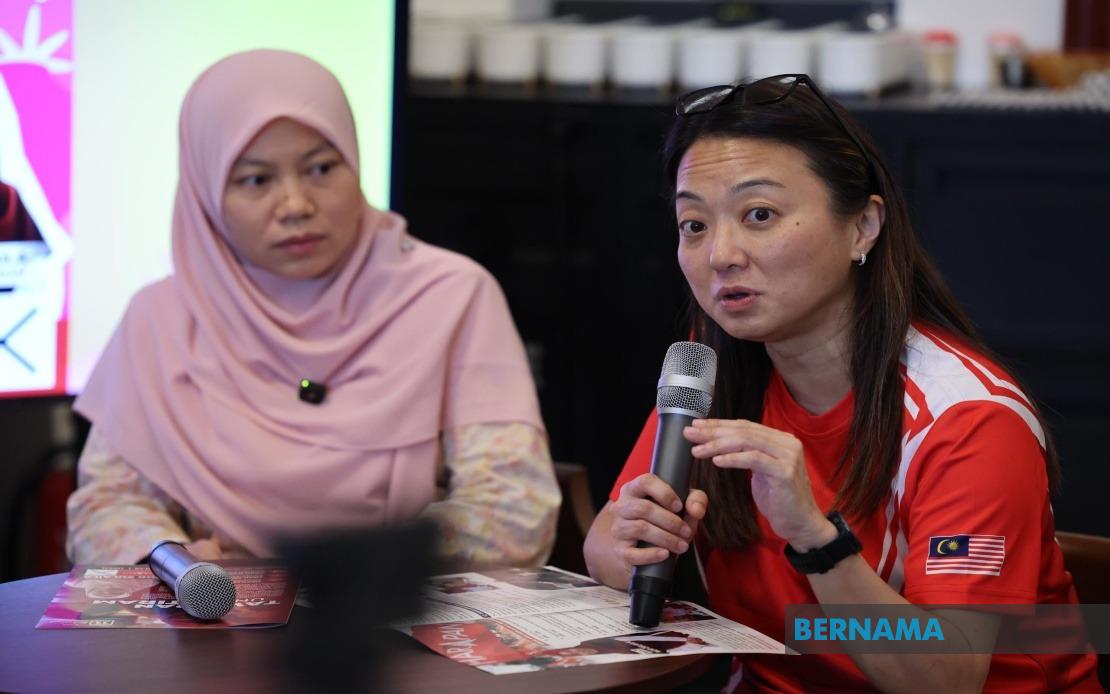
Johor's upcoming state election has drawn scrutiny over manifesto similarities, but DAP deputy secretary-general Hannah Yeoh rejected the notion that overlapping policy commitments amount to unoriginal "copy-paste" documents. Speaking after campaign events in Johor Bahru on July 4, Yeoh, who serves as Minister in the Prime Minister's Department (Federal Territories), argued that convergence in party platforms stems from a shared obligation to address the electorate's genuine concerns.
The criticism had specifically targeted Pakatan Harapan's manifesto for the 16th Johor state election, with observers claiming it resembled Barisan Nasional's policy platform. Rather than viewing this as problematic, Yeoh reframed overlapping commitments as evidence that parties—regardless of political affiliation—are responding to authentic public priorities. When multiple parties pledge action on welfare, housing, or education, she suggested, this reflects the real-world issues affecting Malaysian households, not a failure of political differentiation.
Yeoh's position carries particular weight given the centrality of manifesto debates in Southeast Asian elections, where voter scepticism toward political promises runs high. In Malaysia's context, where manifestos have historically served as crucial touchstones for accountability, her argument challenges voters to evaluate parties not on rhetorical originality but on implementation capacity and track record. The minister noted that welfare provisions, housing solutions, and public services feature prominently in nearly every party's platform precisely because these domains directly impact constituents' daily lives and economic security.
Beyond defending manifesto overlap, Yeoh highlighted DAP's gender representation strategy as a substantive differentiator. The party fielded eight female candidates among its 17 slate for Johor, signalling institutional commitment to women's political participation and leadership pathways. This demographic composition carries significance in a state where women's economic participation remains below national averages in certain sectors, and where legislative representation of female voices has historically lagged behind population demographics.
Yeoh's remarks about women candidates transcended symbolic gestures. She emphasised that female contenders possess capacity to advance to senior executive roles, including the position of Menteri Besar should their parties secure electoral mandates. This assertion carries practical implications for Johor's governance trajectory. She illustrated her point through the example of Nor Zulaila Abd Ghani, the Tiram candidate, who brings twelve years of administrative experience spanning local authority, state, and federal levels. Yeoh characterised Nor Zulaila as a candidate capable of challenging conventional stereotypes whilst bringing substantive expertise to policymaking.
Nor Zulaila's candidacy itself underscores evolving patterns in Malaysia's political recruitment. Her mixed heritage—Malay mother and Chinese father—positions her as embodying the intercommunal dialogue that Yeoh framed as essential for addressing racial anxieties. In a federation where ethnic identity remains politically salient, candidates demonstrating integrated family backgrounds and cross-cultural credibility can function as instruments for shifting communal narratives. Yeoh's invocation of such candidates suggests DAP's strategy extends beyond conventional policy platforms to include demographic and representational arguments that may resonate with urban, ethnically diverse voter bases.
The Tiram contest exemplifies the electoral complexity facing Johor voters. Nor Zulaila confronts a four-cornered battle against candidates from Barisan Nasional, Parti Bersama Malaysia, and Perikatan Nasional. This fragmentation reflects Malaysia's broader political volatility, where traditional two-coalition competition has fractured into multipolar contests. Such configurations complicate voter choice whilst potentially rewarding candidates with strong local roots and constituent service records—precisely the administrative experience profile Yeoh emphasised regarding her party's nominees.
Pakatan Harapan's decision to contest all 56 Johor state seats signals strategic confidence despite the manifesto criticism. The coalition's comprehensive candidacy across constituencies suggests resource allocation aimed at competitive positioning rather than defensive posturing. Early voting scheduled for July 7 and polling day on July 11 will determine whether Yeoh's arguments about shared policy priorities and female candidate viability translate into electoral gains. The compressed campaign timeline—Yeoh's comments came merely days before balloting—meant that manifesto defence required swift, coherent articulation to influence undecided voters.
For Malaysian observers of state-level politics, the Johor election offers a microcosm of contemporary coalition dynamics. Yeoh's framing of manifesto similarities as reflecting legitimate public demands rather than political laziness invites recalibration of how voters evaluate competing parties. If accepted, this logic elevates scrutiny of implementation capacity, institutional track records, and candidate quality above rhetorical novelty. Conversely, sceptics might interpret such reasoning as deflecting substantive differentiation onto demographic representation and heritage narratives.
The broader Southeast Asian context renders this election significant. Johor, as Malaysia's most populous state and an economic powerhouse with substantial manufacturing and port infrastructure, experiences governance challenges—urban congestion, housing affordability, environmental management—shared across the region's tiger economies. How the eventual Johor government addresses these issues whilst managing ethnic plurality and competing coalition pressures will offer analytical insights for observers across Southeast Asia tracking state-level political evolution and governance effectiveness in rapidly urbanising, economically dynamic regions.

