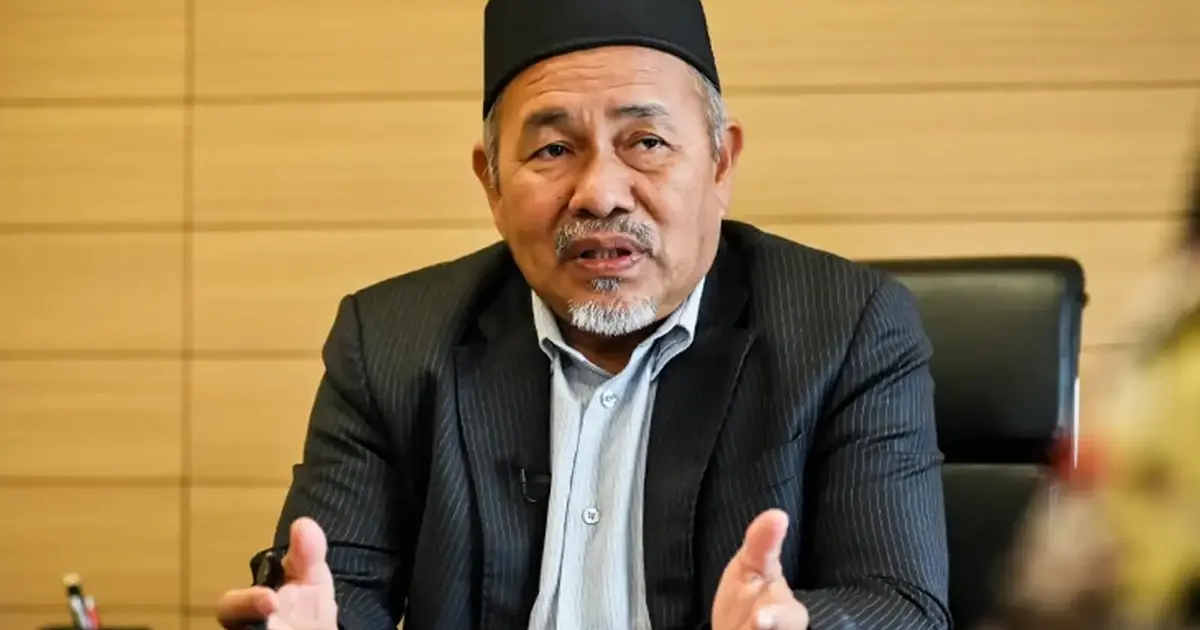
The stability of Malaysia's PAS-Umno coalition hinges fundamentally on mutual sincerity and a unified strategic direction, according to PAS treasurer-general Iskandar Abdul Samad, highlighting the delicate foundations underlying one of the country's most significant contemporary political partnerships. His comments underline the broader challenges facing Malay-majority coalitions as they navigate an increasingly fragmented political landscape where trust and ideological alignment remain contentious issues.
Within the broader context of Malaysian politics, the PAS-Umno relationship represents a critical axis of influence over governance, particularly in matters affecting Malay-Muslim interests and constitutional frameworks. The merger of these two traditionally competing entities has reshaped the political terrain considerably, creating both opportunities for consolidated power and vulnerabilities to internal friction. Iskandar's intervention suggests that beneath surface-level cooperation, concerns about cohesion persist among party leadership, prompting explicit affirmations of commitment.
The treasurer-general's emphasis on sincerity carries particular weight given historical tensions between PAS and Umno spanning decades. These parties have alternated between fierce rivalry and pragmatic cooperation, often driven by electoral calculations rather than ideological convergence. The current arrangement, therefore, requires constant reinforcement through demonstrated commitment rather than assuming goodwill will sustain the relationship automatically. This recognition reflects mature political assessment that coalition partnerships demand active maintenance.
Iskandar's insistence on clear vision signals the need for both parties to articulate complementary long-term objectives that extend beyond immediate electoral advantage. Without shared understanding of where the coalition intends to lead the country—whether regarding economic policy, constitutional interpretation, or social governance—individual party interests risk pulling in divergent directions. This becomes particularly acute when differing constituencies within each party harbour competing priorities.
The caution directed at Bersatu reveals apprehension about external actors seeking to destabilise the arrangement. As a third party within the broader government coalition, Bersatu occupies an ambiguous position, potentially benefiting from PAS-Umno discord if it creates opportunities for repositioning or increased influence. Iskandar's public warning thus serves dual purposes: deterring any such interference whilst signalling to coalition partners that vigilance against divisive forces remains necessary.
For Malaysian readers observing coalition dynamics, Iskandar's remarks illuminate the constant negotiation required within multi-party governments. The PAS-Umno partnership demonstrates how formal alliances must be continually reaffirmed through both symbolic statements and substantive policy coordination. Without such active engagement, coalition relationships deteriorate rapidly, particularly when partner parties retain distinct power bases and ideological constituencies.
The treasurer-general's comments also reflect awareness that scepticism about the PAS-Umno alignment exists within both parties' grassroots levels. Traditional Umno members harbour reservations about closer ties to PAS's more explicitly Islamic orientation, whilst PAS supporters question whether cooperation compromises their party's independent identity. Leadership must therefore consistently convince membership that the partnership serves respective party interests whilst advancing broader national governance.
Regionally, the PAS-Umno configuration carries implications beyond Malaysia's borders. Other Southeast Asian nations with mixed religious and ethnic demographics observe Malaysian coalition arrangements closely, recognising that successful integration of Islamic parties within secular constitutional frameworks offers instructive lessons. The stability of this partnership consequently contributes to broader regional political stability.
Iskandar's intervention occurs against a backdrop of broader Malaysian political volatility, where government coalitions have shifted dramatically over recent years. Each reconfiguration carries economic and policy consequences affecting citizens directly. The implicit argument in his remarks suggests that stability—achieved through sincere commitment and unified vision—provides the platform necessary for competent governance and policy implementation that benefits constituencies across the country.
Looking forward, maintaining the PAS-Umno relationship will require both parties to resist temptations toward opportunistic defection when external alternatives present themselves. The treasurer-general's emphasis on sincerity and vision essentially appeals for strategic patience, recognising that coalition stability produces longer-term benefits exceeding those derivable from short-term competitive manoeuvring. Whether grassroots membership across both parties ultimately accepts this argument will substantially influence whether the partnership achieves the durability that contemporary Malaysian governance arguably requires.

