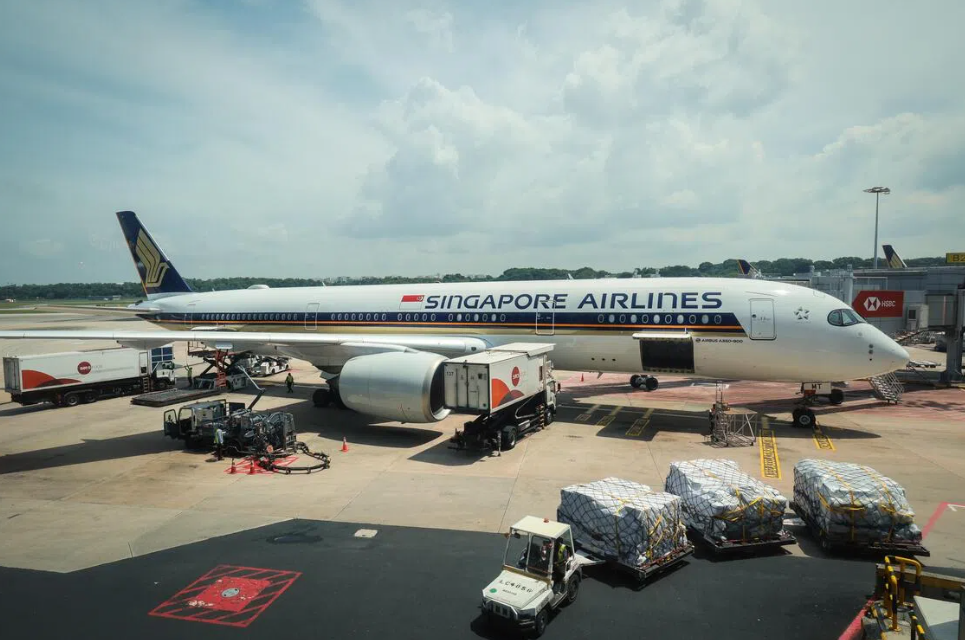
Singapore Airlines' flagship ultra-long-range service to New York encountered an unexpected technical setback on August 12 when flight SQ22 turned around and returned to Changi Airport just hours after departure. The incident, which unfolded in the early morning hours of August 13, disrupted one of the aviation industry's most ambitious commercial routes, though the airline's swift response and passenger care protocols appear to have mitigated the worst of the inconvenience.
The Airbus A350-900 aircraft, which had lifted off at 11.35pm bound for Newark in New Jersey, came back to Singapore at 3.06am on August 13 following what an SIA spokesperson described as an unspecified technical issue. The airline declined to publicly elaborate on the nature of the fault, citing only that the problem warranted the aircraft being towed to a remote maintenance bay rather than returning to the terminal under its own power. This precautionary measure underscores the seriousness with which the carrier treated the situation, prioritising a thorough assessment and repair over minimising operational disruption.
The SQ22 route represents one of global aviation's most remarkable achievements in distance and endurance. With a typical flight duration exceeding 18 hours and covering approximately 16,700 kilometres non-stop, the Singapore-Newark service ranks among the longest commercial flights operated anywhere in the world. For regional aviation professionals and frequent long-distance travellers, disruptions to such routes carry particular significance given the extraordinary fuel consumption, crew scheduling complexity, and passenger logistics involved in their operation. The aircraft's technological sophistication—the A350-900 being one of the most advanced narrowbody jets in service—means that even minor technical anomalies can trigger rigorous safety protocols.
The incident forced SIA to organise the orderly disembarkation of all 133 passengers and 17 crew members via shuttle buses, a process that, while standard procedure, inevitably created cascading logistical challenges. The airline provided food vouchers to compensate those waiting in the terminal, acknowledging the extended delay and uncertainty they faced. More significantly, the original flight crew could not continue to New York because their accumulated flight hours—including the aborted first attempt—would have exceeded regulatory limits set by aviation authorities to prevent fatigue-related incidents. This intersection of safety regulations with operational contingency speaks to the intricate regulatory framework that governs ultra-long-range operations.
A replacement aircraft was prepared and departed Changi at 5.41am on August 13, successfully reaching Newark at 12.15pm local time. The decision to deploy a fresh aircraft rather than attempt repairs and continue with the same one reflects a risk-management approach increasingly common among major carriers, particularly on premium long-haul services where customer expectations and safety standards are highest. While this strategy imposes significant costs on the airline—effectively running two aircraft for a single revenue flight—it demonstrates corporate commitment to reliability and safety over short-term economics.
Passengers who experienced the disruption received individualized assistance, including rebooking on connecting flights where necessary. The airline's communication strategy, however, attracted some criticism from those affected. One passenger who posted about the experience on Reddit noted that while SIA's overall handling of the situation was "incredibly well" executed, the lack of transparency regarding the technical issue left travellers in the dark. The passenger specifically lamented not understanding why the aircraft required towing or why checked baggage retrieval was delayed, concerns that highlight a gap between operational competence and passenger communication in crisis management.
For Malaysian and Southeast Asian readers, this incident offers several lessons about contemporary aviation safety and the mechanics of long-haul operations. SIA's decision to prioritise passenger welfare and aircraft integrity over schedule adherence reflects industry best practices that have become increasingly standardized among premium carriers. The financial and operational costs of such disruptions are substantial, yet the reputational benefits of transparent, professional crisis management often outweigh the immediate inconvenience to passengers.
The broader context of ultra-long-range aviation in Southeast Asia reveals the region's growing role as a hub for ambitious, technologically demanding routes. Singapore's position as a global aviation centre means that disruptions affecting flagship services carry weight beyond immediate passenger impact, potentially affecting connecting traffic throughout the region and regional aviation competitiveness. The fact that SIA maintains multiple A350-900 aircraft capable of deploying as replacements underscores the capital-intensive nature of operating such services and the competitive advantages enjoyed by well-resourced carriers.
The incident also illuminates the complex interplay between modern aircraft reliability and the regulatory oversight that shapes how airlines respond to faults. Contemporary widebody aircraft like the A350 are extraordinarily reliable, yet when technical issues do arise, the stringent safety protocols governing their operation ensure that no compromise is made in the interests of schedule adherence. This uncompromising approach to safety has become standard across leading carriers and contributes to aviation's safety record, which remains exceptional despite the enormous volume of passengers transported globally.
SIA's apology to affected passengers and reiteration that "the safety of our customers and crew is always our top priority" represents standard corporate messaging, yet in this context, the actions taken—diverting the aircraft, arranging a replacement, and assisting passengers with alternative arrangements—validate the statement with concrete operational decisions. As the airline industry continues to expand long-haul services and introduce even more ambitious routes, understanding how carriers manage technical emergencies becomes increasingly important for both passengers and stakeholders across Southeast Asia.

