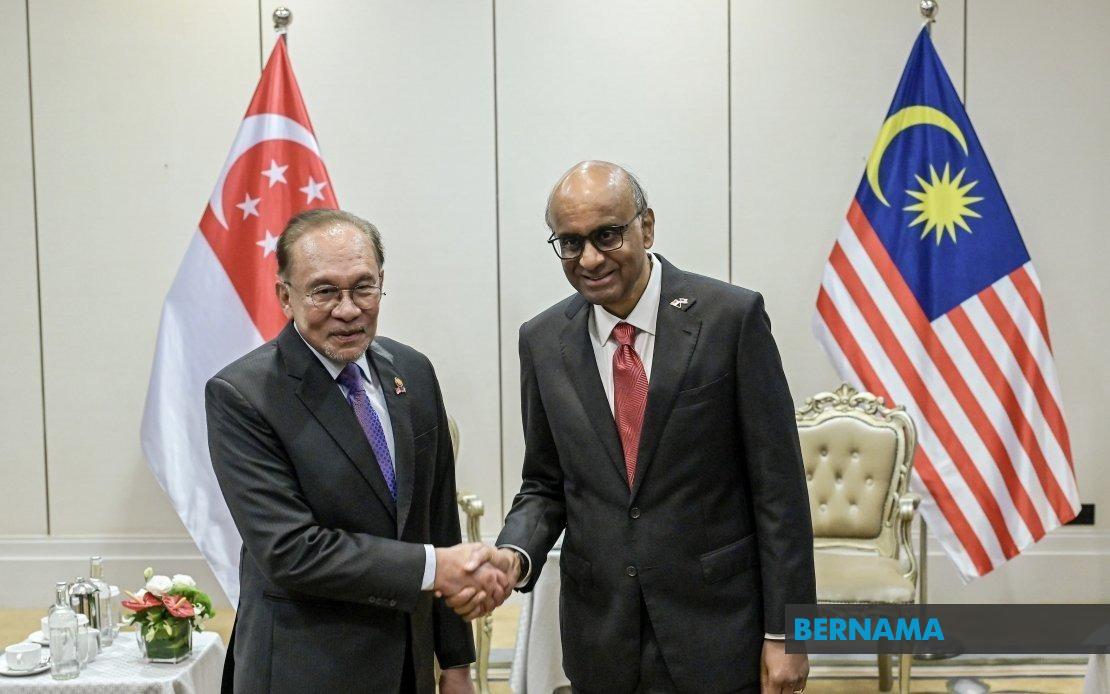
Singapore and Malaysia are moving to deepen their partnership across multiple strategic sectors, reaffirming mutual commitments to collaboration in food security and energy during high-level talks this week. Prime Minister Datuk Seri Anwar Ibrahim held talks with Singaporean President Tharman Shanmugaratnam during the latter's courtesy visit on Monday, with both leaders emphasizing the importance of broadening cooperation in areas that serve the bilateral relationship and wider regional interests.
President Tharman's inaugural state visit to Malaysia, spanning July 12 to 15, represents a significant moment for bilateral engagement at the highest levels of government. The three-day visit included formal ceremonial recognition, with the president and his wife Jane Ittogi Shanmugaratnam receiving a state welcoming ceremony at Istana Negara, where they were received by His Majesty Sultan Ibrahim, King of Malaysia, and Her Majesty Raja Zarith Sofiah, Queen of Malaysia. Such formal protocols underscore the diplomatic weight both nations accord to strengthening their relationship.
During their meeting, the two leaders addressed the pressing challenge of food security, a particularly acute concern for both city-state and nation given regional supply chain vulnerabilities and climate pressures. Energy cooperation also featured prominently in discussions, reflecting the economic interdependence between the two neighbours and the need for stable, reliable energy arrangements that underpin broader regional prosperity. These sectors have become increasingly critical as Southeast Asia navigates post-pandemic economic recovery and transitions toward sustainable development.
Beyond bilateral commercial interests, the leaders engaged substantively on broader geopolitical matters affecting the region. They exchanged perspectives on the evolving situation in West Asia, an area of growing strategic importance to Southeast Asia given trade routes, energy supplies, and security considerations that extend far beyond the immediate region. This dimension of their talks reflects how Malaysia and Singapore, despite their small and medium size respectively, recognize their stake in global stability and their capacity to influence regional positions on major international developments.
A cornerstone of their discussion centred on the rules-based international order and maritime security. Both President Tharman and Prime Minister Anwar underscored the necessity of upholding international law, particularly the United Nations Convention on the Law of the Sea, which provides the legal framework governing maritime disputes and commerce. The explicit reaffirmation of UNCLOS reflects shared concern about protecting freedom of navigation through crucial waterways that both economies depend upon for trade and growth. These principles carry particular resonance in Southeast Asia, where maritime boundary questions and shipping corridors remain sensitive issues.
President Tharman's engagements extended beyond the federal capital to include state-level officials, signalling an intent to broaden the relationship across different governance levels. On Tuesday, the president met with the Sultan of Selangor, Sultan Sharafuddin Idris Shah, and held discussions with Selangor Menteri Besar Datuk Seri Amirudin Shari. These Selangor-level talks opened avenues for potential collaboration that reflect how bilateral relationships increasingly operate through multiple channels and jurisdictions, particularly given Selangor's economic prominence and strategic location.
The agenda discussed in Selangor demonstrated the breadth of bilateral ambitions beyond traditional diplomatic concerns. Technical and vocational education emerged as a collaboration area, addressing workforce development needs across both economies as they compete for skills and innovation in a rapidly changing regional economy. Climate adaptation and flood mitigation also featured, reflecting shared vulnerability to extreme weather phenomena that increasingly affect both nations. The capacity to exchange expertise, technology, and best practices in these domains could yield tangible benefits for populations on both sides of the causeway.
The potential growth of start-ups and innovation ecosystems represents another forward-looking dimension of expanded cooperation. Singapore's maturity as a financial hub and innovation centre, combined with Malaysia's larger market and entrepreneurial dynamism, creates complementary advantages. Fostering closer connections between tech entrepreneurs, venture capital providers, and regulatory frameworks in both countries could unlock economic opportunities and position the region more competitively against global innovation centres. President Tharman's welcome of enhanced exchanges between Singapore and Selangor in this sphere indicates recognition of Selangor's emerging role as an innovation hub within Malaysia.
These discussions occur against a backdrop of historical complexity in Singapore-Malaysia relations. The two nations, having shared a common history before Singapore's separation in 1965, have navigated periods of tension alongside considerable cooperation. Contemporary engagement at this level of formality and substantive depth suggests both governments see strategic value in projecting stability and deepening integration across sectors where mutual benefit is clear. For the broader region, harmonious and deepening Singapore-Malaysia relations provide a stabilizing foundation, as these two economically advanced neighbours anchor regional prosperity and security frameworks.
The economic implications of enhanced cooperation carry weight for the wider region. Singapore's role as a financial and trading hub depends on strong hinterland relationships, particularly with Malaysia. Malaysia, conversely, benefits from access to Singapore's capital, expertise, and global networks. Deeper linkages in food security and energy strengthen regional resilience against external shocks and supply disruptions. The emphasis on maritime law and freedom of navigation reflects shared interests in maintaining open, predictable trade routes essential to Southeast Asian prosperity.
For Malaysian policymakers, the visit provides momentum to advance specific sectoral initiatives while strengthening the broader relationship. The explicit focus on food security matters deeply to Malaysia's long-term development, as agricultural self-sufficiency and supply chain security shape national resilience. Energy cooperation, whether through traditional sources or renewable transitions, directly impacts competitiveness and economic growth. Meanwhile, investments in technical education and start-up ecosystems address medium-term human capital and innovation challenges critical to Malaysia's aspirations as an upper-middle-income nation.
Looking forward, the commitments articulated during this visit require translation into concrete mechanisms, funding arrangements, and institutional frameworks that translate diplomatic pledges into tangible outcomes. The breadth of areas covered—from traditional concerns like maritime law to emerging issues like start-up ecosystems—suggests both governments recognize that modern bilateral relationships must address diverse challenges simultaneously. President Tharman's inaugural state visit thus marks not merely a ceremonial occasion but a substantive reset in bilateral engagement, with implications extending across economic, security, and developmental dimensions that matter profoundly for both nations and the region they help anchor.

