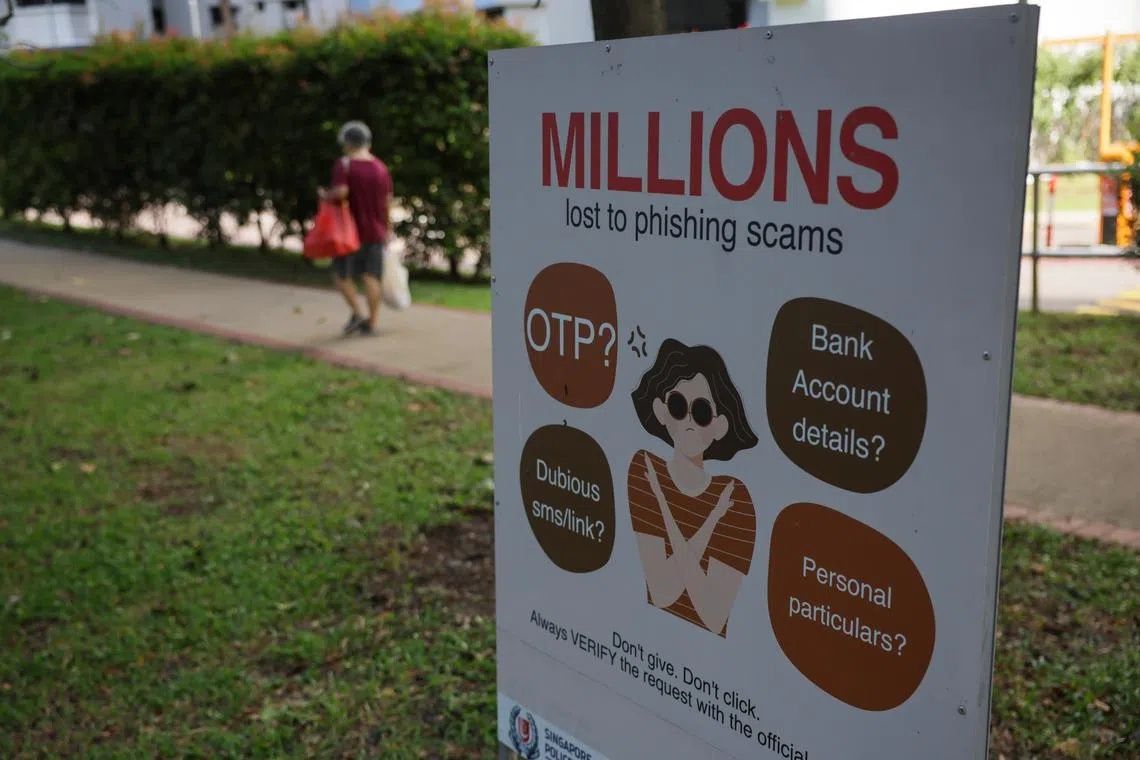
Singapore's police force has intensified its crackdown on organised scam networks, with a major two-week enforcement operation concluding July 1 resulting in the investigation of 230 individuals suspected of orchestrating or enabling fraud schemes that have cost victims approximately S$9 million. The suspects range in age from 16 to 77, with the youth's involvement underscoring a concerning trend of younger citizens being drawn into criminal syndicates that exploit their technological familiarity and lower criminal thresholds.
Among the 230 individuals under investigation—comprising 159 men and 71 women—authorities suspect they played varying roles within sophisticated scam networks. Some are believed to have actively orchestrated the fraudulent schemes themselves, whilst others allegedly functioned as money mules, the operational backbone of scam syndicates that launder illicit proceeds and provide crucial financial infrastructure. The Commercial Affairs Department and seven police land divisions collaborated on the operation between June 18 and July 1, demonstrating the resource-intensive nature of combating this growing threat.
The breadth of fraud schemes uncovered during the operation reveals how scammers have diversified their tactics to exploit different victim segments. Investigators identified involvement in more than 713 separate incidents spanning e-commerce fraud, where victims are deceived on online shopping platforms; friend impersonation scams, which exploit social trust by spoofing known contacts; job scams targeting vulnerable employment seekers; government official impersonation schemes designed to create false authority; investment scams promising unrealistic returns; and rental scams involving property fraudsters. This diversification makes detection increasingly difficult for both law enforcement and the public.
The charges under investigation carry substantial penalties designed to deter participation in scam ecosystems. Those convicted of cheating face imprisonment of up to a decade and financial penalties, whilst money laundering convictions carry sentences up to 10 years, fines reaching S$500,000, or both. Operating unlicensed payment services—a critical component of money laundering infrastructure—attracts fines up to S$125,000 and three years' imprisonment. For scammers and syndicate leaders, conviction triggers mandatory caning of six to 24 strokes, a uniquely severe measure reflecting Singapore's zero-tolerance stance.
Money mules, often unaware of the full criminal context of their involvement or incentivised by immediate cash rewards, face somewhat lighter but still significant penalties of up to 12 strokes of the cane. However, authorities have implemented additional sanctions targeting the structural enablement of scam operations. Individuals convicted of mule-related offences may face restrictions on banking services and mobile line subscriptions, effectively cutting them off from participating in future fraud schemes whilst their criminal convictions remain active.
The timing of this operation comes as Singapore reports progress in its broader anti-scam efforts. Official statistics released in February 2026 indicate that reported scam cases declined substantially from over 50,000 in 2024 to 37,308 in 2025—a 25 percent reduction demonstrating the cumulative impact of enforcement and public awareness campaigns. Financial losses similarly decreased from S$1.1 billion in 2024 to S$913.1 million in 2025, suggesting both reduced scam volumes and potentially improved victim education about high-risk schemes.
Within the evolving scam landscape, e-commerce fraud has emerged as the dominant threat category, with 6,703 reported cases in 2025 resulting in S$16.7 million in losses. This prevalence reflects the massive growth of online shopping across Southeast Asia and scammers' ability to exploit the relative anonymity and complexity of digital transactions. The dominance of e-commerce schemes presents particular challenges for Malaysian readers, as cross-border e-commerce fraud frequently involves regional perpetrators operating across multiple jurisdictions.
The operation's broad geographic and departmental coordination demonstrates Singapore's institutional approach to dismantling scam networks rather than pursuing isolated arrests. By engaging both centralised commercial crime specialists and frontline land division officers, authorities improve their capacity to identify and pursue complex networks with multiple operational nodes. This mirrors regional trends toward enhanced police cooperation on transnational financial crime, an increasingly critical capability as scam syndicates exploit porous borders and weak cross-jurisdictional enforcement coordination.
For Malaysian audiences, this Singapore operation underscores the persistent regional challenge of scam infrastructure that frequently targets or involves Malaysian victims and perpetrators. The prominence of money mules in these arrests reflects how scam networks recruit economically vulnerable individuals from across Southeast Asia, promising quick cash in exchange for banking services or SIM card provision. Malaysian nationals have featured prominently in both victim statistics and accused perpetrator lists in regional scam investigations, making this enforcement action relevant to domestic security concerns.
The availability of support resources reflects Singapore's comprehensive anti-scam framework. The ScamShield helpline operating on 1799 and the online reporting portal at www.police.gov.sg/i-witness provide public reporting mechanisms, whilst www.scamshield.gov.sg serves as an information repository. Such infrastructure, coupled with mandatory reporting by financial institutions and telecommunications providers, creates an ecosystem designed to disrupt scam operations through multiple intervention points rather than relying solely on post-fraud criminal prosecution.
The investigation's preliminary stage suggests that charges and prosecutions will follow as police complete their inquiries into the 230 suspects. Given Singapore's consistent track record of securing convictions in fraud cases and the mandatory caning provisions for serious scammers, these individuals face substantial legal consequences. The operation also likely generated intelligence on higher-level syndicate managers and international networks, intelligence that may inform future bilateral enforcement cooperation with Malaysian and other regional authorities investigating connected criminal enterprises.

