A 49-year-old woman was arrested on August 6 in Singapore for her alleged involvement in promoting Fun Coffee, an investment platform that police have identified as operating a multi-level marketing and pyramid selling scheme. The arrest, announced by authorities on August 8, marks Singapore's latest enforcement action against a cryptocurrency-enabled investment fraud that has already victimised hundreds of people across the region and siphoned tens of millions of dollars.
According to police statements, the suspect actively recruited participants into the scheme and helped coordinate the platform's operations within Singapore. Her arrest falls under the Multi-Level Marketing and Pyramid Selling (Prohibition) Act, legislation designed to combat fraudulent income schemes. If prosecuted and convicted, she could face up to five years in prison, a fine of up to $200,000, or both, underscoring the seriousness with which Singapore treats such offences.
Fun Coffee, nominally registered in Phu Quoc, Vietnam, operates through a deceptively simple investment mechanism that exploits users' familiarity with cryptocurrency. Potential investors must download an application, then transfer Tether (USDT)—a stablecoin pegged to the US dollar—into wallet addresses generated through the app. The scheme's appeal lies in promises of exceptionally high returns combined with recruitment incentives, a classic pyramid structure designed to reward early participants while making profit increasingly difficult for later joiners.
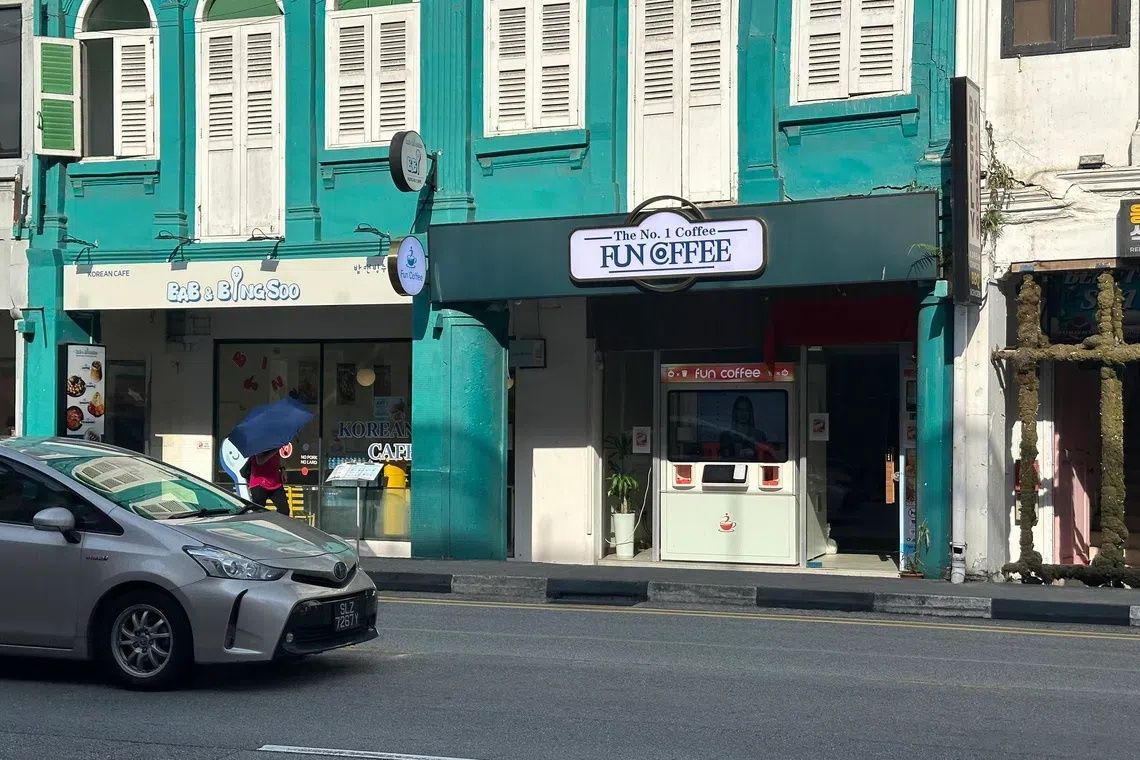
The operational mechanics reveal how modern fraud leverages digital infrastructure. Rather than operating from a traditional financial office, Fun Coffee positions itself as a "lifestyle brand combining coffee, wellness and digital innovation into a community experience." When The Straits Times visited the company's registered address at 202 Jalan Besar in Singapore on August 7, reporters found only a coffee vending machine at the entrance, fitted with handwritten instructions directing customers to scan a QR code for payment. This minimalist physical presence—a common characteristic of digital-first scams—allows operators to maintain plausible deniability while conducting the actual business entirely through apps and cryptocurrency transfers.
The scheme's reach extends well beyond Singapore, signalling the interconnected nature of transnational fraud networks. Authorities in Hong Kong and Macau have arrested eight individuals collectively implicated in the Fun Coffee operation during roughly the same period. In those jurisdictions alone, approximately 200 victims have reported losses totalling nearly HK$100 million (approximately S$16.3 million). A single victim in Singapore lost around $400,000 and remains unable to recover any funds, illustrating the devastating personal impact on those who invested life savings into what appeared to be a legitimate venture.
Fun Coffee's claims about its scale and legitimacy—assertions of over US$1 billion in assets and a team exceeding 5,000 members—bear no scrutiny once participants attempt withdrawals. The inability of users to access their funds through the application represents the moment the fraud structure collapses, as there are insufficient legitimate assets to satisfy redemption requests. This pattern is entirely consistent with pyramid schemes, which mathematically require constant recruitment of new members to generate returns for existing participants; once recruitment slows, the system becomes insolvent.
The timing of Fun Coffee's entry into Singapore, sometime in 2025, coincides with the region's growing adoption of cryptocurrency and digital payment systems. Southeast Asia presents an attractive target for such operations because of rising fintech literacy among younger demographics, substantial wealth accumulation in urban areas, and relative regulatory gaps compared to more mature financial markets. Singapore's sophisticated investors may paradoxically be more vulnerable to schemes that exploit technical jargon and incorporate legitimate-sounding wellness and lifestyle branding alongside financial promises.
Police warnings highlight the specific red flags that distinguish legitimate investment platforms from fraudulent ones. Requests for payment via personal PayNow QR codes, personal mobile numbers, or overseas bank accounts should immediately alert potential investors to danger. Fun Coffee's operational model, which relies on such informal payment methods rather than regulated financial channels, exemplifies deliberately chosen infrastructure designed to avoid regulatory scrutiny and facilitate rapid fund transfers beyond authorities' reach.
The regulatory response from Singapore authorities reflects growing awareness that pyramid and multi-level marketing schemes have adapted to cryptocurrency environments more rapidly than enforcement mechanisms. The Multi-Level Marketing and Pyramid Selling (Prohibition) Act provides legal tools, but requires vigilant investigation and timely arrests to disrupt operations before they expand further. The involvement of Hong Kong and Macau authorities suggests emerging regional coordination, though the scheme's ability to operate across multiple jurisdictions simultaneously demonstrates the challenge faced by individual regulators.
For Malaysian investors and consumers, the Fun Coffee case offers critical lessons about the characteristics of investment fraud in the digital age. The combination of unrealistic return promises, recruitment incentives, cryptocurrency infrastructure, lifestyle branding, and minimal physical footprints represents a fraud blueprint increasingly common across Southeast Asia. The regional spread of Fun Coffee victims, from Singapore to Hong Kong to Macau, illustrates how such schemes exploit the seamless nature of digital finance and cryptocurrency transfers to operate across borders far more easily than traditional frauds.
The broader implication for Southeast Asia is that regulator coordination must accelerate. As criminals exploit the asynchronous speed of enforcement across different jurisdictions, authorities need mechanisms for rapid information sharing, cross-border investigations, and coordinated arrests. The scheme's growth in Singapore despite warnings from authorities in nearby jurisdictions suggests that information about emerging frauds does not flow sufficiently quickly or effectively through regional channels.
For potential investors throughout Malaysia and Southeast Asia, the central lesson remains that investment promises guaranteeing high returns with minimal risk, coupled with financial incentives for recruitment, represent the fundamental characteristics of unsustainable schemes. Cryptocurrency's technical complexity and the genuine innovation occurring in fintech can obscure the basic economic reality that schemes promising effortless wealth transfer from late to early participants inevitably collapse, devastating those who joined believing they had discovered a legitimate opportunity.

