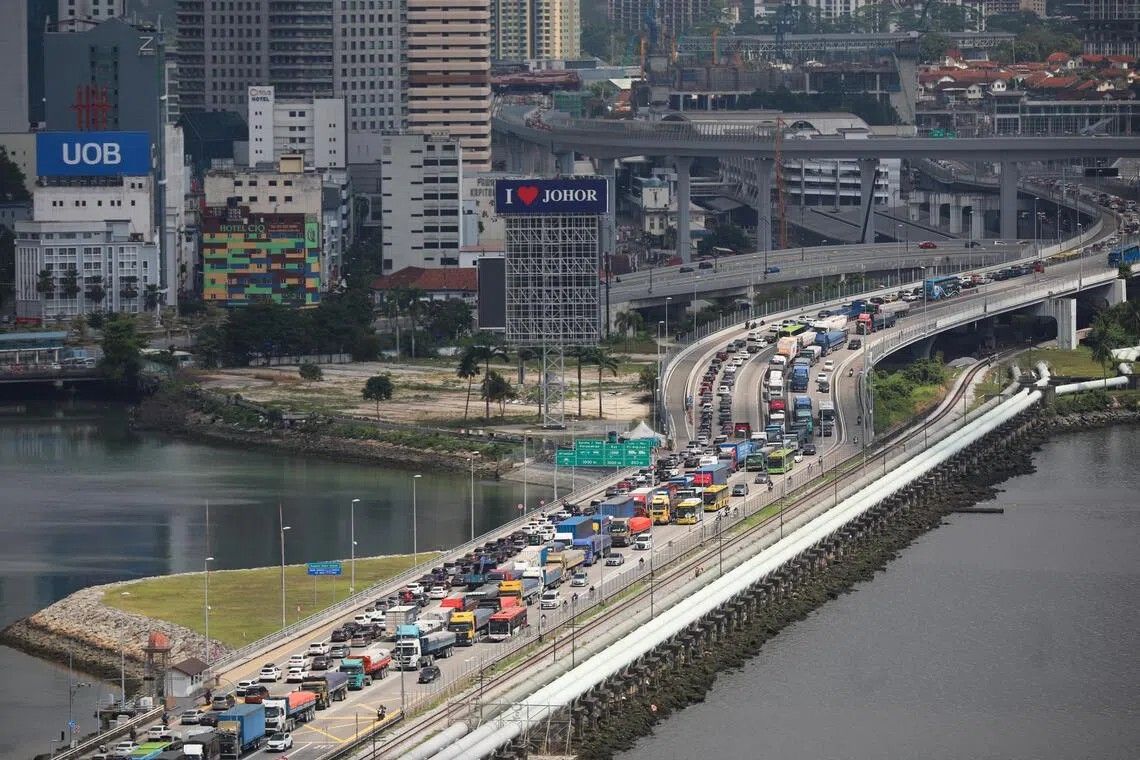
Singapore's Immigration and Checkpoints Authority is preparing for a major influx of travellers crossing into the city-state over the National Day long weekend from August 7 to 10, with officials explicitly warning of "very heavy traffic" at both the Woodlands and Tuas land checkpoints. The alert, issued on August 3, reflects the authority's expectation based on recent patterns of cross-border movement and the drawing power of a four-day public holiday break for regional travellers.
The scale of potential congestion becomes evident when examining recent traffic data from comparable holiday periods. Between May 26 and June 28, spanning the Hari Raya Haji, Vesak Day weekend and June school holidays, more than 18 million travellers transited the two checkpoints. The volume peaked on June 19, when 598,000 people cleared immigration in a single day, surpassing the previous record of 589,000 set on December 19, 2025. These figures underscore how significant cross-border traffic has become during extended holidays, particularly for Malaysian residents commuting to Singapore for work, shopping, or leisure.
The practical consequences of this volume materialise during peak hours, when vehicle queues from Malaysia create backups that translate into waiting times exceeding three hours for immigration clearance alone. This delay extends beyond the checkpoint itself, with congestion spilling back across the Causeway and Second Link, affecting travel times for hours before and after peak periods. For working professionals and families planning day trips or short visits, such delays can substantially impact itineraries and require careful timing decisions.
The Immigration and Checkpoints Authority has reinforced security screening procedures at all checkpoints since February 28 in response to what officials describe as a heightened global security environment, particularly following recent developments in the Middle East. While these measures are essential for national security, they inevitably add processing time at immigration counters, compounding the congestion challenge during high-volume periods. Authorities must balance thoroughness with efficiency, a tension that becomes acute when millions of travellers converge within a narrow timeframe.
To manage the anticipated rush, ICA has recommended that travellers plan journeys well in advance and shift their crossing times to non-peak periods, specifically early mornings and late evenings when checkpoint capacity is underutilised. The authority has also advised commuters to monitor real-time traffic conditions at both checkpoints before departing, enabling informed decisions about timing and route selection. Such proactive planning can meaningfully reduce wait times, though it requires flexibility that not all travellers possess, particularly those working standard office hours or managing family schedules.
Digital solutions offer another avenue for faster processing. The MyICA mobile application generates QR codes that enable expedited immigration clearance, eliminating the need for manual document verification at certain processing lanes. This technology represents a significant operational improvement for high-volume periods. Motorcycle riders and pillion passengers can take advantage of facial recognition systems deployed under ICA's New Clearance Concept, which has improved clearance rates by more than 35 per cent, equivalent to an additional 7,600 travellers per hour during departure peak periods compared with pre-pandemic levels in 2019. These figures illustrate how technological innovation can substantially enhance checkpoint efficiency.
Behavioural compliance remains equally critical to managing congestion. The Immigration and Checkpoints Authority has explicitly appealed to motorists to cooperate with officers, maintain strict lane discipline, and follow all traffic regulations. Queue-cutting, a recurring problem during peak periods, disrupts the orderly flow of vehicles and cascades delays across the entire checkpoint operation. Those caught engaging in queue-cutting face enforcement action requiring them to exit the queue and rejoin at the back of the line, an outcome that defeats the purpose of cutting and extends their own waiting time. Such countermeasures encourage compliance through direct consequence.
Recent enforcement records highlight the enforcement challenges authorities face during high-traffic periods. During the Hari Raya Haji, Vesak Day weekend and June school holidays, 52 motorists were apprehended for traffic-related offences and dangerous road behaviour. Responses included referrals to Traffic Police for investigation and prosecution, mandatory queue re-entry, and outright bans from entering Singapore. These penalties serve both as deterrents and as means of maintaining checkpoint discipline, though their application requires substantial officer resources and coordination.
For Malaysian commuters and travellers, the August 7 to 10 period presents a scheduling dilemma. Those with flexibility should consider postponing non-essential trips or adjusting travel times to avoid the congestion window. Regulars on the Causeway and Second Link should anticipate delays and budget extra time into their journey planning. Businesses relying on cross-border logistics should similarly adjust delivery schedules and staffing arrangements to account for potential delays in personnel crossing.
The broader context reflects Singapore's role as a regional economic and leisure hub where cross-border mobility has become routine for millions. Malaysia's proximity and the integration of labour and consumer markets mean that public holidays often trigger mass movement in both directions. While such mobility has positive economic and social dimensions, managing its infrastructure implications during concentrated periods remains an ongoing challenge for transport and immigration authorities on both sides of the causeway.
As the National Day long weekend approaches, preparation rather than last-minute travel offers the most effective strategy. The Immigration and Checkpoints Authority's advance warnings provide opportunity for prospective travellers to adjust plans, access real-time information, and utilise available digital tools. For those who cannot avoid travelling during peak hours, patience and compliance with checkpoint procedures represent the most reliable paths through what will undoubtedly be congested crossings.

