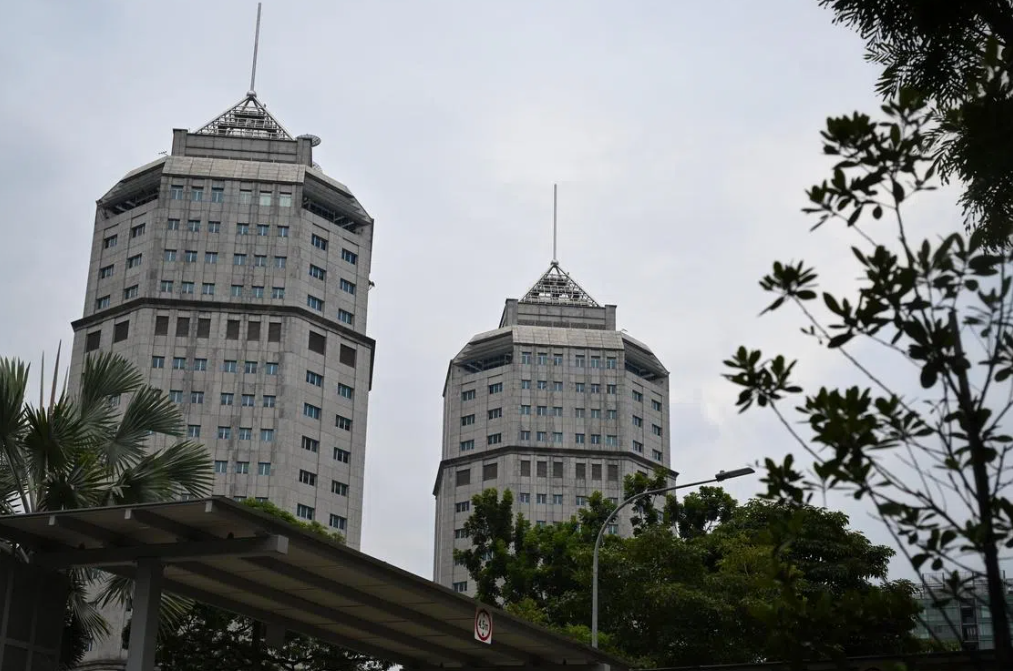
Singapore's Internal Security Department has terminated the work permits of two Bangladeshi nationals and arranged their deportation following investigations into extremist content they posted on social media platforms. Tayani Md Risad, 25, and Islam Sahedul, 37, were repatriated to Bangladesh after being investigated separately in July, according to an ISD spokesperson who spoke to The Straits Times on Friday, July 17.
Risad's case centred on his public expressions of support for Bangladeshi radical Islamist writer Shafiur Rahman Farabi, whose writings have consistently advocated violence targeting secular and atheist commentators. Intelligence files indicate Farabi maintains associations with Hizb ut-Tahrir, a fundamentalist Islamist organisation that Bangladesh's government has formally proscribed. The nature of Risad's digital advocacy raised concerns about the ideological ecosystem within which he operated, even though he was not directly accused of planning violent activities in Singapore.
Sahedul presented a different profile of concern for Singapore's authorities. His social media activity encompassed inflammatory commentary regarding the Israel-Iran geopolitical conflict combined with religious posts that designated Muslims unwilling to live under Islamic governance frameworks as infidels. Such messaging, authorities determined, represented the kind of divisive sectarian rhetoric that could undermine social cohesion in a society where approximately 14 percent of residents are Muslim, alongside Christian, Buddhist, Hindu, and other religious communities.
Crucially, the ISD's assessment concluded that neither man had demonstrated intent to execute terrorist attacks or engaged in terrorism-related activities within Singapore's borders. The agency found no evidence linking them to previous cases of self-radicalised individuals prosecuted under the Internal Security Act. Nevertheless, officials considered their ideological positions fundamentally incompatible with Singapore's foundational commitment to multiculturalism and religious pluralism. The ISD spokeswoman stated that "their extremist and divisive views are inimical to Singapore's multiracial and multi-religious society," explaining the decision to revoke their work status despite the absence of an imminent security threat.
Upon arrival at Hazrat Shahjalal International Airport in Dhaka on July 8, Bangladesh authorities detained both men, confiscating three mobile phones and three passports according to local news reports. Within twenty-four hours, Bangladeshi police brought the pair to court seeking an extended remand period, claiming the men had admitted to involvement with militant organisations while employed in Singapore. Investigators indicated they required additional time to establish the scope of their connections, organisational networks, and any financial flows connected to such groups. During the remand hearing, Risad disclosed that Singapore's detention followed Facebook posts he had created in 2023 discussing Hefazat-e-Islam, another radical Bangladeshi Islamist organisation, and its leadership.
The judicial officer presiding over the remand application made a pointed observation, asking the defendants: "You are remittance warriors. Why did you need to get involved in these matters?" The phrase encapsulates a particular vulnerability within Singapore's migrant worker population—individuals who leave home specifically to earn wages for transmission to impoverished families now face heightened scrutiny when their online activities attract security attention. This dynamic reflects a broader pattern within the city-state's enforcement approach toward foreign labourers, particularly those from South Asia, where economic precarity intersects with ideological vulnerability.
This case arrives within a context of repeated security incidents involving Bangladeshi nationals in Singapore. In 2020, authorities arrested a Bangladeshi construction employee who had become radicalised through exposure to pro-ISIS materials online after working in Singapore since 2017. That individual had purchased foldable knives with the explicit intention of conducting violent attacks, demonstrating how extended residence in Singapore's permissive information environment could facilitate radicalisation trajectories. The incident underscored the ongoing challenge of identifying ideological shifts among transient worker populations before they crystallise into operational intent.
Singapore's security history contains several larger-scale incidents involving Bangladeshi nationals. In 2016, the ISD detained eight radicalised Bangladeshi workers employed in construction and marine sectors who belonged to an underground cell called Islamic State in Bangladesh. These individuals possessed instructional materials covering weaponry and explosives, and had actively recruited other Bangladeshi nationals working in Singapore to expand their clandestine network while accumulating funds to purchase firearms for terrorism campaigns targeting Bangladesh. An additional five Bangladeshi workers discovered with jihadi-related materials during that investigation were deported after clearance. Three years earlier, in 2015, Singapore arrested 27 Bangladeshi construction workers who had formed a jihadist terror cell and contemplated conducting armed jihad abroad, subsequently deporting them after legal proceedings.
The pattern reveals how Singapore's substantial Bangladeshi migrant worker population—concentrated in labour-intensive industries including construction and marine services—has periodically attracted extremist recruitment efforts and self-radicalisation processes. The persistent vulnerability of this demographic stems from multiple reinforcing factors: economic desperation driving overseas employment, limited social integration within Singapore's host society, continued emotional attachment to homeland political dynamics, and ready access through digital platforms to extremist ideological content. Singapore's approach has balanced deportation-based security responses with efforts to disrupt radicalisation vectors before individuals transition from expression to action.
For Malaysian security and immigration officials, the Singapore cases carry relevant implications. Malaysia similarly hosts substantial Bangladeshi migrant populations and maintains comparable concerns regarding radicalisation within transient worker communities. The progression documented across these incidents—from isolated extremist speech to network formation to actual procurement of weapons—suggests the importance of systematic monitoring frameworks that can distinguish ideological expression warranting deportation from activity indicating imminent operational capability. Malaysia's own experiences with recruitment within migrant populations underscore this analytical necessity.
The ISD's decision to revoke work permits based on extremist expression without establishing terrorist planning capability reflects Singapore's threshold for national security intervention. By acting on divisive rhetoric deemed incompatible with multicultural coexistence, rather than requiring proof of operational intent, the city-state prioritises preventing ideological ecosystem development that might subsequently enable recruitment and coordination. Bangladeshi workers and employers throughout Singapore have received a clear signal about acceptable boundaries for online expression, particularly regarding religious and geopolitical matters. The ISD encourages anyone suspecting radicalisation to contact 1800-2626-473, maintaining channels for community intelligence contribution to preventive security efforts.

