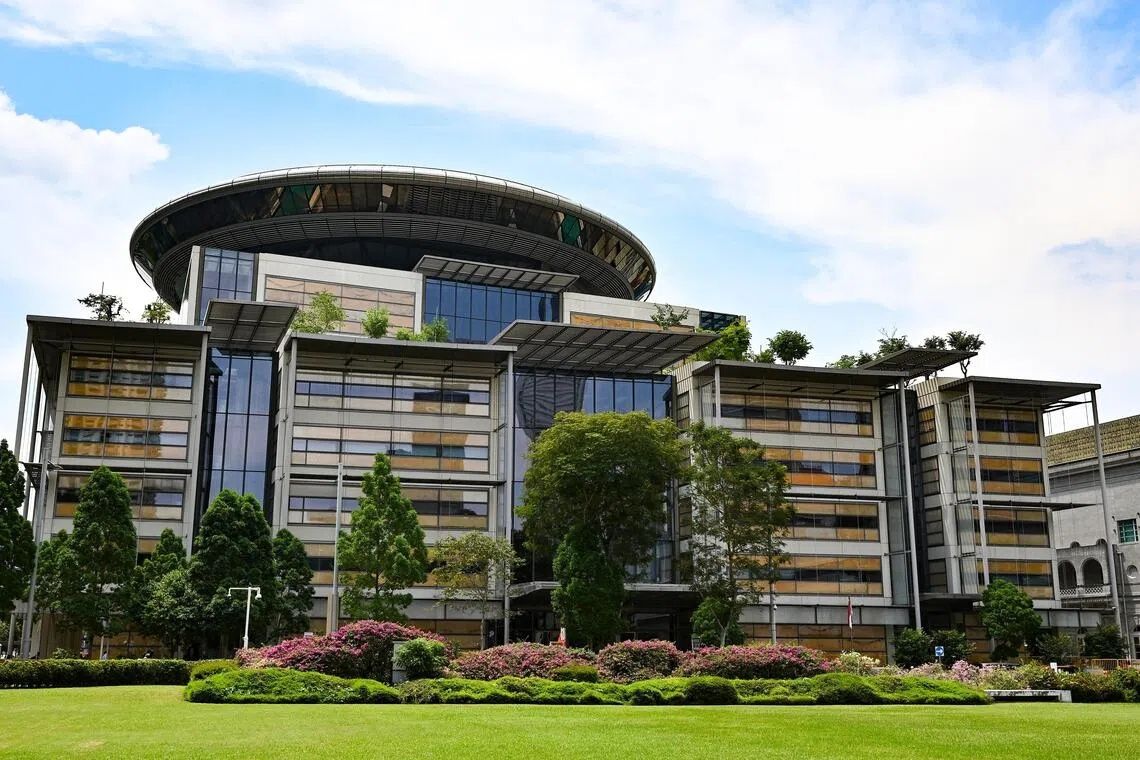
Singapore's Court of Appeal has decisively rejected an appeal by Wang Yunhe, a suspected cybercriminal facing extradition to the United States, challenging the police's seizure of his personal belongings. The three-judge panel, led by Chief Justice Sundaresh Menon, issued written grounds of decision on August 4 declaring that Wang's legal approach was "fundamentally flawed" and that his contentions regarding the unlawfulness of the seizure lacked merit. The judgment represents a significant enforcement victory for Singapore's courts in handling complex international criminal matters and underscores strict adherence to procedural requirements in extradition cases.
Wang, a Chinese national, stands accused of orchestrating a sophisticated cybercriminal enterprise involving the creation and distribution of malware that infected millions of residential computers globally. He was indicted in a Texas court on May 10, 2023, on multiple serious charges including conspiracy to commit computer fraud, wire fraud, and money laundering. American authorities initiated extradition proceedings against Wang following his arrest in Singapore on May 24, 2024, after requesting his transfer and the seizure of evidence and proceeds from his alleged criminal activities. During the arrest, police seized 50 items belonging to Wang, who has remained in remand pending a committal hearing to determine whether he should be surrendered to the United States.
The dispute centred on Wang's attempt to invalidate the seizure of 12 specific items, including bank cards, mobile phones, flash drives, a laptop, and a computer processing unit. Wang contended that the American request for evidence seizure was excessively general and imprecise, failing to provide Singapore authorities with sufficient grounds to identify and lawfully seize the particular items in question. He further argued that investigating officers lacked reasonable suspicion that these items constituted either direct evidence of crimes or proceeds derived from criminal activity. By challenging the seizure, Wang sought to narrow the scope of material available to support his extradition and potentially undermine the strength of the American prosecution's case.
What emerged from the appellate judgment, however, was a critical procedural misstep that undermined Wang's entire legal strategy. Wang had initially filed his application challenging the seizure before a magistrate in proceedings ostensibly related to the Extradition Act. The magistrate heard and dismissed the application, leading Wang to seek permission from a High Court judge to commence judicial review proceedings to overturn the magistrate's decision. When the High Court judge also dismissed his request, Wang appealed to the Court of Appeal, which examined not only the merits of his challenge but the very mechanism through which he had pursued it.
The Court of Appeal identified a fundamental jurisdictional problem that undermined Wang's case from inception. The Extradition Act, the judges noted, contains no statutory provision allowing fugitives to challenge police seizures before a magistrate. The application Wang submitted to the magistrate was in substance a judicial review application seeking to quash the police's seizure, a matter that only the High Court possesses jurisdiction to examine. By routing his challenge through the magistrate, Wang had attempted to pursue a remedy in an inappropriate forum, effectively attempting to circumvent the established procedural framework governing such disputes.
Furthermore, the timing of Wang's application created an additional procedural barrier that was fatal to his case. Judicial review applications challenging police conduct must ordinarily be filed within three months of the relevant action. Wang's seizure occurred on May 24, 2024, yet his application to the magistrate was not filed until February 21, 2025, nearly nine months later. This substantial delay placed him well outside the mandatory three-month window. The judges concluded that by applying to the magistrate, Wang "effectively circumvented this requirement" and thereby forfeited his right to pursue a judicial review challenge on temporal grounds.
The Court of Appeal suggested that both parties may have inadvertently overlooked the magistrate's lack of jurisdiction because Wang's application challenging the seizure had been bundled together with other applications genuinely falling within the magistrate's purview under the Extradition Act. This procedural bundling, while administratively convenient, contributed to the jurisdictional confusion. The court noted that had Wang recognised this jurisdictional distinction, he should have filed a judicial review application directly with the High Court and done so well within the three-month window following the May 2024 seizure.
Beyond procedural deficiencies, the judges also examined whether Wang could have established an arguable case on the merits had he pursued the correct legal pathway. The court concluded he had failed in this regard as well. Wang could not demonstrate that Singapore authorities lacked reasonable suspicion that the 12 seized items constituted evidence or fruits of crime. The broad nature of the American request, which Wang cited as problematic, did not prevent Singapore's police from exercising judgment in identifying materials potentially relevant to the cybercriminal conspiracy in which he is alleged to have played a central role.
The judgment carries significant implications for Malaysia and other Southeast Asian jurisdictions grappling with international extradition and cybercrime enforcement. Singapore's ruling reinforces that procedural compliance cannot be overlooked or circumvented, even in cases involving serious transnational crimes. Fugitives cannot manufacture alternative jurisdictional paths to challenge enforcement actions, and temporal requirements exist for sound reasons—to provide finality and prevent indefinite challenges to investigative conduct. For Malaysian courts and law enforcement, the decision provides persuasive authority supporting similar strict application of procedural safeguards in extradition matters.
The case also illustrates the growing sophistication of transnational cybercrime prosecution and the need for coordinated international responses. Wang's alleged distribution of malware affecting millions of computers worldwide exemplifies how criminal conduct originating from one jurisdiction can cause harm across multiple countries simultaneously. Singapore's willingness to enforce extradition alongside asset seizure reflects recognition that disrupting cybercriminal operations requires both prosecuting individual perpetrators and recovering the instrumentalities and proceeds of their crimes. Regional cooperation mechanisms must function efficiently while respecting fundamental procedural fairness, a balance the Singapore court has carefully maintained.
Wang has now exhausted available avenues of challenge in Singapore's courts. The Court of Appeal's dismissal of his appeal, coupled with his extended period in remand, suggests his extradition to the United States is likely to proceed barring unforeseen developments. The committal hearing will determine whether sufficient evidence exists to support his transfer, a process that Wang's seizure challenges have now failed to obstruct. His case serves as a cautionary tale regarding the importance of timely, properly pleaded legal challenges and the inability of sophisticated procedure to overcome jurisdictional and temporal barriers, regardless of the defendant's resources or legal representation quality.

