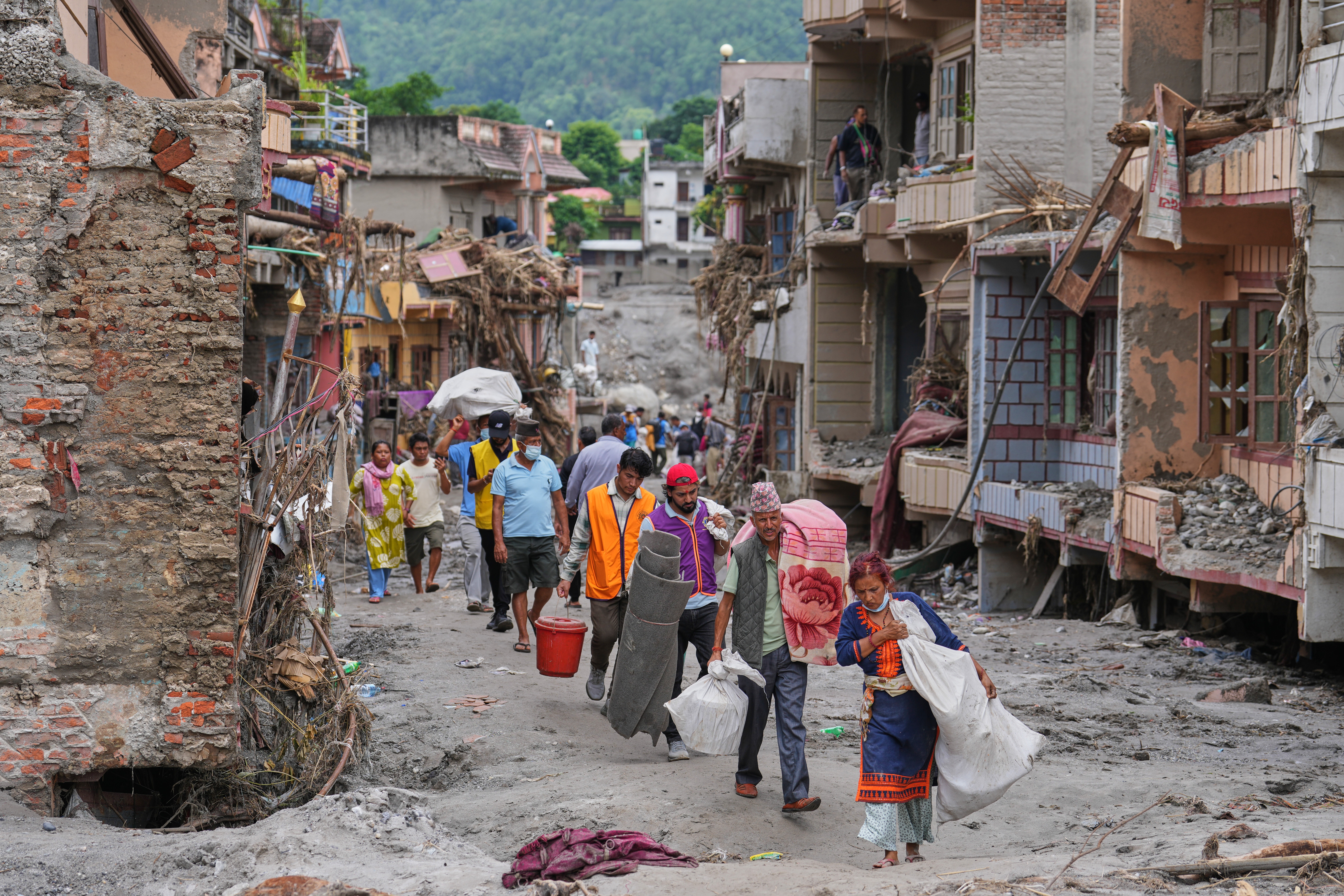
Singapore has announced a comprehensive humanitarian response to the catastrophic flooding that has devastated Nepal's northern regions bordering China, committing specialised personnel, military resources, and civilian supplies to support the country's overwhelmed relief infrastructure. Foreign Minister Dr Vivian Balakrishnan formalised the commitment during a telephone conversation with Nepalese Foreign Minister Shisir Khanal on Monday, signalling Singapore's readiness to mobilise its disaster response capabilities for a close regional neighbour facing a humanitarian crisis of unprecedented scale.
The multi-layered assistance reflects Singapore's established protocols for international disaster relief and demonstrates the city-state's capacity to deploy technical expertise beyond its borders. Among the most critical contributions will be Singapore Police Force officers trained in Disaster Victim Identification, a specialised forensic discipline essential when natural disasters overwhelm local facilities and create urgent need for systematic victim cataloguing and identification. Nepal specifically requested these DVI specialists, indicating recognition of Singapore's technical capabilities in managing the logistics of mass casualty situations—a grim but necessary function during major disasters.
Beyond the police contingent, Singapore's Foreign Ministry confirmed that both civilian humanitarian supplies and resources from the Singapore Armed Forces would be transported to Nepal to alleviate immediate shortages. The nature and scale of these supplies remain unspecified, though such packages typically include medical equipment, water purification systems, shelter materials, food provisions, and communication devices. SAF logistics expertise would likely facilitate efficient distribution through Nepal's damaged infrastructure, a critical consideration in mountainous terrain where road networks have been compromised by flooding and mudslides.
This official government response supplements Singapore's private sector mobilisation. On Friday, Singapore announced a US$100,000 contribution through the Singapore Red Cross to its public fundraising appeal dedicated to Nepali relief efforts. By the time of the Foreign Ministry's announcement, the Singapore Red Cross had accumulated approximately S$1 million in total donations, reflecting significant domestic public engagement with the crisis. This dual approach—combining government-level assistance with facilitation of private charitable contributions—represents a coordinated strategy that maximises resource deployment while avoiding duplication.
The scale of Nepal's disaster demands such comprehensive international support. Initial reports indicated that the death toll had reached at least 919 people six days after the catastrophe, with nearly 4,800 individuals still missing, among them 853 foreign nationals. These figures underscore the magnitude of the flooding and mudslides that struck the Nepal-China border region, areas characterised by steep topography and seasonal weather patterns that render them particularly vulnerable to flash flooding during monsoon seasons. The high number of missing foreigners likely reflects the region's popularity among trekking groups and mountaineering expeditions targeting Himalayan peaks.
Singapore's pre-positioned Crisis Response Team, deployed to Nepal since August 27, has been coordinating consular assistance for affected Singaporean citizens and gathering real-time information to inform the government's relief strategy. This advance positioning demonstrated anticipatory crisis management and allowed Singapore to transition rapidly from citizen protection mode to active humanitarian contribution. The team's presence on the ground provides critical context for tailoring assistance to genuine needs rather than relying solely on international media reports, which often misrepresent specific requirements during rapidly evolving disasters.
For Malaysian readers, this development carries particular relevance given geographical and cultural proximity to both Nepal and Singapore within the broader South Asian and Southeast Asian frameworks. Nepal's disaster illustrates the region's vulnerability to extreme weather events intensified by climate variability and mountainous terrain, challenges that Malaysia understands directly through its own exposure to monsoon flooding and landslides. Singapore's rapid deployment of technical expertise, particularly in forensic disaster management, demonstrates institutional capabilities that regional partners increasingly rely upon during emergencies—a model that informs discussions about regional cooperation architecture and mutual aid protocols across ASEAN and beyond.
The foreign policy dimensions merit consideration as well. Singapore's enthusiastic response reflects both humanitarian principle and strategic interest in maintaining strong relationships with South Asian nations whilst demonstrating the value of partnership with a well-resourced, technically sophisticated city-state. For Nepal, facing infrastructure limitations and constrained domestic resources following natural disasters, such assistance proves invaluable. The engagement pattern established through this crisis—coordinated across diplomatic channels, military logistics, police expertise, and private fundraising—establishes precedent for future cooperation and underscores the importance of maintaining functional relationships across Asia-Pacific nations.
Singapore's Foreign Ministry reiterated its commitment to ongoing collaboration with Nepal's government as relief operations progress, signalling that the current announcement represents initial mobilisation rather than the full extent of assistance. As damage assessments crystallise and specific needs become apparent over coming weeks, Singapore may expand its contribution or adjust its focus to address evolving priorities. The partnership between the two nations demonstrates how smaller developed states can punch above their demographic weight through technical specialisation and institutional efficiency, providing models for regional crisis response that extend far beyond traditional development assistance paradigms.
The broader context involves growing recognition that natural disasters transcend borders and demand coordinated international response mechanisms. Nepal's catastrophe, whilst geographically distant from Malaysia and Singapore, reinforces lessons about climate vulnerability and the necessity for maintaining surge capacity in emergency management systems. For regional governments and development practitioners observing Singapore's response, the deployment model illustrates how partnership frameworks, pre-positioned expertise, and clear communication channels enable rapid humanitarian mobilisation. As climate change intensifies extreme weather patterns across South and Southeast Asia, such cooperative mechanisms will likely become increasingly central to national and regional resilience planning, making Singapore's demonstration of rapid, technical response capacity particularly valuable for understanding emerging best practices in Asian disaster governance.

