Singapore has moved against two citizens for radicalisation tied to the ongoing Israeli-Palestinian conflict, marking the seventh and eighth individuals subjected to Internal Security Act orders on such grounds since October 2023. The detentions underscore growing concerns about how international conflicts catalyse domestic extremism, particularly among younger demographics vulnerable to online propaganda networks.
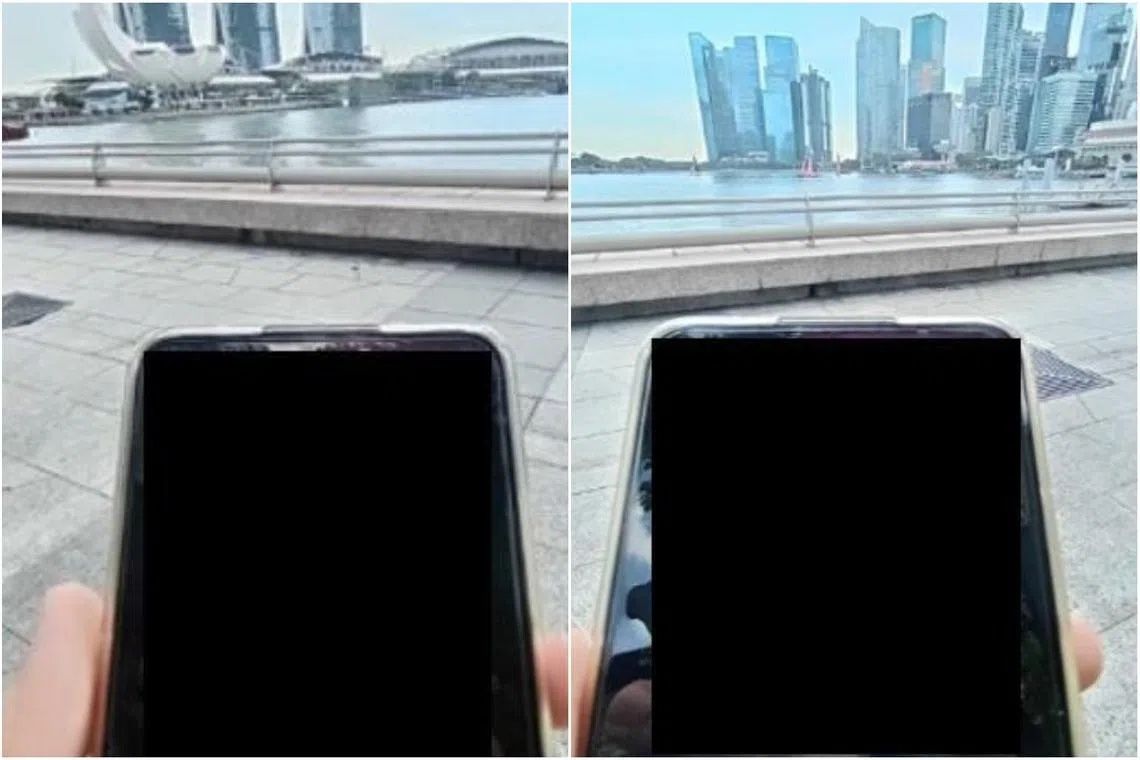
Cyrus Dzulqarnain Al-Shahriar, 19, received a restriction order after authorities discovered photographs he had taken showing extremist material with Marina Bay Sands in the background. The student's case illustrates how radicalisation operates through layered exposure to online ideological content rather than a single conversion moment. His pathway began innocuously in 2022 when he joined Islamic learning groups, but progressively shifted toward anti-Western narratives and eventually violent extremist ideology following Hamas's October 2023 attacks on Israel.
The second individual, Tarmizi Mohd Taha, 30, received a detention order. Tarmizi, employed in customer service, had previously worked as a logistics assistant during his national service stint with the Singapore Police Force. Critically, authorities determined that Tarmizi expressed willingness to conduct attacks within Singapore if Hamas directed him to do so. His case demonstrates how radicalisation can indoctrinate individuals into viewing themselves as operational assets for designated terror organisations, creating direct domestic security implications.
Cyrus's journey into extremism reflects what security analysts describe as "salad bar" radicalism or Composite Violent Extremism—a hybrid belief system synthesising multiple, sometimes contradictory extremist ideologies. Rather than adhering to a single coherent philosophy, Cyrus absorbed pro-Hamas narratives, accelerationist thinking from niche online groups, and incel ideology simultaneously. This fragmented worldview proved particularly potent because it allowed him to construct personalised justifications for violence against multiple targets: Western institutions, LGBTQ communities, women, and perceived enemies of Islam.
By early 2024, Cyrus was contemplating travel to Gaza to fight alongside Hamas. Though resource constraints and fear of physical confrontation dissuaded him, his ideological commitment deepened. Upon encountering an online group espousing violent accelerationism—the belief that societal chaos through violence could catalyse Islamic global dominance—Cyrus joined their private chat channels. He subsequently graduated from passive consumption to active contribution, posting glorifications of Al-Qaeda's 9/11 attacks and the 2002 Bali Bombings, which killed approximately 2,900 and 200 people respectively.
The photographs he took at the Esplanade constituted a symbolic pledge to his online group. By publicly sharing these images on social media in November 2025 with Marina Bay Sands visible, Cyrus signalled group membership and commitment to what adherents termed "digital jihad." This consisted primarily of coordinated harassment campaigns against anti-Islam users, production of disinformation, and incitement to violence against designated enemies. His posts glorified Hamas and Hay'at Tahrir al-Sham, the Syrian Islamist organisation.
Particulously concerning was Cyrus's crossover into incel ideology, a misogynistic worldview centred on resentment. After reading about school shooter Elliot Rodger—who killed six and injured fourteen in May 2014 near the University of California, Santa Barbara—Cyrus identified as involuntarily celibate and began posting threats targeting women using extremist incel terminology. He fantasised about violence against LGBTQ individuals and couples at his school, envisioning attack scenarios despite never taking preparatory steps.
The convergence of these ideologies within a single individual's worldview illustrates the security challenge facing Singapore and comparable regional democracies. Cyrus held no single coherent ideology but rather a volatile mixture: Islamist supremacism, anti-Western accelerationism, and bitter misogyny. This hybridity makes threat assessment difficult because attackers drawing from multiple ideological wells may defy traditional profiles. The Internal Security Department noted that ideological incoherence does not diminish security risk; rather, it complicates prevention and intervention strategies.
Authorities determined that while Cyrus's violent ideations remained in the thinking phase without concrete preparation, his demonstrated support for terrorist organisations and public incitement to violence against identifiable groups constituted sufficient grounds for action. Notably, Cyrus never discussed his extremist beliefs with family or schoolmates, suggesting sophisticated compartmentalisation and awareness of social taboos surrounding his views. This self-awareness paradoxically indicates both ideological commitment and some retained connection to mainstream social norms.
The case underscores how Gaza-related conflicts generate secondary radicalisation waves in geographically distant countries through digital channels. Neither Cyrus nor Tarmizi had direct connection to the Middle East conflict; their radicalisation occurred entirely online through exposure to propaganda networks. This phenomenon concerns Southeast Asian security apparatus because the region's significant Muslim populations and digital connectivity create conditions for rapid ideological transmission unmediated by geographical proximity or cultural familiarity with local contexts.
For Malaysian observers, the Singaporean cases offer important analytical value. Malaysia has experienced comparable radicalisation patterns, particularly among youth exposed to online extremist communities. The mechanisms Cyrus encountered—hybrid ideologies, accelerationist narratives, and incel content—operate across Southeast Asian digital spaces without respect to national boundaries. Online forums, encrypted chat applications, and social media platforms facilitate ideological cross-pollination that authorities struggle to monitor systematically.
The Internal Security Department indicated that Cyrus will undergo rehabilitation programming designed to deradicalise his extremist beliefs. This represents Singapore's emphasis on reintegration rather than indefinite detention, though the restriction order imposes significant liberty limitations. Such approaches attempt to address underlying psychological and ideological vulnerabilities while maintaining security. Regional governments increasingly recognise that purely custodial responses prove insufficient for addressing self-radicalised individuals integrated into online communities rather than traditional hierarchical organisations.
These cases highlight how international conflicts catalyse domestic security threats through mechanisms that bypass traditional counter-terrorism frameworks. The investigation, detection, and intervention in online radicalisation remain immature capabilities across Southeast Asia, with limited digital forensics expertise and unclear legal frameworks governing social media surveillance. As ideological radicalism becomes increasingly personalised and hybrid rather than organisationally structured, security services must develop more sophisticated analytical capabilities to identify individuals approaching violence thresholds before committing attacks.