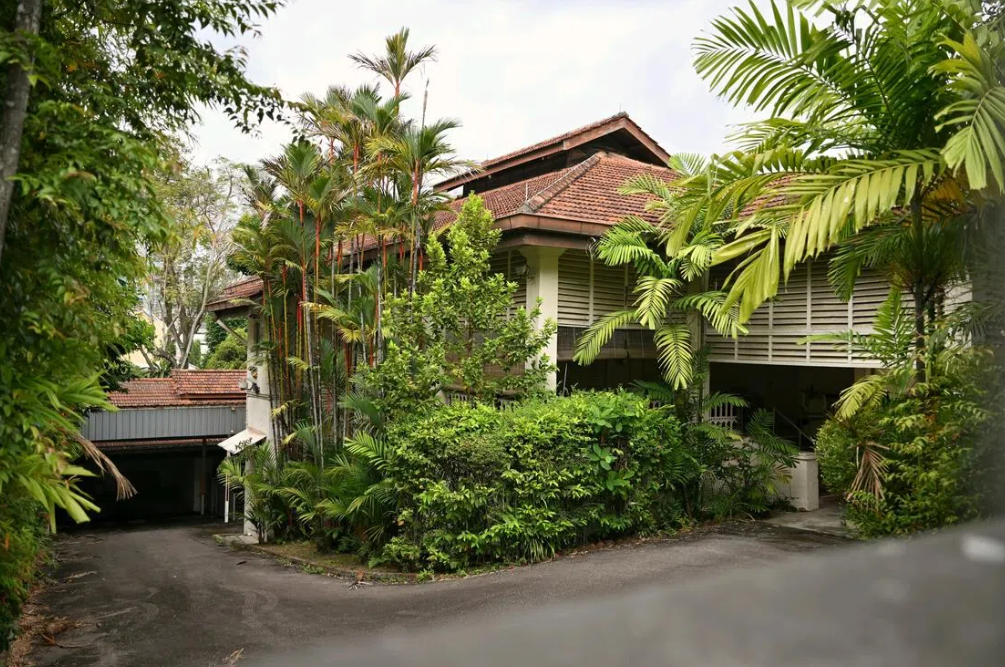
Singapore's Government has formally taken possession of 38 Oxley Road, a historically significant property that witnessed pivotal conversations among the nation's founding leadership. The Singapore Land Authority and National Heritage Board announced on July 31 that the acquisition process had been completed, though the purchase price was not disclosed. This move marks the culmination of several months of legal proceedings initiated when the Government declared its intention to acquire the site to ensure its long-term preservation and public accessibility.
The pre-war bungalow, which served as the family residence of founding Prime Minister Lee Kuan Yew, holds profound symbolic importance in Singapore's post-independence narrative. Beyond its architectural heritage value, the site represents a crucial venue where conversations shaping the nation's early political and economic trajectory occurred. These discussions between senior leaders during the fledgling republic's formative years lent the property considerable historical gravitas, prompting authorities to recognize it as worthy of national preservation and public stewardship.
The National Heritage Board indicated that it would undertake comprehensive research into the property's historical significance and architectural characteristics before determining the most appropriate method for transforming it into a public space. This measured approach reflects the Board's commitment to balancing heritage conservation with contemporary public accessibility. In the immediate term, the site will undergo necessary maintenance and restoration work to arrest any deterioration, with strict restrictions preventing unauthorised entry. Officers from the National Heritage Board were observed within the compound immediately upon acquisition, suggesting preparatory assessments have already commenced.
The property's acquisition represents the culmination of a contentious process that gained momentum in November 2025, when the Government announced its intention to gazette the site as a national monument. Two months later, in December 2025, the formal gazetting as a national monument proceeded, establishing the legal framework for subsequent acquisition. The Government subsequently gazatted the site for compulsory acquisition on January 29, 2026, setting the stage for the completion of negotiations with the property's previous owner and the formal transfer of title.
The acquisition has proven deeply controversial within the Lee family, triggering a long-standing dispute between Singapore's Senior Minister Lee Hsien Loong and his younger brother Lee Hsien Yang, who was the property's most recent owner. The discord centres on starkly divergent interpretations of Lee Kuan Yew's final wishes regarding the bungalow's fate. Lee Hsien Yang and his late sister Lee Wei Ling maintained that their father explicitly desired the demolition of the structure, viewing its preservation as contrary to his personal preferences. In contrast, Senior Minister Lee has suggested that the home's preservation aligns with honouring the founding leader's legacy and safeguarding a site of historical importance to the nation.
The family disagreement acquired further complexity following questions about the circumstances surrounding Lee Kuan Yew's final will. Senior Minister Lee raised concerns in Parliament about what he characterized as troubling circumstances during its preparation, effectively challenging the authenticity and validity of assertions made by his siblings. He subsequently issued a ministerial statement categorically refuting accusations that he sought to preserve the property for political advantage, positioning the Government's acquisition instead as a decision rooted in historical preservation rather than factional family interests.
Lee Hsien Yang responded to the completed acquisition with a public statement on July 31, characterizing the Government's action as fundamentally misaligned with his father's documented values and explicit wishes. He contended that the compulsory acquisition represented a repudiation of Lee Kuan Yew's preferences and demonstrated insufficient regard for his long-held conviction that the building should be demolished. This characterization suggests the younger Lee sibling views the Government's stewardship as institutional overriding of individual preference, raising broader questions about the relationship between state heritage objectives and family autonomy.
The Government's statutory statements accompanying the compulsory acquisition order clarified that the site's status as a protected national monument precludes future residential, commercial, or private redevelopment. This protective designation effectively removes the property from the conventional real estate market and establishes it as a permanent public asset. Minister for Culture, Community and Youth David Neo articulated the Government's vision of transforming the site into an accessible heritage space, potentially in the form of a heritage park, that would enable Singaporeans to engage with a tangible location intimately connected to the nation's founding era.
The acquisition holds significance beyond its immediate implications for the Lee family or architectural preservation. It reflects the Singapore Government's broader commitment to commemorating and physically preserving spaces associated with national genesis narratives. As Southeast Asian nations grapple with questions of how to memorialize founding figures and politically formative periods, Singapore's handling of 38 Oxley Road offers a model of state intervention in heritage protection, albeit one that has generated considerable family resistance and public discussion about the appropriate balance between state preservation mandates and individual family wishes.
For Malaysian observers, the Singapore case illustrates evolving approaches to national heritage governance and the challenges that emerge when personal property acquires public historical significance. The compulsory acquisition mechanism deployed in Singapore, combined with the transformation of a private family residence into a public commemorative space, represents one approach to resolving conflicts between private ownership rights and collective historical interests. As Malaysia continues developing its own heritage preservation frameworks, including potential reviews of how significant historical properties are managed, the Singapore precedent offers both cautionary lessons regarding family discord and practical models for long-term public stewardship of historically important sites. The transformation of 38 Oxley Road from contested private property into managed public heritage space remains an ongoing process, with the National Heritage Board's detailed study expected to shape visitor access and interpretive frameworks in coming years.

