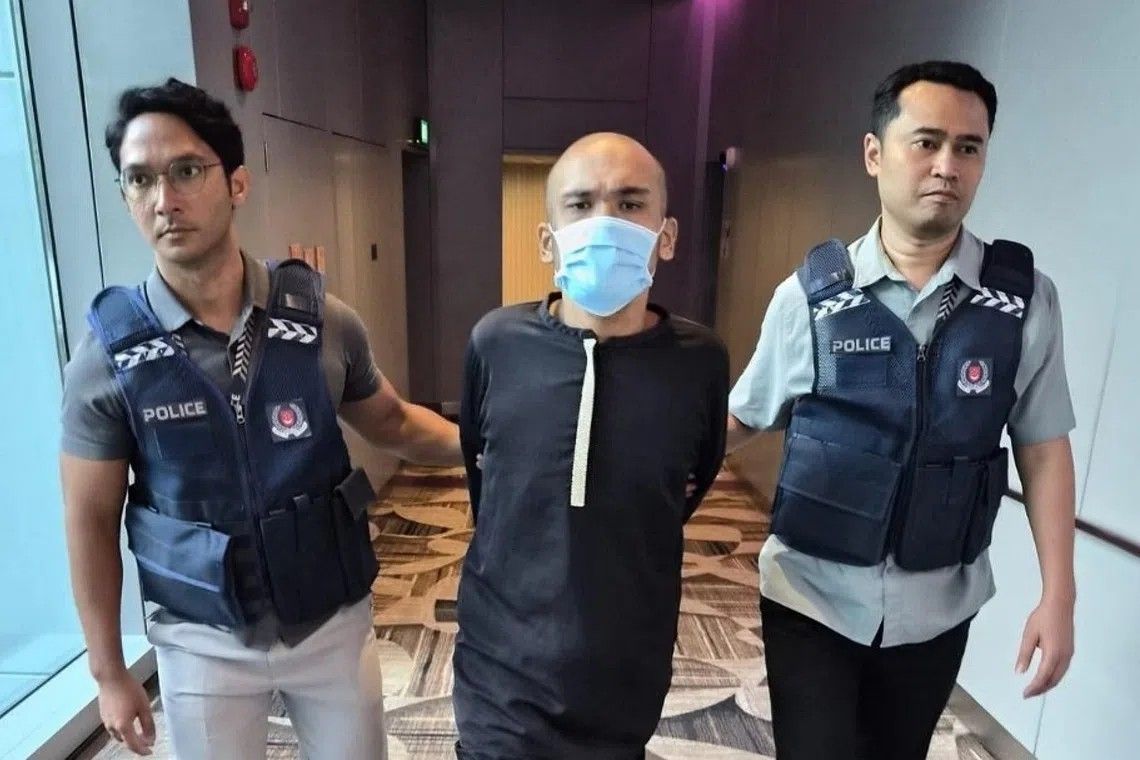
Religious sensitivities remain a flashpoint in Singapore's multicultural society, as authorities have moved to prosecute a man for allegedly posting inflammatory content targeting the Muslim community on social media. Elvin John Baptist, 27, appeared in court on August 7 facing a single charge of insulting the religion of another person under Singapore's Maintenance of Religious Harmony Act, legislation designed to protect the island nation's delicate social fabric by criminalising speech or conduct intended to insult religious beliefs.
According to court documents, Baptist allegedly uploaded two videos to TikTok on March 1, in which he made offensive remarks in Malay that were calculated to provoke and demean the Muslim faith. The nature of these remarks underscores the ongoing challenge faced by Singapore's authorities in policing digital spaces where religious minorities can be targeted with relative anonymity. The videos appear designed not merely to express opinion but to deliberately wound and inflame tensions—behaviour that Singapore's legal framework treats with serious concern.
The response from Singapore's police demonstrates the government's commitment to swift action in such cases. However, the timeline reveals a critical detail: whilst the videos were posted on March 1, police only received a report about them on August 6. By that point, Baptist had already departed Singapore, presenting law enforcement with a cross-border challenge. This delay underscores a persistent difficulty in online policing—the gap between the time offensive material circulates and when authorities become aware and can act.
Singapore's partnership with Malaysian authorities proved crucial in apprehending Baptist. Working with the Royal Malaysia Police, Singapore's Home Team managed to have the suspect deported from Malaysian territory on the same day the police report was filed. Baptist was arrested immediately upon his arrival back in Singapore on August 6, suggesting coordinated border management and a willingness by both nations' law enforcement to cooperate on religious sensitivity matters. For Malaysia and other Southeast Asian nations grappling with similar issues, this example demonstrates how regional coordination can prevent suspects from remaining at large across international boundaries.
The Maintenance of Religious Harmony Act under which Baptist was charged represents Singapore's legislative approach to protecting religious minorities in a plural society. The law makes it an offence to deliberately insult the religion of any person, with particular weight given to actions designed to threaten public peace. In a nation where Malays, Chinese, Indians and others of varied faiths coexist, such legal safeguards are considered essential infrastructure for social stability. Yet the law also reflects broader questions about the balance between protecting religious sentiment and preserving free expression—tensions that resonate across the region.
Baptist's case is not isolated. Police have indicated that he is also assisting with investigations into a separate incident involving another video that has circulated on social media platforms. This second video allegedly depicts an individual desecrating a Quran aboard a public bus in Singapore. The investigation into this separate matter suggests a pattern of religious disrespect captured on video and shared digitally, highlighting how mobile technology and social media have created new vectors for religiously offensive content.
The Quran desecration video is particularly significant. Unlike Baptist's TikTok posts, which involved direct verbal remarks, this video documents a physical act of sacrilege against Islam's holiest text. For Muslims across Singapore and the broader region, such imagery carries profound spiritual and emotional weight. The fact that it occurred in a public space—a bus—and was recorded and distributed digitally amplifies the affront, as it transforms a private transgression into a public spectacle accessible to thousands.
For Malaysian observers, these developments carry particular resonance. Malaysia's own legal framework similarly protects Islam through provisions in federal law and state Islamic enactments, though enforcement approaches differ. The cross-border dimension—with a Singaporean suspect fleeing to Malaysia and then being deported back—demonstrates how religious offences increasingly transcend national boundaries in the digital age. What is posted in one country can be accessed, shared and amplified across the entire region within seconds.
The broader implications for Southeast Asia are significant. As digital platforms become primary spaces for public discourse, religious sensitivities in plural societies remain highly combustible. Singapore's swift response—from social media upload to arrest within five months, aided by cross-border cooperation—signals that authorities across the region take such matters seriously and are developing mechanisms to pursue offenders regardless of jurisdiction.
Yet questions persist about the relationship between prosecution and prevention. Whilst the law provides remedies after the fact, viral content spreads faster than legal processes can contain it. The delay in reporting Baptist's March videos until August suggests that neither the platform nor ordinary users immediately escalated the content to authorities. Enhanced reporting mechanisms, platform responsibility, and public awareness campaigns may be necessary complements to criminal law.
The case also reflects evolving norms around digital civility in multicultural societies. Younger users, particularly those active on platforms like TikTok, are operating in spaces where provocative content can attract engagement and attention. For some, crossing lines of religious respect appears acceptable risk-taking. Baptist's prosecution serves notice that in Singapore and potentially across Southeast Asia, such calculations carry legal consequences.
As the investigations proceed and courts adjudicate both Baptist's current charge and the separate matter involving the Quran video, the outcomes will likely influence how social media companies, law enforcement and civil society approach religious sensitivities online. For a region where communal harmony remains fragile and religiously charged speech can ignite tensions, the handling of such cases sends powerful signals about shared values and red lines.

