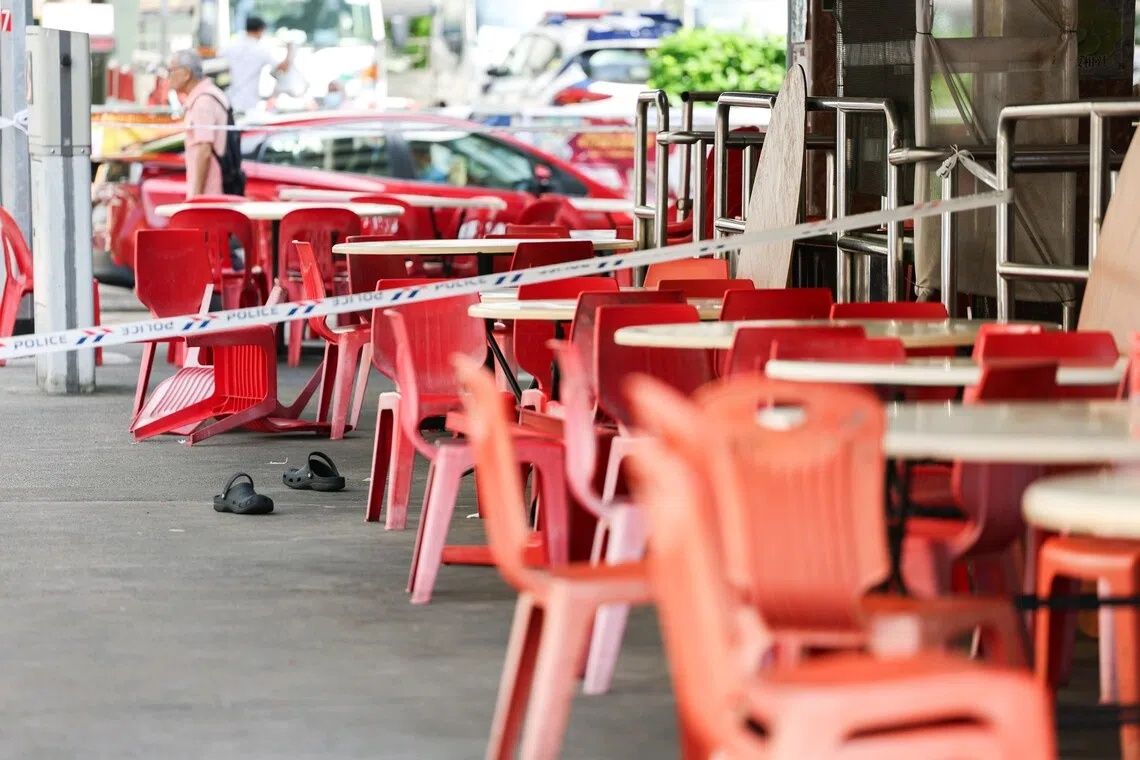
A Singapore court has handed down a 17-month prison sentence to Pradave Shashi Kumar, 22, who wielded a chair as a weapon during a fatal late-night altercation on Kitchener Road. The conviction comes after Kumar pleaded guilty to voluntarily causing hurt using a dangerous weapon, marking the first conclusion in a case involving four accused individuals connected to the incident that claimed the life of 25-year-old Dhinessh Vasie on September 22, 2024.
The incident unfolded in the early morning hours when a group of young people, including Kumar and three companions, departed a nightclub at Golden Mile Tower and travelled to a pub along Sam Leong Road to continue socialising. Upon arriving at approximately 4am, they discovered a tense situation developing in a nearby back alley, where eight men were engaged in a heated dispute with three women. What began as a verbal disagreement quickly escalated into violence when one of Kumar's associates, Satish Jason Prabhas, 23, exchanged words with a member of the opposing group before launching physical blows.
The confrontation rapidly spiralled into a broader melee involving multiple combatants. According to prosecution evidence presented by Deputy Public Prosecutor Jonathan Tan, the altercation prompted the larger group to retreat towards the back alley in the direction of Verdun Road. During this chaotic sequence, witnesses observed Muhammad Sajid Saleem, 24, carrying a small knife with a 7.5-centimetre blade held in a downward position. The presence of the weapon triggered panic among Dhinessh's group, who attempted to flee from their assailants.
Kumar and his three associates pursued Dhinessh's group as they ran towards the nearby intersection of Verdun Road and Sam Leong Road. The prosecution's account detailed how Sajid pursued Dhinessh to a coffee shop located at this intersection, where the victim had begun to tire and slow his pace. Sajid then allegedly inflicted a stab wound to Dhinessh's upper back, a critical moment that would prove fatal when the knife penetrated the victim's heart. The court heard that Dhinessh sustained wounds specifically to his cardiac region during the knife attack, injuries that would ultimately claim his life.
Following Sajid's knife assault, the situation deteriorated further when Kirrthik Roshan Prem Ananth, 23, seized a chair from the coffee shop premises and repeatedly struck the wounded victim. Kumar then engaged in the same assault, picking up a second chair and forcefully striking Dhinessh's head and chest twice as the victim remained slumped and unable to mount any defensive response. The prosecution emphasised that throughout this brutal attack, Dhinessh was incapacitated and offered no resistance, rendering him entirely vulnerable to the continued violence inflicted upon him.
The case highlights a systemic breakdown in public safety during late-night entertainment precincts, where alcohol consumption combined with volatile social dynamics can rapidly transform minor disputes into lethal encounters. For Malaysia's own cities, which grapple with similar challenges around nightlife districts and alcohol-fuelled violence, the Kitchener Road incident serves as a cautionary example of how quickly casual confrontations can escalate beyond the point of no return. The involvement of multiple assailants using different weapons—bladed and blunt—demonstrates the danger posed by group dynamics in violent situations, where individual participants may commit progressively severe acts as escalation continues.
The legal proceedings reveal a structured approach to accountability, with each of the four accused facing charges corresponding to their specific roles in the fatal attack. Sajid faces a murder charge for wielding the knife, while both Prabhas and Ananth confront rioting charges reflecting their participation in the broader affray. Kumar's conviction for causing hurt with a dangerous weapon, though resulting in a 17-month sentence, occupies the middle tier of culpability within this violent incident. The maximum penalty for his specific offence extends to seven years' imprisonment, along with the possibility of fines and caning, indicating that courts retain discretion to impose harsher sentences depending on aggravating circumstances.
The timeline of the incident raises questions about early intervention and community awareness. The group's movement from the nightclub to the pub, followed by their presence in a back alley at 4am, illustrates the vulnerability windows that emerge during extended drinking sessions across multiple venues. Police arrived at the coffee shop location shortly after the assault concluded, ultimately arresting Kumar at approximately 5:15am—a window that included the perpetrators' departure toward City Square Mall. For Malaysian law enforcement, this sequence underscores the challenges of rapid response in urban entertainment zones where incidents can conclude before emergency services arrive.
The conviction of Kumar represents the conclusion of only the initial phase of this case's journey through Singapore's legal system. The remaining three accused—Sajid on murder charges and Prabhas and Ananth on rioting charges—will face their own proceedings, potentially resulting in more severe sentences given the gravity of their alleged roles. The murder charge against Sajid, in particular, carries potential sentences substantially exceeding Kumar's 17-month jail term, reflecting Singapore's approach to distinguishing between those who inflict fatal injuries and those who participate in the subsequent assault on an already-wounded victim.
Beyond the immediate criminal proceedings, this incident resonates across Southeast Asian cities grappling with similar violence patterns. The combination of alcohol-fuelled decision-making, group dynamics that encourage escalation, and the ready availability of improvised weapons creates conditions under which minor altercations transform into fatalities. The Kitchener Road case demonstrates how split-second choices—choosing to escalate a verbal dispute into physical blows, selecting a weapon, or continuing an assault on an already-incapacitated victim—carry consequences that extend far beyond the immediate participants to devastate families and communities.
The sentencing of Kumar also illustrates judicial recognition of contextual factors that may mitigate culpability without erasing responsibility. His role as a secondary assailant, occurring after the fatal knife wound had already been inflicted, likely influenced the 17-month sentence as the court balanced the seriousness of his actions against the hierarchy of culpability within the group violence. For Malaysian policymakers and community leaders, the broader lesson concerns prevention strategies aimed at de-escalation training, venue security protocols, and alcohol management regulations that might prevent comparable incidents from erupting into lethal violence.

