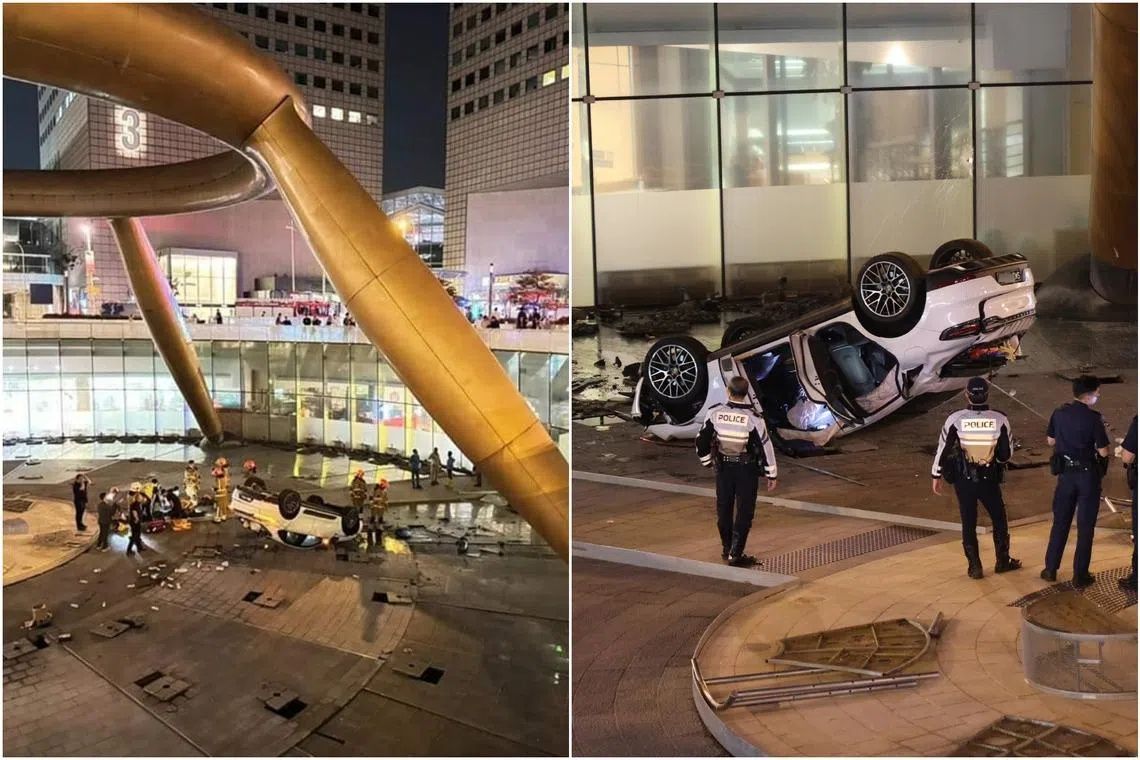
A Singapore court has sentenced a 58-year-old man to five weeks imprisonment for driving under the influence of alcohol, resulting in a spectacular crash that saw his vehicle plunge into one of the nation's most iconic landmarks. Then Shing Chong consumed approximately one litre of beer before operating his motor vehicle, which subsequently crashed through protective barriers surrounding the Fountain of Wealth at Suntec City on July 13, 2024. The incident, which occurred in the heart of Singapore's central business district, caused nearly S$64,600 in damage and narrowly avoided causing serious injury or death to construction workers present at the scene.
The prosecution's account revealed a concerning sequence of events that began in the early evening of July 12, 2024. Then departed his residence and drove to the shopping complex specifically to socialise with a friend, arriving around 6pm and parking in the basement level. Between 6:15pm and midnight, he consumed his substantial quantity of beer whilst at a bar within the mall. This extended drinking session, spanning nearly six hours, appeared to have substantially impaired his judgment and motor control by the time he attempted to exit the car park.
The circumstances of the crash demonstrated the dangers of combining alcohol consumption with vehicle operation. Upon leaving the car park, Then's vehicle paused briefly at a gantry barrier for approximately ten seconds as it lifted to allow passage. However, once he began driving along Temasek Boulevard, his attention faltered critically. Despite clear directional signage indicating a left turn into a roundabout ahead, Then continued driving straight through three separate traffic lanes without adjusting his course. This failure to respond to traffic instructions or road conditions led him directly toward the Fountain of Wealth's protective barricade, which he breached before the vehicle plummeted into the fountain's basement area below.
What could have been a tragedy was averted by fortune rather than caution. Three construction workers were actively engaged in tasks within the basement of the fountain at the moment of impact. These individuals managed to escape the area without sustaining injuries, though the Deputy Public Prosecutor emphasised the near-catastrophic nature of the outcome. Had any of the workers been positioned directly beneath the vehicle's descent, the consequences would have been far more severe and potentially fatal. This close call underscored the inherent risks of impaired driving in urban environments where pedestrians and workers occupy spaces that drivers might suddenly enter.
The defendant's legal team mounted a defence centred on mental health considerations. Lawyers from Invictus Law Corporation argued that Then had suffered from major depressive disorder at the time of the incident and requested the court order a mandatory treatment order assessment rather than imprisonment. They contended that a psychiatrist's report from the Institute of Mental Health established a contributory connection between his psychiatric condition and the commission of the offence. Under Singapore's sentencing framework, individuals deemed suitable for mandatory treatment orders can undergo psychiatric or psychological rehabilitation in place of custodial sentences. Additionally, Then acknowledged having consumed either an antihistamine or sleeping medication prior to drinking alcohol, potentially intensifying the depressant effects on his system and judgment.
However, the prosecution successfully opposed this alternative sentencing approach, arguing that the gravity of drink-driving offences necessitated a deterrent response. The Deputy Public Prosecutor pointed to the significant property damage incurred, the potential for loss of life or serious injury, and the need to send a clear message to the community about the consequences of operating vehicles whilst intoxicated. The court ultimately agreed with this position, with District Judge Koo Zhi Xuan emphasising that drink-driving constitutes highly irresponsible behaviour regardless of any underlying mental health conditions.
The sentencing imposed on Then comprised both custodial and licensing components. Beyond the five-week jail term, he received a two-and-a-half year disqualification from holding or obtaining any class of driving licence, commencing from his release date. This extended ban would significantly impact his mobility and independence during a substantial portion of his remaining working years. Notably, the accused demonstrated financial responsibility by making full restitution for the damages caused to the fountain and surrounding infrastructure, paying approximately S$64,600 in compensation.
The case highlights an ongoing public safety concern across Southeast Asia, where alcohol-impaired driving remains a significant contributor to traffic accidents, injuries, and fatalities. Singapore's strict approach to drink-driving offences, incorporating both imprisonment and extended licence disqualifications, reflects a broader regional and international trend toward increasingly punitive consequences for this category of offence. The severity of the sentence, despite the defendant's mental health history and full financial compensation, demonstrates that courts view such violations as fundamentally incompatible with public safety interests.
For Malaysian readers, the Singapore case offers important perspective on how neighbouring jurisdictions address drink-driving through the criminal justice system. While Malaysia has its own drink-driving laws with penalties including fines, imprisonment, and licence suspension, the outcomes across different cases and jurisdictions vary considerably. The Singapore court's firm stance, particularly in rejecting mental health mitigation in this context, reflects an increasingly hardline position that prioritises deterrence and community protection over rehabilitation-focused sentencing alternatives in serious traffic safety matters.
The incident also serves as a reminder of how impaired driving endangers not only the driver and vehicle occupants but also innocent bystanders and workers in proximity to roadways and public spaces. Construction workers, parking attendants, security personnel, and other individuals working in urban environments are often exposed to traffic risks they cannot control. The narrow escape experienced by the three workers at Suntec City underscores the potentially catastrophic consequences of momentary lapses in judgment combined with intoxication, consequences that extend far beyond the driver alone and can reshape lives in seconds.

