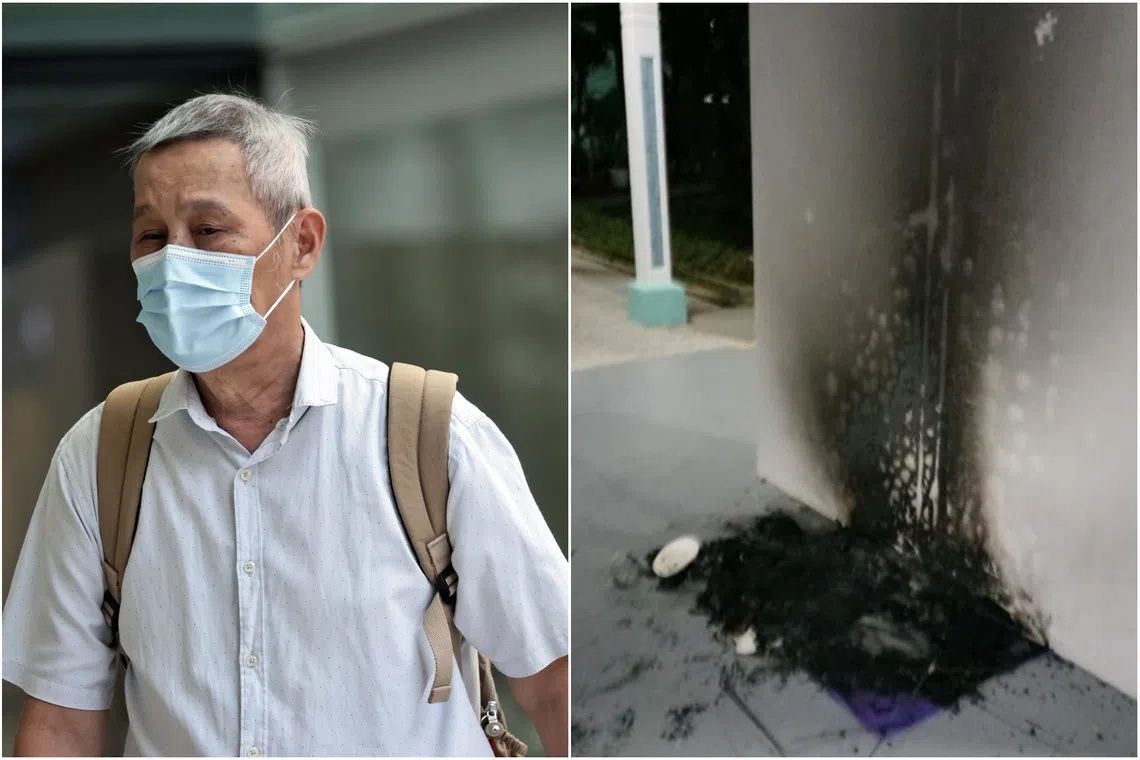
A Singapore retiree has been handed a three-month custodial sentence for arson after deliberately torching cardboard cat shelters installed near his home in Bukit Batok, in what appears to be a case of escalating frustration over neighbourhood animal welfare practices. Koh Teng Boo, 68, pleaded guilty to committing mischief by fire on Tuesday following two separate incidents in which he ignited the makeshift structures, resulting in damage exceeding S$900 to the void deck's flooring and surrounding walls. The case highlights tensions that can emerge in densely populated residential areas when individual residents clash with community initiatives, and raises questions about how local authorities balance competing interests in neighbourhoods.
Koh's grievance began last September when cardboard shelters designed to provide refuge for stray cats appeared around a pavilion and void deck adjacent to his block at Bukit Batok East Avenue 4. These structures, which contained food and water supplies, represented part of a broader community effort to care for the area's population of street animals. However, Koh became convinced that the cat houses were attracting unwanted wildlife and creating sanitary problems, observing that birds were visiting the shelters and expressing concern about potential pest infestations. His frustration was compounded by what he perceived as residents discarding litter directly into the cat housing facilities, further deteriorating conditions in the communal space.
Instead of accepting the situation, Koh decided to escalate his concerns through official channels. He approached his Member of Parliament to lodge a formal complaint about the cat houses, articulating his worries about hygiene standards and pest control. This step suggested an initial willingness to resolve the dispute through proper governance procedures rather than take matters into his own hands. Yet when no visible remedial action materialised following his parliamentary appeal, Koh's patience evaporated, and he took a dramatically different approach to addressing what he viewed as an unresolved neighbourhood problem.
By October 2025, Koh had moved from complaint to confrontation. He physically removed three cardboard cat houses and placed them inside an incense burner bin before setting them ablaze, deliberately destroying the structures that had become the focal point of his grievances. Deputy Public Prosecutor Stephen Yeo noted during sentencing that Koh claimed his arson was justified because his earlier parliamentary petition appeared to have yielded no tangible response from authorities. The destruction, however, proved temporary and ineffective. Within two days, new cat houses had been erected around his block, suggesting that whoever was maintaining these shelters remained committed to the initiative despite the initial destruction.
Rather than accepting defeat, Koh persisted with both his complaints and his destructive tactics. On November 17, he returned to his MP's office to lodge another formal grievance, restating his hygiene concerns while emphasising that his opposition stemmed from sanitation fears rather than any antipathy toward cats themselves. This nuanced claim suggested Koh was attempting to frame his position as reasonable and pragmatic rather than malicious. Yet this final official appeal also failed to produce the outcomes he desired, pushing him toward a second act of arson.
Two days after his second parliamentary appeal, at approximately 1.30 am on November 19, Koh left his home after consuming alcohol and deliberately ignited another cat house using a lighter. He then abandoned the burning structure without ensuring the fire was safely extinguished, an act of recklessness that could have resulted in far more serious consequences had the flames spread. Notably, investigation records did not clarify how or when the fire was ultimately put out, indicating a dangerous indifference to the potential risks posed by his actions. Koh's decision to return the following day and set fire to yet another cat house demonstrated escalating determination rather than remorse or recognition that his initial arson had failed to achieve his objectives.
The second incident of November 20 differed critically from the first. When Koh ignited this cat house and walked away, two passing residents quickly spotted the flames and extinguished the fire before it could cause substantial harm. This civilian intervention prevented more extensive damage and may have forestalled an even more severe punishment. Police apprehended Koh later that same day, ending his unilateral campaign against the community cat welfare project. The Jurong-Clementi-Bukit Batok Town Council subsequently submitted a bill for S$913 to cover repairs to flooring and walls, which Koh has since paid in full, demonstrating a degree of financial accountability for his actions.
The sentencing to three months imprisonment reflects the seriousness with which Singapore's courts treat arson offences, even when the destruction targets relatively modest structures. Under law, mischief by fire committed with intent to damage property carries penalties of up to seven years' imprisonment and potential fines, making Koh's three-month term a comparatively lenient outcome. His early guilty plea, advanced age, retiree status, and prompt restitution of damages likely influenced the court's decision to impose a below-maximum sentence. The case nonetheless underscores that taking the law into one's own hands, regardless of personal grievances or perceived governmental inaction, carries serious criminal consequences.
For Malaysian observers, this Singapore case offers instructive lessons about managing neighbourhood conflicts in multiethnic, high-density urban environments. Southeast Asia's expanding cities frequently grapple with tensions between individual property rights, communal welfare initiatives, and government responsiveness to resident concerns. While Koh's arson was clearly indefensible, the underlying dispute reflects real challenges that residents face when they feel their concerns about shared spaces are being ignored. The incident suggests a need for more robust mechanisms through which residents can lodge grievances about neighbourhood management, and for faster, more transparent resolution processes that prevent frustration from escalating into criminal behaviour. Had authorities responded promptly and substantively to Koh's initial concerns—whether by adjusting the cat houses, instituting better hygiene protocols, or simply explaining the rationale for the community initiative—the situation might have been resolved without criminal justice intervention, illustrating that preventive dialogue often costs less than prosecution.

