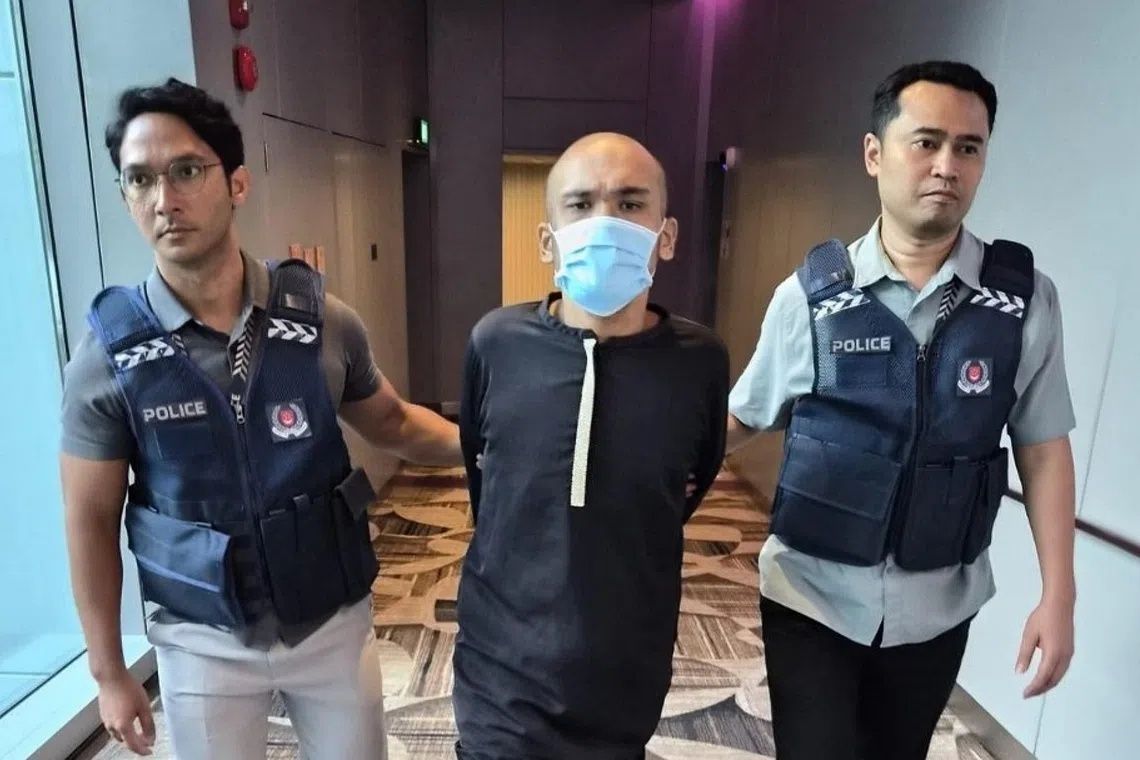
A 27-year-old Singaporean is set to face court charges on Friday, August 7, after posting inflammatory social media content that disparaged the Muslim community earlier this year. The case underscores Singapore's zero-tolerance approach toward online speech that threatens religious harmony, a particularly sensitive issue in a multicultural nation where religious tensions could easily destabilise social cohesion. The man's prosecution represents one of the growing number of such cases as authorities worldwide grapple with regulating digital speech that crosses the line from free expression into incitement.
Police received initial reports about the offensive videos on March 1, but by that time the suspect had already departed Singapore. The timing of his departure and the subsequent investigation created challenges that required cross-border cooperation to bring him into custody. This delay highlighted the complexity of pursuing such cases when suspects flee jurisdiction—a problem that extends across Southeast Asia, where digital crimes increasingly involve perpetrators moving between countries to evade authorities.
The breakthrough in locating and apprehending the suspect came through coordination with the Royal Malaysia Police. He was deported from Malaysia on August 6 and arrested immediately upon his arrival in Singapore the same day, demonstrating the effectiveness of regional law enforcement cooperation on criminal matters. Such collaboration between Malaysian and Singaporean authorities reflects broader efforts within ASEAN to address transnational crimes, though the region still faces significant challenges in harmonising legal frameworks and enforcement mechanisms.
The charges relate specifically to insulting remarks made against the Muslim community in videos disseminated through social media platforms. Beyond these initial charges, the suspect is also assisting police investigations into a separate but related incident—a video circulating online that allegedly shows an individual desecrating the Quran by stepping on it. Police have confirmed that the person featured in the Quran desecration video is the same individual now facing charges, connecting what initially appeared to be separate offences into a pattern of deliberate religious provocation.
According to police accounts, the Quran desecration video was recorded on a public bus within Singapore, making it not merely an isolated incident but an act committed in a public space where other citizens would have witnessed it. This detail carries particular significance in Singapore's context, where religious sensitivity remains a priority given the nation's delicate balance between Buddhist, Christian, Muslim, Hindu, and other faith communities. Public acts of religious disrespect carry greater potential to inflame communal tensions than private online statements.
To combat the spread of such content, Singapore police took formal action on March 7 by issuing five disabling directions to Meta, the parent company of Facebook and Instagram. These directions required the technology giant to remove access to the offensive material for users within Singapore's jurisdiction. The police action demonstrates how authorities are increasingly leveraging their regulatory powers over multinational tech companies to restrict harmful content distribution, though questions persist about whether such measures effectively address the underlying problem or merely push problematic material to other platforms and networks.
If convicted, the defendant faces severe penalties reflecting the seriousness with which Singapore treats religious vilification. The potential sentence includes imprisonment for up to five years, monetary fines, or a combination of both. These maximum penalties align with Singapore's stringent approach to preserving racial and religious harmony—concerns that carry considerable weight in a nation where the government has long emphasised that communal peace is essential to prosperity and stability. The severity of potential punishment also serves as a deterrent to others considering similar online conduct.
The case occurs within Singapore's existing legal framework governing religious offences, which predates the current social media era but has been increasingly applied to digital conduct. Singapore's Penal Code provisions addressing insulting remarks intended to wound religious feelings have become a focal point for debates about balancing free expression with community protection. The application of these older statutes to novel digital contexts sometimes creates tension between civil liberties advocates and those prioritising social harmony.
Singapore's police have articulated a firm position on such matters, stating they view acts threatening racial and religious harmony with utmost seriousness. Official statements emphasise that individuals making remarks or engaging in conduct designed to generate enmity, hatred, animosity, or hostility between different communities will face swift and decisive legal consequences. This messaging serves both a practical enforcement function and a broader social communication purpose, signalling to the population that certain boundaries exist and will be enforced.
The case carries implications for Malaysia and other Southeast Asian nations contending with similar challenges around online religious speech. The region has experienced various high-profile incidents involving religious offences committed through digital platforms, and cooperation between jurisdictions remains vital as perpetrators increasingly exploit the borderless nature of the internet. Malaysia's own laws addressing religious sensitivity, codified in both federal legislation and state-level Islamic legal provisions, create a complex landscape where cross-border cases require careful navigation.
For technology platforms operating across Southeast Asia, the Singapore prosecution represents another indicator that regional governments are determined to hold them accountable for content moderation. While platforms argue they operate at a global scale and cannot customise moderation for every jurisdiction, pressure from authorities in major financial centres like Singapore suggests they may need to develop more granular, territory-specific enforcement mechanisms. The tension between platform autonomy and government regulation continues to reshape the digital landscape across the region.
Looking forward, this case will likely influence how both authorities and platforms approach religious speech online throughout Southeast Asia. The outcome may set precedents affecting the threshold for prosecution, the standards applied to determining offensive content, and the scope of platform responsibility. For Malaysian observers, it underscores the ongoing challenge of protecting religious sensibilities while maintaining open digital spaces—a balance that various governments in the region continue to negotiate as social media remains deeply embedded in daily life.

