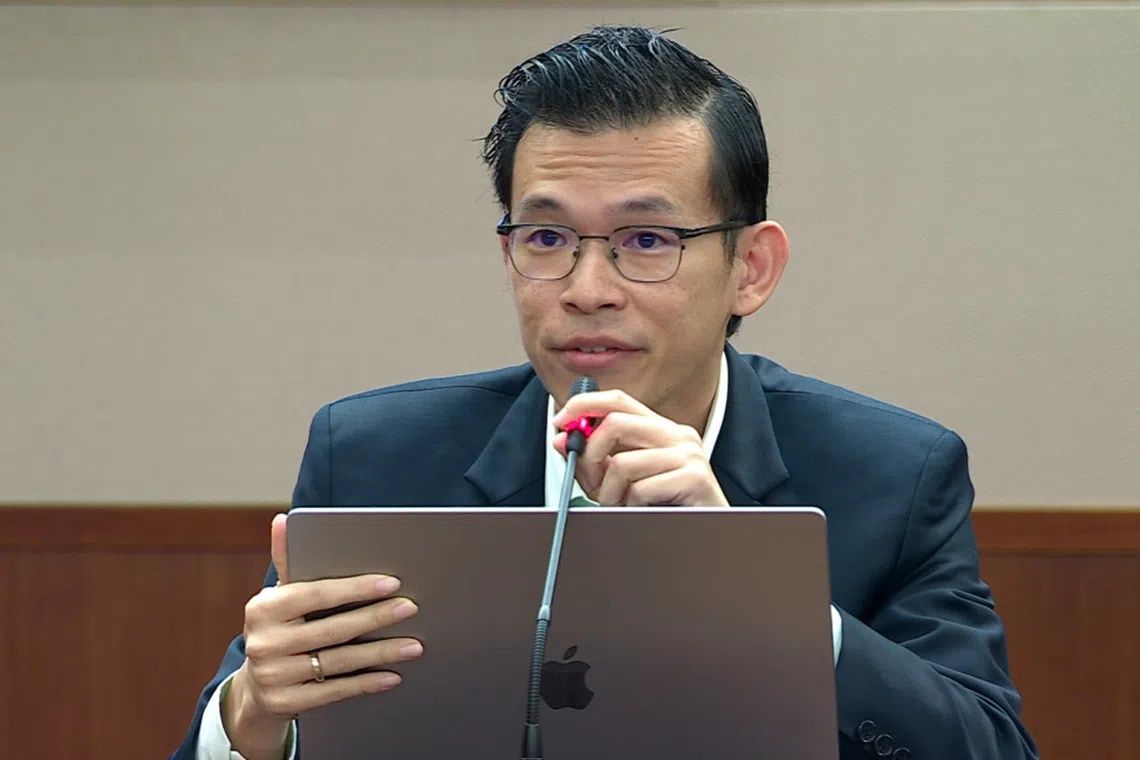
Singapore's Parliament has affirmed an amended motion on the nation's economic direction following an extended parliamentary debate, though the Workers' Party rejected the final version and voted against it as a bloc. The motion, originally moved by WP MP Kenneth Tiong, prompted substantive discussion about how Singapore can reshape its approach to supporting local enterprises, generating quality employment, and fostering entrepreneurship in an increasingly uncertain global environment. The outcome reflects a fundamental divergence between the ruling People's Action Party and the opposition on whether Singapore's longstanding reliance on foreign multinational corporations remains fit for purpose in the modern economy.
Minister for Trade and Industry Tan See Leng articulated the government's position that Singapore's economic strategy has never pursued growth as an end in itself, but rather as a vehicle for distributing prosperity across society and enabling social mobility. He contended that the existing model has consistently delivered quality employment, wage growth, and opportunities for advancement across multiple generations. Tan acknowledged the government's responsibility to preserve this framework whilst adapting it to a fundamentally transformed global landscape characterised by greater instability and unpredictability. His remarks set the tone for the broader parliamentary exchange about how to refine rather than abandon the current approach.
Tiong presented a starkly different diagnosis, proposing that Singapore requires a more radical reorientation of its economic philosophy. He argued for an economy where fair distribution of benefits is embedded within growth mechanisms themselves, rather than relying on post-growth interventions such as vouchers and rebates to address inequality. His vision emphasised dynamic local enterprises as primary growth engines, supported by robust domestic consumer demand and Singaporean capital expanding regionally. Tiong specifically contended that Singapore's historical economic model—built on attracting and hosting large foreign multinationals—has become increasingly inadequate for generating meaningful career opportunities for younger Singaporeans and has simultaneously constrained the development and expansion of domestic businesses.
The parliamentary session, which extended nearly nine hours, brought together 23 speakers before Tan's closing remarks. Despite the polarised positions articulated by the Workers' Party, Tan identified substantial consensus across party lines regarding core economic objectives. Both sides, he noted, supported the need for fulfilling careers and competitive incomes for Singaporean workers, as well as the cultivation of globally competitive Singaporean enterprises. This apparent common ground on endpoints suggested that disagreement centred more on methodology and sequencing than on ultimate goals, though the Workers' Party's final vote against the amended motion indicated that tactical and philosophical differences remained too significant to bridge.
Tan's response encompassed acknowledgement of the inherent limitations of government intervention in market economies. He conceded that the state cannot guarantee universal venture success, permanence of employment, or painless economic transitions. Instead, he framed the government's role as creating conditions in which citizens encounter fair opportunities to test ideas, possess clear pathways toward advancement, and receive assistance when facing setbacks. This formulation emphasised enabling infrastructure rather than outcome guarantees—a distinction central to the PAP's rebuttal to opposition proposals for more interventionist industrial policy.
The minister illustrated his argument through his personal entrepreneurial narrative, having co-founded Healthway Medical Group at 27 alongside fellow physicians despite possessing no formal business training. His company initially identified an underserved niche by offering corporate healthcare services to businesses located in Housing and Development Board estates and industrial zones. Tan noted that early multinational corporation clients became instrumental in establishing his firm's credibility and track record, contradicting the Workers' Party assertion that foreign companies necessarily crowd out local enterprises. Rather than depicting MNCs as competitive obstacles, he characterised them as potential partners whose demanding standards and established networks could accelerate local company maturation.
Drawing from this experience, Tan articulated a framework distinguishing between government's appropriate role and its limitations. Government, he asserted, must establish the foundational infrastructure—sound institutions, transparent regulations, open markets, and reduced unnecessary friction—within which enterprise can flourish. It may also selectively share risks where broader economic benefits justify intervention. However, government cannot substitute for the entrepreneurial functions of identifying customers, assembling teams, making commercial judgments, or persisting through inevitable difficulties. This delineation positioned government support as a catalyst rather than a replacement for enterprise, rejecting the notion that larger public expenditure alone creates champions or transforms economies.
Tan referenced the Scale-Up programme administered by Enterprise Singapore, designed to nurture rapidly expanding local companies toward global significance. Data from the programme's initial seven cohorts demonstrated that 80 participating firms collectively generated an additional S$2.5 billion in revenue within three years, with S$1 billion originating from international expansion. This evidence, offered in support of the government's existing approach, suggested that targeted intervention in company development could produce measurable outcomes without requiring fundamental model restructuring. The results indicated that the current framework, when properly executed, could nurture local champions capable of competing internationally and generating substantial economic value.
The minister outlined how government policies address five specific gaps constraining entrepreneurial development: the transition from aspiration to first venture, the movement from research to commercialised innovation, the critical juncture from product development to acquiring initial customers, the progression from early traction to sustainable scaling, and finally the leap from domestic foundation to global operations. Programmes including Startup SG Founder—which furnishes capital, mentorship, and networking support—aim to provide structured early-stage backing allowing viable concepts to reach market validation. Complementary schemes such as the Partnerships for Capability Transformation initiative facilitate collaboration between local firms and multinationals, enabling smaller enterprises to integrate into MNC supply chains rather than competing directly.
When firms demonstrate readiness for expansion, Tan noted, the Startup SG Equity scheme catalyses private investment in early-stage and growth-focused deep technology companies. This graduated support architecture, according to the minister, reflects sophisticated understanding of entrepreneurial lifecycle challenges rather than indiscriminate subsidy. Yet for the majority of Singaporeans, economic experience manifests through employment rather than business ownership, highlighting the relevance of government's broader labour market and skills development policies. This acknowledgement implicitly conceded that enterprise support, while important, could not substitute for comprehensive workforce development and employment creation strategies.
The Workers' Party's rejection of the final amended motion, with all 12 of its MPs voting against the resolution, underscored the persistence of fundamental disagreement about Singapore's economic trajectory. The PAP's proposed amendments, accepted by Parliament though opposed by the opposition, effectively shaped the final text toward emphasis on existing policy frameworks rather than acknowledgement of structural economic challenges. This outcome demonstrates how parliamentary procedure, particularly amendment processes, can determine substantive policy direction even when broad factual agreement exists. For regional observers, the debate illustrates how developed Asian economies grapple with balancing foreign direct investment reliance against domestic enterprise development, a challenge extending beyond Singapore to Malaysia, Thailand, and other ASEAN nations.
The parliamentary exchange carries implications for Southeast Asian economic policy discourse more broadly. Singapore's debate mirrors discussions occurring throughout the region about whether growth-focused models adequately address inequality and whether multinational-dependent strategies remain optimal amid geopolitical fragmentation and technological disruption. The Workers' Party's emphasis on distribution mechanisms and local enterprise development reflects concerns gaining traction across developed and developing Asian economies. Conversely, the PAP's defence of market mechanisms and incremental reform suggests that established economically successful governments remain cautious about fundamental model restructuring. As Southeast Asia navigates post-pandemic economic adjustment and increasing uncertainty, Singapore's parliamentary debate offers a window into how different political perspectives conceptualise economic renewal and the proper balance between state intervention and market forces.

