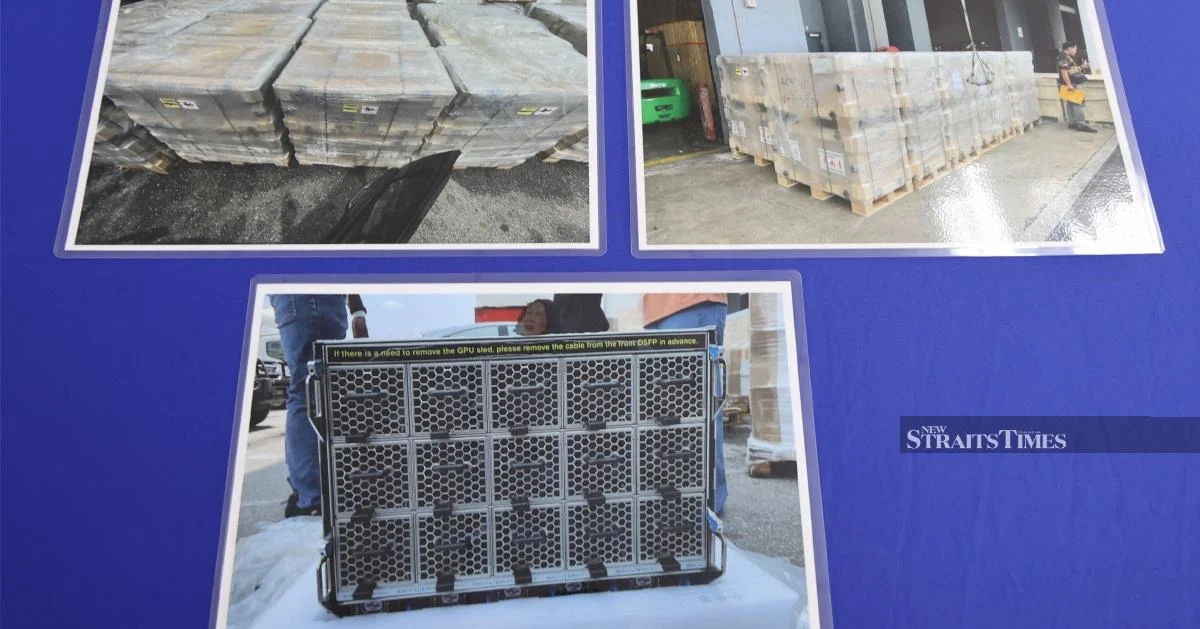
Singapore police have moved to seize a luxury bungalow valued at over US$40 million as investigators pursue fraud charges stemming from the alleged illicit transfer of artificial intelligence chips in violation of United States export restrictions. The action, announced on Wednesday, marks an escalation in what appears to be a significant enforcement operation targeting breach of American semiconductor export controls, a matter of growing concern across Southeast Asia as nations grapple with competing technological and geopolitical interests.
The seizure reveals the high stakes involved in cases involving restricted semiconductor technology, particularly chips designed for artificial intelligence applications that are subject to stringent American export regulations. These controls have been a focal point of US-China tensions and broader efforts to restrict advanced computing capabilities from reaching certain destinations deemed sensitive from a national security perspective. Singapore, as a major global financial and technology hub with deep American and Western ties, has become an important jurisdiction for investigating such violations.
The investigation into the alleged chip transfers suggests sophisticated actors may have been attempting to circumvent multilayered export control mechanisms. The fact that investigators have identified sufficient evidence to seize a property of such substantial value indicates the scope and seriousness of the alleged scheme. Real estate seizures in fraud cases typically require demonstrated connections between illicit proceeds and specific assets, suggesting prosecutors believe the questioned transactions generated significant profits.
For Malaysia and the broader Southeast Asian region, this case carries important implications. The subregion has emerged as a critical node in global semiconductor supply chains and technology infrastructure. The investigation demonstrates that authorities across the region must remain vigilant about potential violations of export controls, particularly those stemming from American restrictions. Enhanced scrutiny of technology transfers and cross-border transactions involving advanced chips will likely intensify across Southeast Asia.
The timing of this enforcement action reflects heightened global focus on semiconductor technology flows. The United States has progressively tightened export controls on advanced chips over recent years, particularly those with artificial intelligence capabilities. These restrictions aim to prevent sensitive technology from reaching adversarial nations or entities, but enforcement remains challenging given the complexity of global supply chains and the technical difficulty in distinguishing between legitimate and prohibited end uses.
Singapore's decisive action also underscores the city-state's commitment to maintaining its reputation as a jurisdiction with robust legal and regulatory frameworks. As financial institutions and businesses increasingly scrutinise partners and transactions for compliance with international sanctions and export controls, Singapore's enforcement sends a clear signal about its willingness to investigate and prosecute violations. This positioning is crucial for the country's status as a trusted financial centre.
The investigation likely involved significant international cooperation, particularly with American authorities given the centrality of US export control violations to the case. Singapore routinely collaborates with overseas law enforcement agencies on financial crimes and technology-related matters. Such cooperation is essential for detecting transnational schemes that exploit jurisdictional boundaries and the complexity of moving assets across borders.
The alleged fraud suggests creative methods were employed to obscure the nature and destination of the chip transfers. Sophisticated actors in such schemes frequently employ layered business structures, shell companies, and complex financial arrangements to disguise the true beneficial ownership and ultimate end-use of restricted technology. The investigation presumably uncovered documentary or transactional evidence establishing the prohibited nature of the transfers.
For businesses operating in the technology sector across Southeast Asia, this case serves as a cautionary reminder about the importance of robust compliance programmes. Companies involved in the semiconductor supply chain, distribution, or related services must implement thorough due diligence procedures and maintain detailed documentation. Penalties for breaching export controls can be severe, including criminal liability, substantial fines, and asset seizure as demonstrated here.
The broader context involves the United States' ongoing efforts to maintain technological advantage through export restrictions. These controls have generated considerable debate, with technology companies and some allies questioning their effectiveness and economic costs. However, the enforcement actions that follow demonstrate these regulations have real teeth and jurisdictions worldwide are being encouraged to adopt compatible compliance frameworks.
As artificial intelligence continues advancing rapidly, export controls on AI-capable chips will likely remain contentious. Different countries balance competing interests in innovation, commerce, and national security differently. Singapore's enforcement action reflects its choice to prioritise alignment with Western security concerns and international rules-based systems, a positioning that has defined its foreign policy and regulatory approach.
The investigation also highlights growing risks in the fintech and digital asset spaces, where sophisticated actors may attempt to obscure illicit transactions. Investigators increasingly deploy financial forensics and asset tracing techniques to identify proceeds from prohibited activities, even when those proceeds have been converted into real estate or other tangible assets. This capability makes it increasingly difficult to shield ill-gotten gains through geographic diversification or asset transformation.

