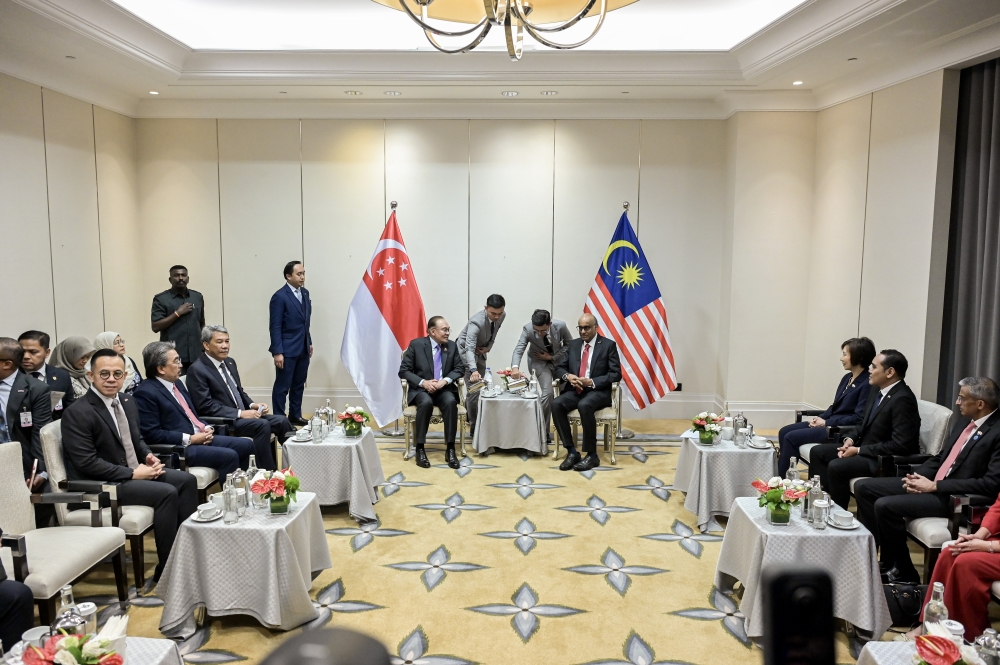
Prime Minister Datuk Seri Anwar Ibrahim received Singapore President Halimah Yacob on Monday afternoon in Kuala Lumpur, with the two leaders engaging in a substantive 40-minute meeting that underscored the importance both nations place on their bilateral partnership. The courtesy call, held during the Singapore President's official state visit to Malaysia, saw the two leaders discuss matters of mutual interest spanning economic ties, security cooperation, and regional stability in Southeast Asia.
Halimah's visit to Malaysia represents a significant diplomatic engagement at the highest levels between two of the region's most economically integrated neighbours. The meeting took place amid a broader context of strengthening institutional ties between Kuala Lumpur and Singapore, reflecting both governments' commitment to maintaining cordial relations despite occasional differences on specific issues. The duration and substance of their discussion indicated that both leaders had substantive ground to cover, moving beyond ceremonial pleasantries to address concrete areas of cooperation.
The Singapore President's state visit carries particular significance given the historically close yet sometimes complex relationship between Malaysia and Singapore. These two countries share extensive trade links, with bilateral commerce exceeding RM160 billion annually, making economic cooperation a cornerstone of their relationship. Beyond trade, the two nations collaborate extensively on security matters, counterterrorism, maritime safety, and the fight against transnational crime—issues that directly impact stability across the Straits of Malacca and the broader Southeast Asian region.
For Malaysian readers, such high-level visits underscore how Singapore remains a crucial strategic and economic partner despite geographical proximity and occasional political tensions. The meeting between Anwar and Halimah serves to reinforce institutional channels for dialogue and problem-solving at a time when both nations face common challenges ranging from climate change to managing complex maritime boundaries and ensuring freedom of navigation in critical sea lanes.
The timing of the Singapore President's state visit also reflects diplomatic efforts to maintain relationship stability as both nations navigate domestic political considerations and regional geopolitical shifts. Malaysia's focus on strengthening ties with immediate neighbours aligns with its broader foreign policy strategy of maintaining balanced relationships across the region while pursuing mutually beneficial economic and security arrangements.
Bilateral meetings of this stature typically address matters such as trade facilitation, investment flows, and cooperation on regional forums including ASEAN. The two leaders would likely have discussed Malaysia's role in regional economic integration and Singapore's position as a major financial hub and trade centre. Educational exchanges, tourism cooperation, and people-to-people links also typically feature in such discussions, given the substantial community of Malaysians working in Singapore and vice versa.
From a Malaysian perspective, these engagements matter because Singapore's economic dynamism and strategic location mean that bilateral relations directly influence Malaysia's commercial interests and regional standing. The relationship requires constant calibration to balance competitive interests with cooperative gains, particularly in sectors like maritime trade, where the two nations share critical sea routes and fishing grounds.
The courtesy call also provides an opportunity for both leaders to discuss ASEAN-related matters and regional cooperation frameworks. As a full member of ASEAN, Singapore plays a crucial role in regional affairs, and coordination between Malaysian and Singaporean leadership helps shape regional responses to transnational challenges. This is particularly relevant given ongoing discussions within ASEAN on maritime security, economic integration deepening through initiatives like the Regional Comprehensive Economic Partnership, and managing relationships with major powers.
For Malaysia, maintaining productive relations with Singapore remains essential for achieving economic growth targets and ensuring regional stability. The two countries' intertwined economies mean that disruptions in bilateral relations carry tangible costs for Malaysian businesses and workers. Conversely, periods of strong cooperation and institutional engagement tend to create positive spill-over effects across multiple sectors.
The Singapore President's state visit, concluded through this substantive meeting with the Prime Minister, demonstrates how both governments prioritise official channels and high-level engagement as mechanisms for addressing concerns and identifying new areas of mutual benefit. Such visits, while often ceremonial in appearance, serve important functions in maintaining relationship momentum and signalling commitment to continued partnership.

