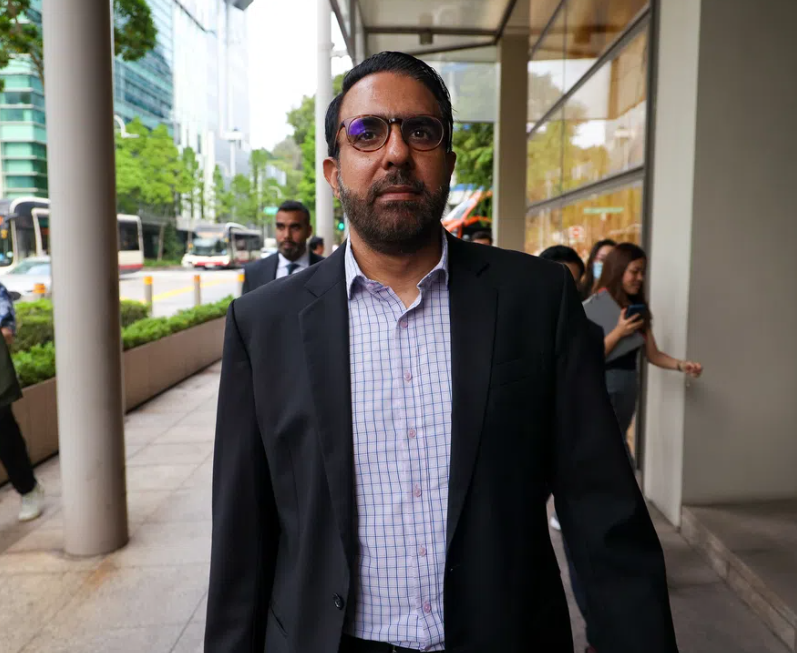
Singapore's legal regulator is moving to permanently remove Workers' Party chief Pritam Singh from the legal profession following his conviction for dishonesty. The Law Society of Singapore has signalled its intention to push for Singh to be struck off the rolls entirely when his disciplinary case comes before the Court of Three Judges on August 13. Although Singh, who represents Aljunied GRC in Parliament, has not actively practiced law in recent years, the formal disciplinary action marks a significant escalation in consequences for his conduct.
Singh's legal troubles stem from his February 2025 conviction on two counts of lying under oath before the Committee of Privileges, Parliament's internal disciplinary body. The conviction itself was rooted in his handling of former Workers' Party MP Raeesah Khan's 2021 parliamentary statement in which she falsely alleged that police had mishandled a sexual assault case. Rather than immediately correcting Khan's false claim, Singh failed to ensure the record was set straight in a timely fashion, later providing misleading accounts of his knowledge and actions to the privileges committee investigating the matter.
Despite his appeal to the High Court in December 2025, Singh's conviction was upheld, and he was ordered to pay a $14,000 fine. The appellate decision effectively closed off his legal options and triggered the mandatory disciplinary machinery within the legal profession. Under Singapore's Legal Profession Act, when any regulated lawyer is convicted of offences involving fraud or dishonesty, the Law Society has no discretion—it must automatically commence disciplinary proceedings without waiting for further direction or referral.
The disciplinary panel hearing Singh's case will be exceptionally senior. The Court of Three Judges comprises Chief Justice Sundaresh Menon, Justice Kannan Ramesh, and Justice See Kee Oon—the highest disciplinary tribunal for Singapore's legal profession. This court possesses broad powers to fashion penalties ranging from suspension of up to five years to permanent removal from the profession, plus financial penalties reaching $100,000. The elevation of Singh's case to this apex body underscores the gravity with which Singapore's judiciary views dishonesty among lawyers.
A critical legal principle weighs heavily against Singh's prospects. Singaporean courts have consistently held that striking off the rolls constitutes the presumptive sanction for misconduct involving dishonesty, unless the lawyer can demonstrate truly exceptional circumstances warranting departure from this default outcome. This presumption reflects the profession's foundational requirement that lawyers maintain absolute integrity when dealing with courts and judicial processes. Any deviation from the presumptive penalty demands compelling justification that courts have traditionally found rare to encounter.
Recent precedent strengthens the case for permanent removal. In July 2026, a lawyer convicted of lying to police in connection with a drink-driving matter was struck off after the court determined no exceptional factors existed to soften the outcome. That decision signals the court's strict application of the dishonesty rule even in cases where the false statement occurred outside the formal legal system. Singh's misconduct, by contrast, involved false testimony before Parliament's official privileges committee—a setting carrying even greater institutional weight and public trust implications.
The Law Society's obligation to pursue disciplinary action stems from formal notification received from the Attorney-General's Chambers that Singh had been convicted of offences satisfying the statutory definition of fraud or dishonesty. This notification transformed the society's role from discretionary prosecutor to mandatory enforcer of professional standards. A Law Society spokesperson confirmed in March that the organisation was statutorily compelled to initiate proceedings based on the attorney-general's determination, leaving the society no latitude to exercise prosecutorial judgment or restraint.
Singh's Workers' Party has already begun distancing itself from his conduct. On April 30, the party's central executive committee issued a formal letter of reprimand after a party disciplinary panel determined Singh had breached two articles of the party's constitution. This internal censure arrived following his court conviction and signalled the party's recognition that Singh's actions violated foundational principles of honesty and party discipline. The timing and nature of the party's response suggested leadership acknowledgment that Singh's misconduct warranted formal internal consequences, independent of legal system penalties.
For Malaysian observers, Singh's predicament illuminates the distinct approach Singapore takes toward professional accountability and parliamentary integrity. While Malaysian legal culture similarly emphasises lawyer conduct standards, Singapore's integrated system—where parliamentary dishonesty automatically triggers professional discipline through mandatory Law Society proceedings—creates a more mechanistic enforcement chain. This approach removes discretionary gaps that might otherwise permit political figures to escape professional consequences despite judicial conviction.
The August 13 disciplinary hearing represents not merely a technical proceeding but a definitive reckoning with Singh's fitness to hold a law licence. Unless he can marshal genuinely exceptional mitigating facts—a threshold courts have set extraordinarily high in dishonesty cases—the presumptive outcome points toward permanent professional removal. This outcome would not prevent Singh's continued parliamentary service, as Singapore law distinguishes between legal profession membership and political eligibility, but it would formally extinguish his entitlement to practice law in any capacity.
Beyond the immediate personal consequences for Singh, the case reinforces Singapore's institutional commitment to maintaining professional integrity standards even when enforcing them against politically prominent figures. The involvement of three senior judges, the mandatory nature of the Law Society's action, and the presumptive penalty structure all operate to depersonalise the proceeding and anchor it in neutral legal principles rather than political considerations. This structural approach, though producing severe consequences for Singh, also provides assurance that professional discipline follows consistent rules applied uniformly across the profession.
The disciplinary hearing's outcome will clarify the enforceability of Singapore's integrity standards when tested against an MP and party leader. Should the court strike Singh off as the Law Society requests, it will affirm that no political position insulates lawyers from professional consequences following conviction for dishonesty. Conversely, any decision to impose a lesser penalty would require the Court of Three Judges to articulate which exceptional circumstances justify departing from the established presumptive sanction—a determination that would carry significance for future cases involving misconduct by prominent legal professionals.

