Singapore is moving to substantially strengthen its road safety framework with a new legislative package designed to curb a troubling surge in traffic-related harm. The Road Traffic (Miscellaneous Amendments) Bill, tabled by the Ministry of Home Affairs on Tuesday, July 7, represents one of the most significant overhauls to the city-state's driving laws in recent years, signalling government alarm at deteriorating conditions on its congested urban expressways and arterial roads.
The impetus behind the legislative push is stark. Between 2021 and 2025, traffic fatalities have jumped by approximately 24 per cent, while traffic violations climbed by roughly 38 per cent across the island. Deaths reached a troubling ten-year high of 149 in 2025, eclipsing the 141 deaths recorded in 2016, while the 2024 figure stood at 142. Simultaneously, the number of people injured has grown from 9,342 in 2024 to 9,955 in 2025. These figures underscore a public safety crisis that extends well beyond isolated incidents, affecting thousands of families and imposing substantial costs on the healthcare and justice systems.
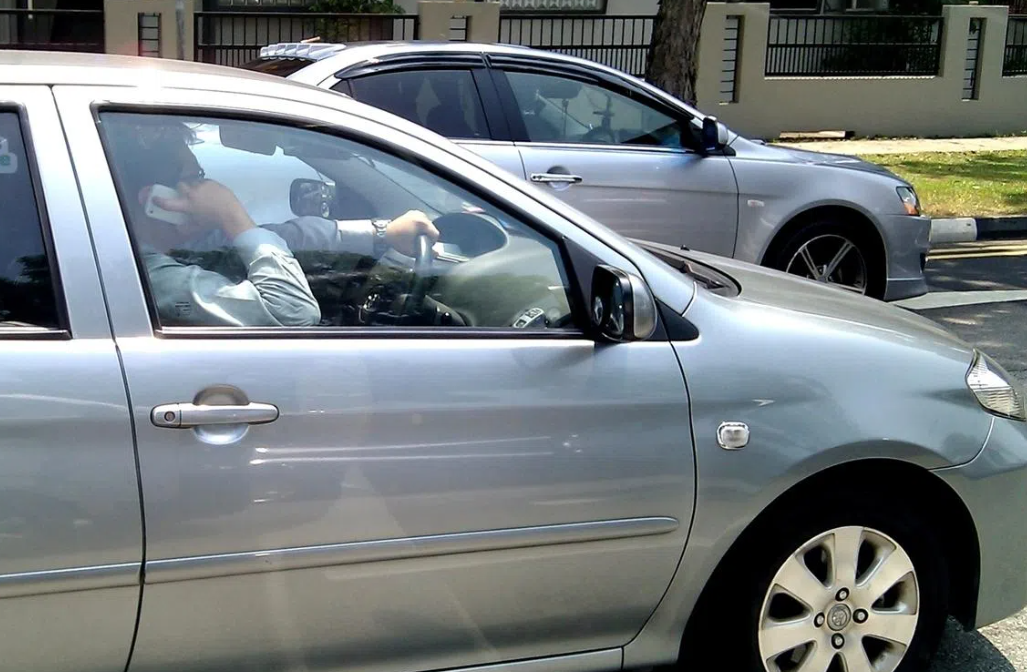
The centrepiece of the Bill addresses smartphone use whilst driving, a behaviour regulators have long identified as a critical distraction factor. Under the proposed legislation, motorists will face criminal penalties simply for holding a mobile phone whilst the vehicle is in motion, regardless of whether they are actually using the device for calls, texts, or navigation. This represents a significant departure from existing enforcement, which requires authorities to prove the phone was actively being used—a burden that has complicated prosecution and made it difficult for Traffic Police to catch offenders in real-time. The regulatory shift reflects recognition that the mere presence of a phone in a driver's hand reduces attentional focus on the road and substantially elevates collision risk.
Current penalties for phone-related driving offences are comparatively modest. Drivers caught texting or calling whilst holding a device typically receive 12 demerit points and a fine ranging from $400 to $500. Court prosecution in more serious cases can result in jail sentences of up to six months and fines of $1,000 for first-time offenders, with repeat offenders facing up to one year imprisonment and $2,000 in fines. However, the enforcement gap—requiring proof of actual phone usage—has substantially limited the effectiveness of these measures. The new law will enable Traffic Police to employ camera-based detection and accept photographic or video evidence from the public, dramatically expanding surveillance capacity and making evasion considerably more difficult for repeat offenders.
Importantly, the legislation preserves exemptions for mounted devices and permits drivers to hold phones when vehicles are stationary, reflecting a pragmatic balance between safety and usability. The measure will likely prove particularly effective in Singapore's dense urban environment, where traffic cameras already blanket major intersections and expressways, and where public cooperation in reporting dangerous driving has traditionally been strong.
Beyond smartphone regulation, the Bill introduces a novel offence category addressing an increasingly visible form of road violence: the deliberate weaponisation of vehicles to endanger or harm others. Current law provides limited tools for prosecuting drivers who intentionally use their vehicles to injure pedestrians or other road users, unless prosecutors can prove beyond reasonable doubt that the driver intended to kill or knew death was a probable consequence—a standard that typically restricts charges to dangerous driving causing death, which carries a maximum eight-year sentence. The case of Jarrett Tee Lee Kiat, who raced on an expressway at high speed and killed an 18-year-old, illustrated the gap: despite his recklessness and apparent lack of remorse, he received only five years and eight months in prison after pleading guilty to dangerous driving.
The new offence of purposeful endangerment using a vehicle causing death or grievous injury substantially closes this prosecutorial gap. Offenders convicted under this provision will face jail sentences of up to 15 years, financial penalties, caning, and permanent disqualification from driving or disqualification for a minimum of ten years if mitigating circumstances exist. This represents a fourfold increase in maximum sentencing compared to existing dangerous driving provisions and signals the government's determination to deter and punish deliberately reckless behaviour that treats vehicles as instruments of harm.
The legislation also tightens penalties for impaired driving, a category that has drawn judicial criticism for insufficient sanctions. In December 2025, High Court judges increased the sentence of Yoong Kok Kai from three and a half years to five years for an accident whilst intoxicated that left an auxiliary police officer in a vegetative state. Yoong had consumed alcohol across three consecutive drinking sessions before driving to Tuas Checkpoint, where he lost vehicle control and caused catastrophic injury. The presiding judge expressed doubt that existing maximum sentences adequately captured the seriousness of the worst-category offences, effectively calling on the legislature to act.
The Bill responds by elevating maximum jail terms for dangerous driving causing grievous hurt from five years to seven years for first-time offenders, and from ten to thirteen years for repeat offenders. Serious aggravating factors—particularly alcohol impairment—will trigger additional jail time of up to eighteen months, up from the current one-year ceiling. These augmented penalties reflect legislative consensus that drink-driving, which combines impaired judgment and diminished motor control, represents one of the most culpable and preventable forms of road harm. Careless driving causing grievous hurt maximum sentences remain unaltered, maintaining differentiation in the sentencing ladder between the most serious conduct and lower-grade negligence.
The comprehensive nature of this legislative package reveals a government grappling with the reality that Singapore's roads, despite sophisticated traffic management systems and dense enforcement cameras, have become measurably less safe in recent years. The amendments address enforcement gaps, expand prosecutorial tools, and recalibrate penalties to reflect contemporary road dangers and judicial concerns about inadequate consequences. For Malaysian motorists and policymakers, Singapore's approach offers instructive lessons: the recognition that phone-holding itself constitutes a sufficient safety threat to warrant criminalisation without requiring proof of active use; the creation of dedicated offence categories for intentional vehicle-based harm; and the political willingness to substantially elevate sentencing benchmarks in response to accumulating injury and death data.
Implementation challenges remain, particularly around public education and ensuring motorists understand that holding phones is now prohibited regardless of use, and that purposeful endangerment carries dramatically enhanced consequences. The reliance on camera-based detection and public reporting will also test Traffic Police capacity to investigate and adjudicate the anticipated surge in reported incidents. Nevertheless, the Bill represents a substantive effort to reverse an alarming trend and to deploy law as a deterrent against behaviours—mobile phone distraction, reckless endangerment, and alcohol-impaired driving—that have proven particularly difficult to control through voluntary compliance or light-handed enforcement alone.

