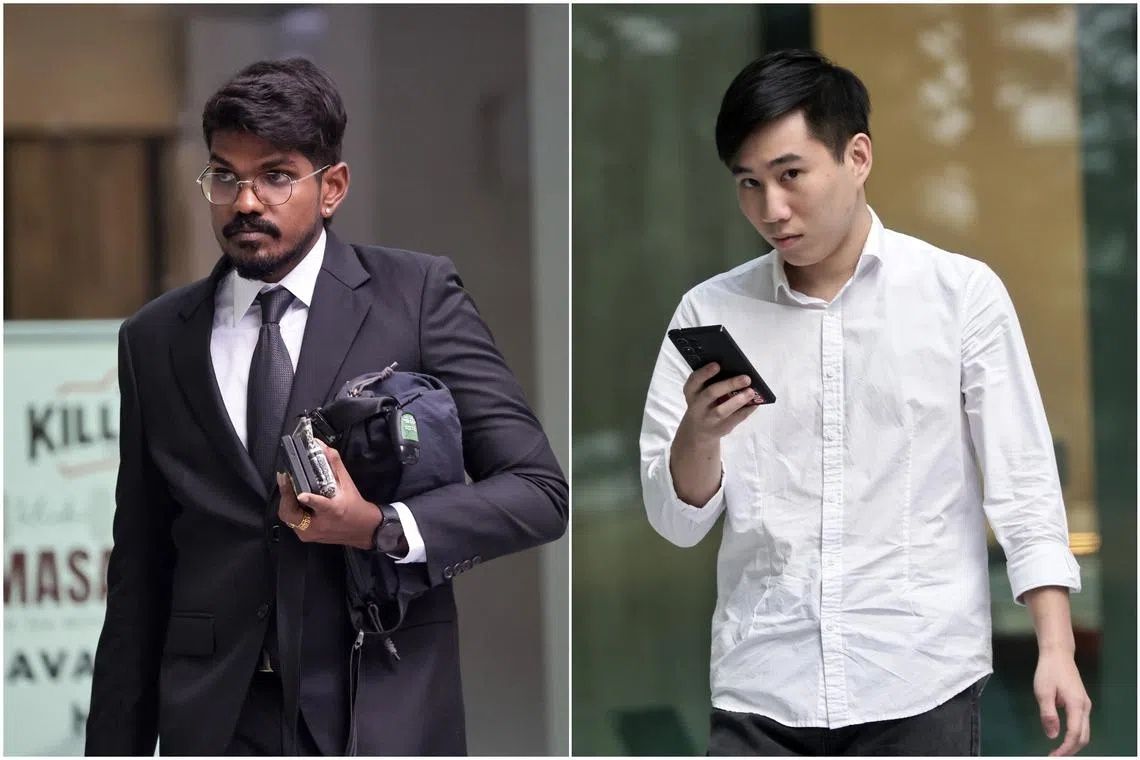
A 29-year-old Singapore Traffic Police investigation officer has been sentenced to 16 months' imprisonment following his conviction on charges of abusing his access to government computer systems and breaching the Official Secrets Act. The case underscores serious vulnerabilities in how sensitive personal information can be compromised when law enforcement officials misuse their positions for personal gain, raising fresh concerns across the region about institutional safeguards and accountability.
Shivasuria Maniam Kesaval was found guilty of four counts of unlawfully accessing Ministry of Home Affairs computer systems and one count under the Official Secrets Act. His accomplice, Brayden Ong Ying Shan, 25, was convicted of criminal intimidation and a separate Official Secrets Act offence. The sentences were handed down by District Judge Lim Tse Haw on July 2, with the police officer receiving the lesser punishment despite being the primary architect of the breach. Notably, Ong has since absconded, fleeing Singapore by boat in early June following his conviction, prompting authorities to issue a warrant for his arrest with a review hearing scheduled for mid-July.
The sequence of events began when a woman reported to authorities that Ong had been operating a vehicle without a valid driver's licence. On July 12, 2022, two of Shivasuria's colleagues from Traffic Police intercepted Ong's car based on her complaint, resulting in the vehicle being impounded. This routine traffic enforcement action inadvertently triggered the cascade of misconduct that would follow. When Ong contacted Shivasuria immediately after the incident to explain his predicament, the officer's fateful decision to exploit his privileged access set the case in motion.
Between July 14 and July 26, 2022, Shivasuria repeatedly accessed the Ministry of Home Affairs' computer systems using his official credentials, conducting searches that were entirely unrelated to his legitimate duties. Through these unauthorised queries, he extracted highly sensitive information including the woman's personal particulars and copies of the original report she had filed against his friend. Rather than treating this information as confidential material protected by law, he disclosed his findings to Ong during multiple meetings throughout this period. The deputy public prosecutor established that Shivasuria specifically informed Ong of the exact date the initial report had been made, which enabled Ong to accurately identify the woman as the person who had reported him to police.
The breach of trust escalated dramatically when Ong weaponised the illegally obtained information against his accuser. On July 15, 2022, he sent the woman threatening messages declaring that he would "murder" whoever had reported him to authorities. In a menacing gesture designed to intimidate and demonstrate his alleged influence within law enforcement, Ong transmitted a photograph of Shivasuria along with the message "I got a TP friend that is high ranking." This statement, while exaggerating the junior officer's actual position, was calculated to make the woman believe she faced coordinated threats from both a private individual and someone with access to state security apparatus. Ong further demanded that she provide the names of her family members, suggesting he would use Shivasuria to conduct unauthorised checks on them to determine who the actual informant was.
The woman's decision to lodge a formal police complaint in late July 2022 triggered the investigation that ultimately exposed this chain of institutional failure. Her report prompted a comprehensive inquiry into how her personal information had become known to the suspect and how Ong had acquired sufficient confidence to threaten her while invoking a connection to Traffic Police. The investigation revealed the systematic breach of protocol by Shivasuria and traced the information flow directly to his illegal database searches. In August 2022, following the emerging allegations, Shivasuria was suspended from his duties, effectively ending his career in law enforcement pending the legal proceedings.
During the trial phase, prosecutors demonstrated that the two offenders had maintained a friendship dating back to 2019, predating the traffic violation and subsequent incidents. Ong's familiarity with Shivasuria's employment in the police force established the framework through which he sought assistance once facing official consequences. The Deputy Public Prosecutor Jeremy Bin argued that Shivasuria's actions were not impulsive but represented a calculated series of decisions to privilege personal loyalty over professional responsibility. Prosecutors sought a sentence of one year and seven months, arguing the officer had demonstrated no remorse for his breaches of trust and violations of confidentiality obligations.
Shivasuria's response to the prosecution's recommendations proved notably insufficient. Appearing unrepresented by legal counsel, he submitted written mitigation materials that the judge did not read aloud in court proceedings. When afforded the opportunity to make final submissions before sentencing, he declined to elaborate further, simply informing the judge he had nothing additional to present. This apparent lack of engagement with the gravity of his actions—breaching the trust placed in him as a law enforcement officer and inadvertently enabling threats against a citizen—may have influenced the court's assessment that he failed to demonstrate genuine contrition.
The case carries significant implications for Singapore's law enforcement accountability and data security protocols. It reveals how an officer with legitimate system access can circumvent institutional controls to pursue personal agendas, and how information obtained through official channels can be weaponised against vulnerable individuals. The severity of the woman's situation—facing death threats while believing her accuser had leverage within the police apparatus—underscores how corruption within security forces can fundamentally undermine public safety and citizen confidence. For the broader Southeast Asian region, where concerns about police accountability and transparency remain persistent, this conviction demonstrates both Singapore's judicial capacity to prosecute even uniformed officers and the ongoing need for enhanced digital access controls and oversight mechanisms to prevent similar abuses.
The divergent outcomes for the two conspirators reveal the complications inherent in prosecuting networked offences. While Shivasuria received 16 months imprisonment for his systematic breaches, his accomplice Ong—who directly threatened the woman and orchestrated the intimidation campaign—escaped immediate incarceration through flight. His current fugitive status, with no apparent rapid extradition proceedings initiated, leaves the matter unresolved and the woman without full justice. A scheduled review hearing on July 14 may address enforcement mechanisms and international cooperation required to apprehend Ong, but his successful departure highlights enforcement gaps that extend beyond Singapore's borders and into regional maritime security.

