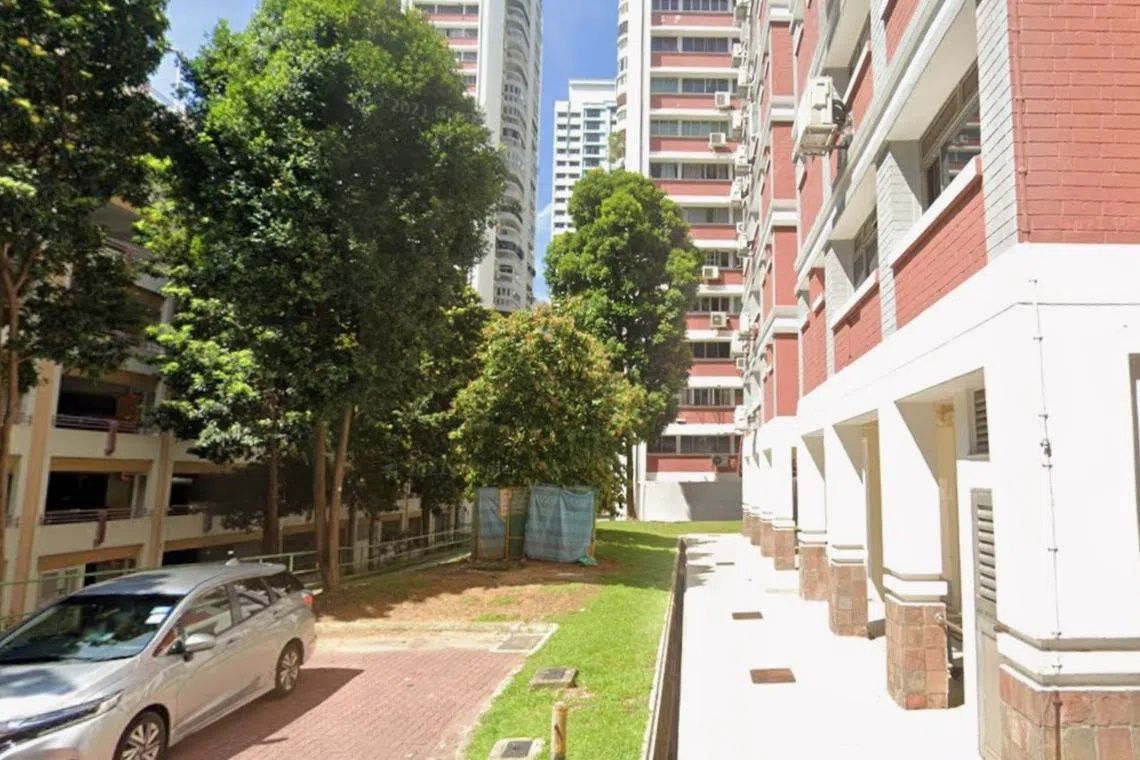
A 46-year-old woman has been arrested in Singapore following a violent knife assault on an acquaintance at a Housing Board residential block in the Bukit Merah area, in an incident that underscores persistent concerns about domestic and interpersonal violence in urban housing estates across the island state. The attack occurred on Saturday, July 4, at 7 Kim Tian Place, with emergency services responding to a distress call shortly after 7.40pm that evening.
Authorities moved swiftly to the scene and apprehended the suspect, who was subsequently charged with causing grievous hurt using a weapon. Officers recovered the knife used in the assault as evidence, and the injured woman, aged 43, was conveyed to Singapore General Hospital while conscious. The victim's condition and extent of injuries remain part of the ongoing investigation, though her responsive state at the time of hospitalisation suggests she avoided life-threatening harm.
China's Shin Min Daily newspaper documented visible aftermath of the confrontation, reporting that bloodstains were present at the void deck area of the HDB block—the common ground-floor space that serves as a communal hub in Singapore's public housing developments. This detail suggests the incident occurred in a semi-public space, raising questions about the nature of the encounter and why it escalated to such violence.
The incident falls within a broader pattern of interpersonal violence that periodically surfaces in Singapore's densely populated housing estates. Housing Board blocks, home to approximately 80 percent of Singapore's population, occasionally become flashpoints for disputes that turn physical. These settings—with their close proximity of residents, shared facilities, and diverse community dynamics—can sometimes harbour tensions that erupt without warning.
The relationship between the two women appears to have been pre-existing, classified by police as an acquaintance arrangement rather than a chance encounter. This detail is significant because it suggests the violence did not stem from a random confrontation but from an established connection with accumulated grievances or tensions. Understanding the nature of their relationship will likely prove central to investigators seeking to establish motive and context for the assault.
Singapore's response to such incidents reflects its zero-tolerance stance on violent crime. The swift arrest and charging of the suspect demonstrates the efficiency of police deployment in the city-state, where emergency response times in residential areas are typically measured in minutes. This capability, while reassuring to residents, also emphasises the expectation that violent behaviour will face rapid consequences.
The weapon used—a knife—remains a common instrument in domestic and interpersonal violence cases across Singapore and the broader Southeast Asian region. Unlike incidents involving firearms, which are tightly restricted in Singapore, blade-based assaults present a different criminal profile. They often occur in heated moments rather than through premeditation, though the severity of injury can be equally devastating.
Investigations remain ongoing as authorities work to establish a complete timeline of events, determine what precipitated the assault, and assess the full extent of the victim's injuries. These inquiries will inform whether additional charges might be considered or whether mitigating factors could influence prosecution strategy. Police statements typically remain measured during active investigations, limiting public disclosure until evidence is comprehensively gathered.
For residents of the Bukit Merah HDB block and surrounding neighbourhoods, such incidents can leave lasting impressions, raising awareness of personal safety within communal spaces. While serious violent crime in Singapore remains comparatively low by international standards, episodes like this remind residents that urban housing estates are not immune to interpersonal conflict turning dangerous.
The case also highlights the vulnerability of women in violent encounters, a concern that has gained increased attention across Asia. Despite Singapore's relatively safe reputation, gender-based violence and assaults on women continue to surface, often within contexts of personal relationships or prior acquaintance rather than stranger danger. Advocacy groups consistently emphasise the importance of support services and early intervention in situations where relationships show signs of escalating conflict.
As the investigation progresses, the circumstances surrounding the Saturday evening assault will likely become clearer. The arrested woman's background, any history of violent behaviour, and details of the relationship between the two parties will shape the legal proceedings and provide insight into how such preventable violence unfolds within Singapore's otherwise orderly society. The case serves as a reminder that beneath the efficiency and safety of the city-state's public spaces, human conflicts continue to demand attention from law enforcement, social services, and community awareness.

