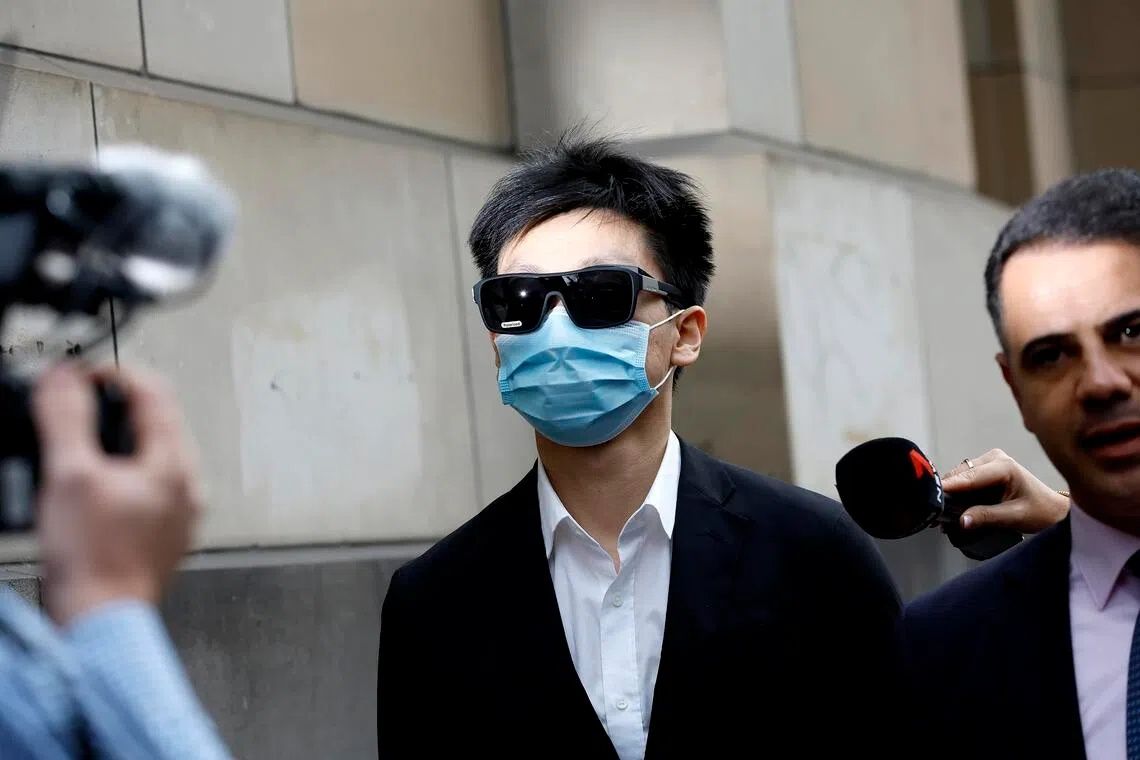
A Singaporean medical trainee has entered a guilty plea to filming hundreds of hospital staff members without their knowledge or consent across three major Melbourne institutions. Ryan Cho, 28, appeared before the Melbourne Magistrates Court on Thursday to admit to 13 charges stemming from an extensive campaign of voyeurism that authorities say yielded more than 10,000 intimate video and image files of more than 500 victims between 2021 and 2025.
The scope of Cho's offences became apparent when police conducted a search of his residence and retrieved multiple electronic devices, including a laptop, hard drive and mobile phone containing the trove of recordings. Among the charges he has now admitted are stalking, unlawfully installing recording devices to capture private images, and manufacturing intimate material. The 13 counts represent a consolidation of 910 charges originally laid by Victorian police, a practice known as "rolling up" that allows the court to manage an otherwise unmanageable volume of allegations while preserving the seriousness of the conduct.
The discovery of Cho's activities began unexpectedly in July 2025 when staff at the Austin Hospital found a mobile telephone concealed in a mesh bag positioned inside a staff toilet facility. This seemingly routine discovery triggered a police investigation that would ultimately expose one of Australia's most significant workplace voyeurism cases in recent memory. The investigation revealed that Cho had targeted colleagues at three major teaching and research hospitals: the Austin Hospital, Royal Melbourne Hospital, and the Peter MacCallum Cancer Centre, where he had rotated through as part of his medical training program.
Cho's connection to Australia spans nearly a decade. He arrived in 2017 and pursued medical studies at Monash University, eventually obtaining permanent residency status in April 2025, just months before his arrest. During his time as a medical trainee between 2021 and 2025, he had resided in shared accommodation with some of his victims, expanding the geographic scope of his offending beyond hospital premises. His swift transition from gaining permanent residency to facing serious criminal charges represents a dramatic reversal of circumstances for the young medical professional.
At Thursday's brief 30-minute hearing before Magistrate Michelle Mykytowycz, Cho stood and admitted his guilt to all 13 charges without contest. The court acknowledged the presence of multiple victims in the gallery and others participating via video link, emphasising the widespread impact of his actions. Cho appeared in formal attire—a black suit with white shirt and tie—sitting alone in the front row, while his father Wilson Cho, a Singapore-based logistics manager, observed from the back of the courtroom. The father had previously stated his complete ignorance of his son's alleged behaviour and the circumstances leading to the suspension of his medical licence by Australian health regulators.
The bail arrangements reflect the serious nature of the offences while accommodating the expectation that sentencing will occur at a future date. Cho remains free on strict conditions guaranteed by a A$50,000 surety lodged by his parents. These conditions are comprehensive and include mandatory police reporting three times weekly, complete prohibition on contact with witnesses, restricted hospital access except in genuine emergencies, confiscation of his passport, and a ban on possessing photographic or video equipment outside his home. Additionally, the court has mandated that Cho undergo appropriate medical treatment, a requirement aligned with his barrister's characterisation of him as a "complicated young professional" presenting "complex psychological issues."
Sentencing is scheduled to commence on November 23 for a three-day hearing in Melbourne's County Court. The proceedings will include impact statements from victims, allowing them to articulate how Cho's actions have affected their professional lives, sense of safety and personal wellbeing. Such victim impact evidence often significantly influences sentencing outcomes, particularly in cases involving large numbers of identifiable victims who have suffered invasion of privacy and violation of their bodily autonomy.
Beyond the criminal proceedings, the case has triggered substantial civil action. Approximately 100 victims, predominantly women, have lodged human rights complaints against all three hospitals through Australia's federal human rights mechanism. These complaints allege sexual harassment and workplace discrimination, essentially arguing that the institutions failed in their duty of care to maintain safe working environments free from predatory conduct. Tony Carbone, managing partner at Carbone Lawyers, which is coordinating the human rights complaints to the Australian Human Rights Commission, has indicated that additional hospital employees are expected to join the collective action.
The implications of this case extend well beyond the immediate individuals involved. For Singapore, it represents an unsettling instance of a local professional engaging in serious criminal conduct while resident overseas, raising questions about background screening and character assessment during medical education. For Australia's medical regulatory framework, it highlights vulnerabilities in workplace safety within hospital settings despite the presence of security infrastructure. For Malaysian and other Southeast Asian medical professionals working in Australia, the case underscores the importance of workplace advocacy and reporting mechanisms, as well as the serious consequences that criminal conduct can carry in Australia's justice system.
The case also exposes systemic issues within healthcare institutions regarding workplace monitoring, staff privacy protection and the mechanisms available to detect covert recording devices in sensitive areas. The fact that discovery occurred somewhat fortuitously—through chance discovery of equipment—rather than through proactive institutional measures suggests that hospitals may need to strengthen their approaches to detecting voyeurism and protecting staff. Furthermore, the investigation's revelation of more than 10,000 files suggests a sustained, deliberate campaign rather than opportunistic offending, raising concerns about how such activity could persist undetected across multiple institutional settings over several years.
For medical trainees and junior doctors throughout the Asia-Pacific region, Cho's case serves as a cautionary reminder of the ethical and legal boundaries that govern professional conduct, and the severe personal and legal consequences of violating the trust placed in medical practitioners. The three-day sentencing hearing in November will likely establish precedent for how Australian courts treat technology-enabled voyeurism within professional settings, with potential implications for sentencing frameworks across comparable Commonwealth jurisdictions including Malaysia.

