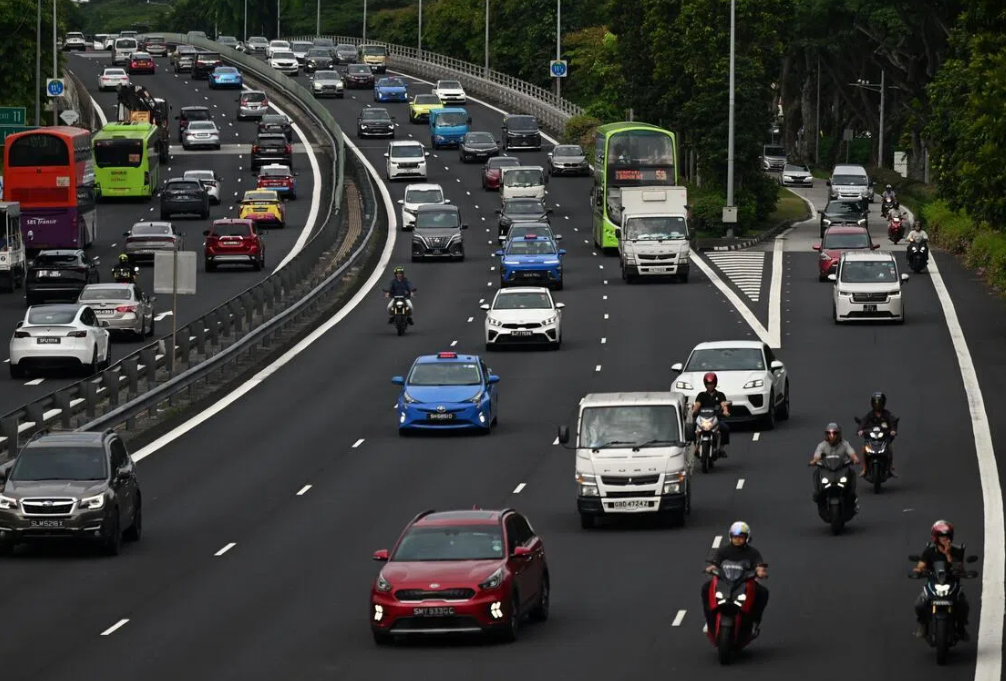
Singapore's four largest ride-hailing and taxi platforms have agreed to maintain supplementary driver fees through the end of September, a decision that reflects the ongoing pressure transportation workers face from elevated fuel and operational expenses. ComfortDelGro, Grab, Gojek, and Tada made the announcement through the National Private Hire Vehicles Association (NPHVA), which represents private-hire drivers under the NTUC umbrella, signalling that the temporary cost relief measures first introduced during the 2022 energy crisis will persist for several more months.
The decision to extend these surcharges comes after sustained discussions between the NPHVA and platform operators regarding the financial pressures confronting drivers. ComfortDelGro, Singapore's dominant taxi operator, will maintain a tiered surcharge structure where trips costing less than $15 attract a $0.50 additional fee, while more expensive journeys incur a $0.80 supplement. The company will also retain a $0.01 per 400 metres increase in distance-based charges for vehicles like its Toyota Prius fleet, applicable to journeys under 10 kilometres. These measures cover rides booked via the ComfortDelGro app, cross-border services, limousine rentals, and hourly bookings.
Ride-hailing competitors Grab, Gojek, and Tada implemented their own driver fees when fuel prices surged dramatically in April. Grab and Gojek charge $0.90 per trip, while Tada imposes a higher $1.20 surcharge on rides exceeding $18 in fare value. According to the NPHVA, these driver fees are transmitted entirely to transportation workers without platform operators extracting commission, distinguishing them from standard service charges that benefit the companies themselves. This distinction is crucial for understanding how the fees function as direct compensation for drivers rather than revenue enhancement for the platforms.
The persistence of elevated fuel costs explains why platforms have chosen to maintain these surcharges rather than allowing them to expire. Petrol prices in Singapore have climbed considerably since the initial implementation of driver fees in 2022. In March 2024, when ComfortDelGro first introduced its surcharge, 95-octane petrol averaged between $2.91 and $2.92 per litre across major stations. By late July, the same fuel grade had risen to $3.36 or $3.37 at the five largest petroleum retailers—Caltex, Shell, Esso, SPC, and Sinopec—representing an increase of approximately 15 per cent in just four months.
The broader regional energy dynamics help explain Singapore's fuel price trajectory. In February, military operations in the Middle East disrupted energy markets when attacks on Iran prompted concerns about potential closures of the Strait of Hormuz, one of the world's most critical petroleum shipping channels. Although the strait remained open, the geopolitical tensions contributed to sustained global oil price volatility that flowed through to retail fuel stations throughout Asia. For drivers operating in Singapore's competitive ride-hailing market, where profit margins often depend on fuel efficiency and per-trip economics, these price movements directly threaten their earnings capacity.
The fee extension reveals important tensions within Singapore's gig economy. While platform operators depend on driver supply to function, and drivers require viable income to continue working, the burden of volatile input costs falls primarily on transportation workers. The surcharges represent a compromise acknowledging that without intervention, driver earnings would compress unsustainably. Yet the temporary nature of these measures—repeatedly extended for three-month periods—suggests uncertainty about whether fuel costs will stabilise or whether structural solutions might eventually emerge.
For Malaysian readers, Singapore's approach to managing ride-hailing driver compensation offers useful parallels. Malaysia's own Grab and Gojek operations function within comparable regional fuel markets, and Malaysian drivers face identical energy price pressures. However, Singapore's formal engagement between driver associations and platforms, mediated through the NPHVA's advocacy, contrasts with Malaysia's more fragmented driver representation. The mechanisms through which Singapore ensures surcharges flow entirely to drivers without platform deductions also highlight questions about transparency and worker protection in Malaysia's digital transport sector.
The NPHVA signalled its intention to sustain ongoing dialogue with platform operators regarding practical support measures for drivers, suggesting that further extensions or adjustments may occur beyond September if cost pressures persist. This regular engagement model, where driver representatives formally negotiate with multiple platforms simultaneously, creates a baseline for industrial relations that protects workers from unilateral platform decisions while allowing companies flexibility to adjust pricing models.
Looking ahead, the September 30 deadline represents another inflection point where stakeholders must assess whether the underlying cost environment has stabilised sufficiently to allow surcharge reductions, or whether further extensions remain necessary. Global oil price trajectories, regional geopolitical developments, and domestic policy changes in Singapore will all influence this calculation. For the broader Southeast Asian ride-hailing ecosystem, Singapore's experience suggests that driver retention and service quality increasingly depend on proactive cost management, particularly when fuel represents a substantial input expense that individual platform users cannot control.

