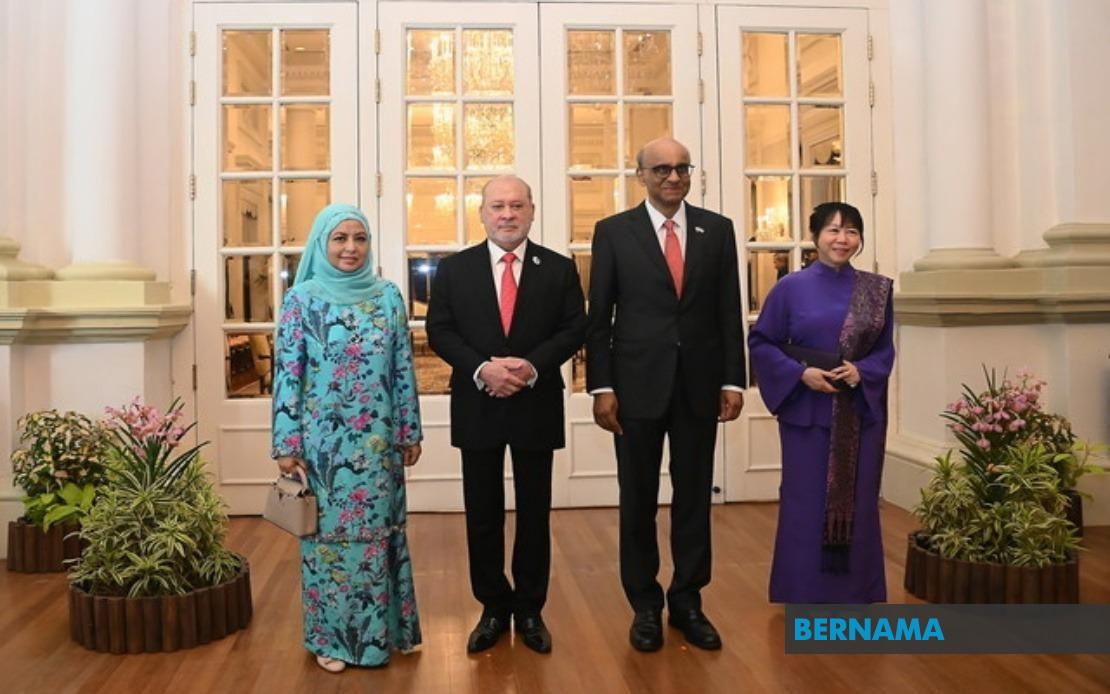
Singapore President Tharman Shanmugaratnam began a three-day state visit to Malaysia on July 13, 2026, at the invitation of His Majesty Sultan Ibrahim, King of Malaysia, underscoring the enduring importance both nations place on their bilateral relationship. In remarks ahead of the visit, President Tharman characterised the Singapore-Malaysia partnership as fundamentally rooted in shared history, mutual respect and an unwavering commitment to dialogue—qualities that have sustained cooperation across six decades despite occasional disagreements over sensitive issues.
The relationship between the two countries extends far beyond conventional state-to-state transactions, President Tharman emphasised, describing it instead as a bond cemented by centuries of interwoven cultural heritage and kinship ties that link their peoples at the deepest levels. He pointed to the Johor-Singapore Causeway, which functions as the world's busiest land border crossing, as a tangible symbol of the economic and social integration that has become characteristic of their partnership. This integration has yielded compounding benefits for citizens on both sides, from employment opportunities to trade flows that underpin regional competitiveness.
Cultural preservation and recognition emerged as another dimension of bilateral cooperation that President Tharman highlighted with particular warmth. Singapore and Malaysia, together with Brunei, Indonesia and Thailand, successfully secured UNESCO inscription for the kebaya, a traditional garment worn across Southeast Asia that embodies the region's multicultural heritage. Beyond this achievement, the two countries are collaborating to seek similar international recognition for Chingay, the elaborate street procession that showcases the communities' shared customs and evolving cultural landscape. These efforts carry significance beyond ceremonial value, serving as deliberate mechanisms to transmit traditions to younger generations while demonstrating how cultural pride and regional cooperation reinforce one another.
The management of bilateral disagreements has emerged as a defining strength of the relationship rather than a weakness. President Tharman acknowledged candidly that the two neighbours have grappled with complex and occasionally sensitive issues over the decades, which is inevitable given their shared history and proximate geography. However, successive governments on both sides have resisted the temptation to allow such disputes to calcify into entrenched antagonism. Instead, they have chosen to resolve disagreements through disciplined dialogue anchored in mutual respect and adherence to international law. This approach has fostered unusually high levels of trust and familiarity among political leaders, officials and civil society on both sides—a valuable reservoir of goodwill that creates space for frank discussions and pragmatic problem-solving.
In an era of intensifying great-power competition and fracturing multilateral trading systems, President Tharman stressed that Singapore and Malaysia must deepen their regional integration to enhance their collective value proposition globally. He called for closer coordination in market integration, energy resilience and supply chain development, arguing that such cooperation can generate growth in emerging sectors including renewable energy, digital technologies and the green economy. Given that both tropical nations face similar climate challenges, collaboration in renewable energy and carbon credit markets presents particular opportunities for mutual benefit. The recently concluded ASEAN Digital Economy Framework Agreement, which will be signed at November's ASEAN Summit in Manila, exemplifies this strategic thinking—external projections suggest that a high-quality agreement could double ASEAN's digital economy value from US$1 trillion to US$2 trillion by 2030.
Two flagship infrastructure projects embody the practical expression of this bilateral vision. The Johor-Singapore Special Economic Zone seeks to combine the respective strengths of both countries to create a genuinely win-win development model that neither could achieve alone. The Rapid Transit System Link, meanwhile, addresses a concrete daily reality: hundreds of thousands of Malaysians and Singaporeans cross the land border checkpoints each day for work, commerce and family reasons. By easing this commute, the RTS Link removes a friction point that hampers both economic productivity and the informal integration of cross-border communities.
President Tharman situated Singapore-Malaysia cooperation within the broader context of ASEAN's strategic challenges and opportunities. As founding members of the bloc, both countries share a fundamental interest in strengthening ASEAN's centrality, unity and relevance amid global uncertainty. He specifically commended Malaysia's 2025 ASEAN Chairmanship, noting that under Prime Minister Datuk Seri Anwar Ibrahim's stewardship, the organisation achieved significant milestones including the admission of Timor-Leste as ASEAN's 11th member, advancement of the ASEAN Trade in Goods Agreement upgrade, and substantial conclusion of the digital economy framework agreement. These achievements demonstrated ASEAN's continued relevance and convening power even in a complex geopolitical environment.
The incoming Singapore Chairmanship in 2027 presents both nations with an opportunity to capitalise on this momentum, President Tharman suggested. By working in close coordination, Singapore and Malaysia can help preserve ASEAN's role as a coherent, reliable and trustworthy partner in regional peace and stability. This coordination becomes ever more critical as great-power competition creates pressure on smaller nations to choose sides or abandon commitment to multilateralism. The example of two established neighbours managing their differences responsibly and deepening cooperation serves as a powerful model for the entire region.
People-to-people engagement emerged as a critical frontier requiring deliberate investment. President Tharman noted that while earlier generations maintained cross-border connections organically through kinship and cultural networks, contemporary circumstances demand more proactive facilitation. He advocated for expanded bilateral exchange programmes, joint internships, youth leadership forums and collaborative community projects designed to deepen friendships among younger Malaysians and Singaporeans. This generational transmission of bilateral goodwill is essential to building a resilient long-term relationship that can withstand the inevitable pressures and misunderstandings that arise between neighbouring states.
On a more personal note, President Tharman reflected fondly on his own experiences travelling through Malaysia across different life stages—from his youth through family trips with his wife and children. He spoke warmly of his appreciation for how Malaysian cultures have evolved together with the broader region over centuries, and expressed genuine admiration for the hospitality of the Malaysian people. These personal sentiments, while seemingly informal, carry weight as signals that bilateral relationship-building extends beyond official protocol to genuine interpersonal connection among leaders who will shape regional affairs for years to come.
The broader significance of President Tharman's visit and remarks lies in their timing and framing. At a moment when regional stability cannot be taken for granted and the international order faces unprecedented stress, Singapore and Malaysia are consciously reinforcing the message that close neighbours can manage disagreements constructively while deepening cooperation across multiple domains. This approach—which President Tharman characterised as allowing hearts to shake hands—offers a counternarrative to the zero-sum geopolitical competition that increasingly dominates global discourse. For Southeast Asia and Malaysia specifically, the relationship provides crucial insurance against regional fragmentation while creating practical foundations for shared prosperity.

