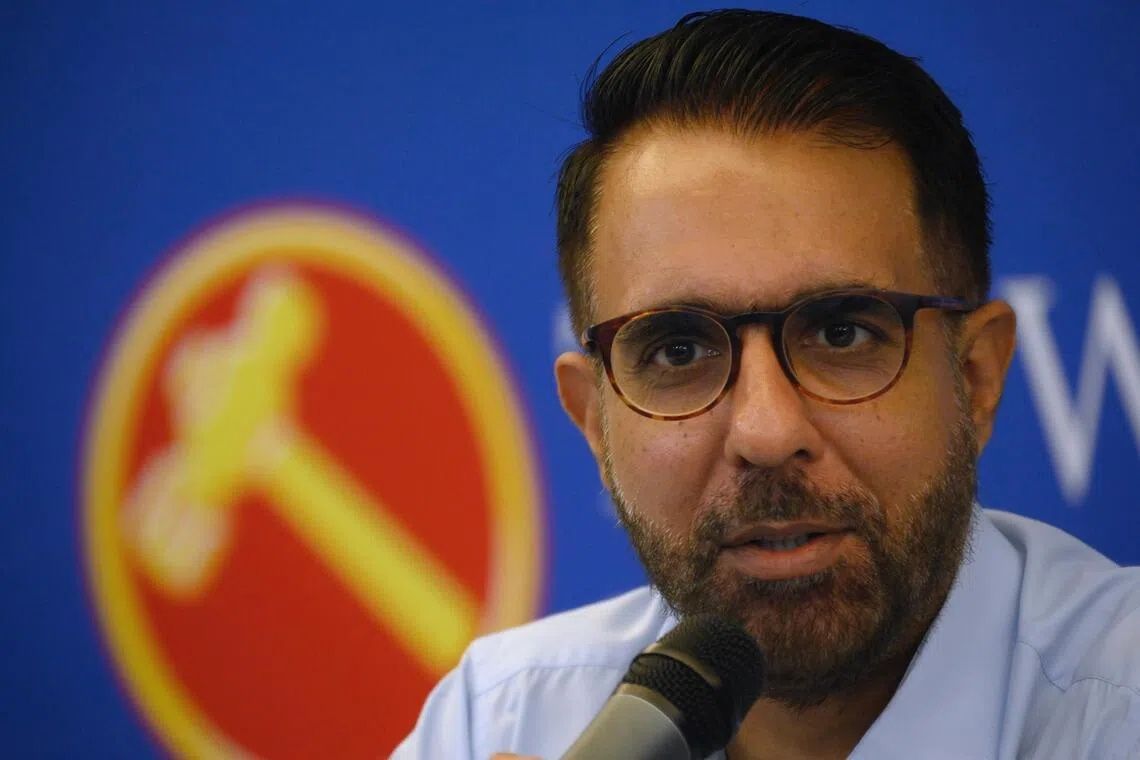
The Workers' Party faces an unprecedented internal crisis that could reshape Singapore's opposition politics, with a faction of the party's roughly 100-strong cadre base determined to remove secretary-general Pritam Singh at elections scheduled for June 28. This potential showdown represents a pivotal moment for the party, which has built its reputation on integrity and transparency, principles now tested by Singh's High Court-upheld conviction for lying to a parliamentary committee in December 2025.
The movement against Singh has gained momentum over recent weeks as dissident cadres intensify their search for a challenger willing to contest the top position. Senior party sources indicate that preliminary approaches have been made to several MPs, including Aljunied GRC's Gerald Giam, Hougang's Dennis Tan, and Sengkang GRC members He Ting Ru and Jamus Lim, though none have formally committed to running. Party insiders emphasise that the situation remains fluid, with positions potentially shifting right up until the voting begins. The reluctance of these figures to publicly comment reflects the party's disciplinary record against members who openly criticise leadership, a constraint that has constrained internal debate.
The immediate catalyst for this leadership challenge stems from Singh's handling of former Sengkang GRC MP Raeesah Khan's 2021 parliamentary falsehood. Khan fabricated a personal anecdote during a parliamentary sitting in August 2021 but did not admit to the deception until November that year. Singh was subsequently found to have guided Khan in maintaining her lie, a finding that triggered disciplinary action against him by the party itself. The formal letter of reprimand issued to Singh two months ago intensified pressure on him to resign, as party members increasingly questioned whether his continued leadership undermined the Workers' Party's core brand proposition of being morally different from the ruling establishment.
The special conference convened on June 28 will see Singh answering questions about his conduct related to Khan's lie and the broader circumstances surrounding his conviction. Twenty-five cadres formally petitioned for this special conference in December 2025, many of them former central executive committee members and election candidates. Beyond demanding accountability, these cadres have explicitly called for Singh to step down voluntarily, with provision made for a secret ballot to determine his fate should he refuse to resign. The significance of this group lies not merely in their numbers but in their seniority within party structures, suggesting that unhappiness extends beyond rank-and-file members to the party's institutional core.
Perhaps most intriguingly, speculation has swirled that Low Thia Khiang, the former party chief who led the Workers' Party from 2001 to 2018 and orchestrated its historic General Representation Constituency victory in 2011, has shifted his position on Singh. Reports suggest that Low voted against Singh during a central executive committee meeting discussing the disciplinary findings, a signal that could prove decisive. Although party sources do not expect Low himself to contest Singh's position, his backing of an alternative candidate could swing approximately 30 votes, combining the core group of unhappy cadres with those who respect Low's counsel. This matters considerably in an organisation where total cadre strength barely exceeds 100 members.
Low's influence within the party remains substantial despite his departure from the secretary-general's post. His 2011 breakthrough of the General Representation Constituency system, previously believed to be an impenetrable government stronghold, established him as a transformative figure in Singapore opposition history. The fact that he faced his own leadership challenge in 2016, when former Aljunied GRC MP Chen Show Mao mounted an unsuccessful bid with backing from party veterans, suggests that factional contestation within the Workers' Party is not unprecedented. Notably, several cadres who supported Chen's challenge eight years ago are among those currently agitating for Singh's removal, indicating that dissent often traces back to overlapping networks of long-standing party members.
Beyond the personal conviction, Singh's leadership has come under broader scrutiny following the party's 2025 general election performance. Several cadres have expressed disappointment that the Workers' Party, despite fielding what they considered a competitive slate, failed to capture additional constituencies. The party had privately harboured expectations of gaining ground, particularly given its demonstrated strength in several areas. Additionally, Singh's decision to withdraw from Marine Parade-Braddell Heights General Representation Constituency on Nomination Day raised questions among members about strategic judgment. These electoral setbacks, occurring alongside the personal conviction and parliamentary disciplinary process, have cumulated into a picture of leadership that some cadres view as increasingly embattled.
The removal of Singh's role as Leader of the Opposition by Prime Minister Lawrence Wong in January 2026 added another dimension to internal discontent. Notably, when PM Wong invited the Workers' Party to nominate a replacement MP for this parliamentary position, the party declined to do so, choosing instead to maintain unified support behind Singh. Some cadres have privately questioned this decision as strategically misguided, arguing that it cost the party prominence and visibility in Parliament and potentially weakened the broader opposition cause at a moment when united strength would have been tactically valuable. This criticism reflects deeper concerns about whether Singh's judgment serves the party's long-term interests.
The mechanics of the June 28 elections allow for significant tactical possibilities that could alter outcomes. Singh requires only a simple majority of the slightly-more-than-100 cadres voting to retain his position, and any cadre in good standing may nominate candidates for the secretary-general role. Notably, even if Singh is voted out at the special conference, he remains eligible to run again at the subsequent biennial ordinary cadres' conference that follows. This dual-ballot structure means that outcomes at the first meeting could significantly influence whether challengers materialise at the second. If Singh wins by only a narrow margin or loses outright at the first meeting, one cadre suggested, the likelihood of multiple challengers emerging at the second ballot increases substantially.
The underlying issue driving this challenge remains deeply connected to the Workers' Party's identity and positioning. Party cadres have long emphasised that voters supporting the Workers' Party do so precisely because they perceive the party as fundamentally different from the governing establishment—more honest, more committed to transparent governance, and less subject to the compromises that characterise mainstream politics. Singh's conviction for misleading Parliament strikes at the heart of this differentiation. One cadre captured the stakes succinctly: "People vote for WP because they trust us to be different. If our leader is convicted of lying, we lose the moral high ground." This is not merely about personal accountability; it touches the existential question of what the Workers' Party represents and why Singaporeans should entrust it with political responsibility.
The coming weeks will prove decisive for Singapore's opposition landscape. The outcome of these internal elections will determine not only Singh's political future but potentially reshape the Workers' Party's trajectory and its ability to mount an effective parliamentary challenge to the government. Should Singh retain leadership, the party would signal that internal stability and leadership continuity outweigh concerns about reputation and integrity. Should dissident cadres succeed in installing an alternative, the Workers' Party would undergo its first leadership transition in eight years, potentially signalling renewal but also raising questions about institutional coherence. For Malaysian observers monitoring regional political developments, this struggle within Singapore's most credible opposition party demonstrates the complex tensions between personal accountability, institutional loyalty, and long-term party viability that challenge political organisations across Southeast Asia.

