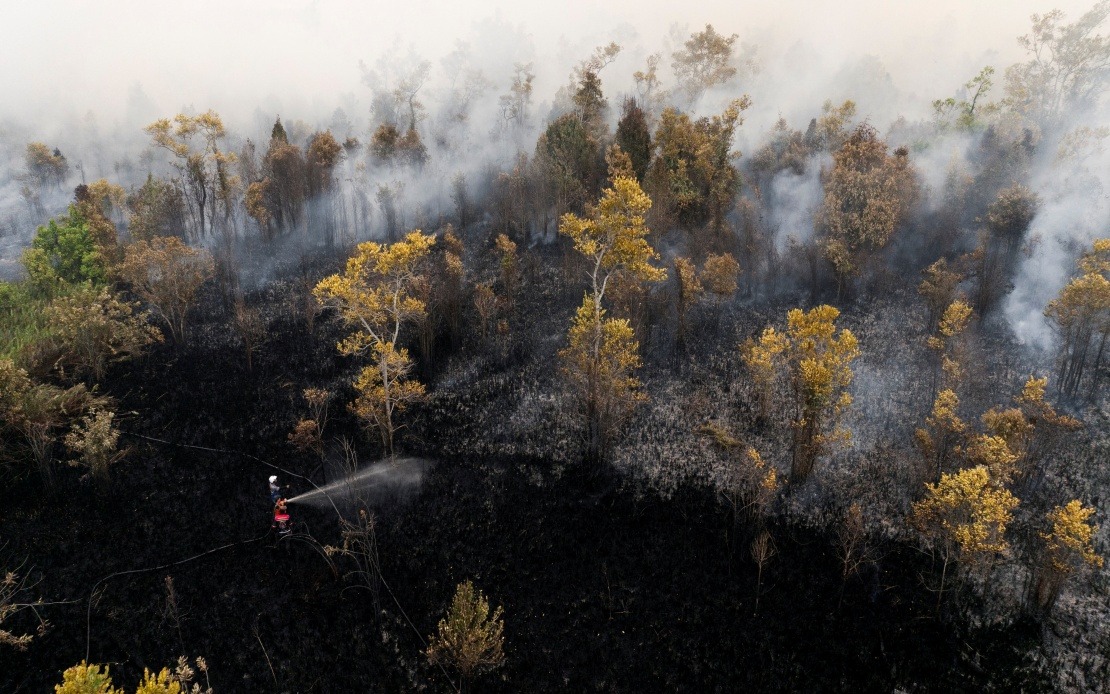
Singkawang Airport in West Kalimantan, Indonesia, halted all flight operations on Saturday as thick haze from burning forests rendered visibility conditions unsafe for aircraft operations. The decision, announced through the airport's official social media channels, affected all domestic travellers using the facility, with authorities urging passengers to coordinate directly with their airlines regarding rebooking and cancellations. Located approximately 145 kilometres north of Pontianak, the provincial capital, Singkawang serves as a key transportation hub for the region, making the suspension a significant disruption to connectivity in western Borneo.
The closure reflects escalating concerns within Indonesia's aviation sector regarding the impact of seasonal fire activity on flight safety protocols. Lukman F. Laisa, the Director-General of Civil Aviation, emphasised that visibility standards represent a non-negotiable baseline for aircraft operations, with carriers obligated to implement delays, diversions, or outright cancellations when atmospheric conditions fall short of regulatory minimums. His statement underscores how forest fire haze transcends environmental concerns, directly threatening infrastructure operations and economic activity across affected provinces. The Transport Ministry has established ongoing coordination mechanisms with airlines and other stakeholders to manage operational adjustments as smoke conditions fluctuate.
Satellite surveillance data painted a sobering picture of fire activity across Kalimantan's three provinces. As of Friday evening, NASA's Terra and Aqua satellites identified 56 high-confidence thermal hotspots in Central Kalimantan, 51 in West Kalimantan, and 19 in South Kalimantan. These hotspots indicate active burning zones where fires continue consuming forest cover and agricultural land. The Meteorology, Climatology and Geophysics Agency reported that significant portions of West and Central Kalimantan were experiencing air quality levels classified as very unhealthy, posing genuine health risks to residents and hampering visibility for aviation purposes.
Indonesian authorities have mobilised substantial firefighting resources to combat the escalating crisis. Ground-based operations proceed in tandem with aerial water-bombing campaigns across affected regions. Additionally, weather modification initiatives—commonly known as cloud seeding—have been prepared for deployment once meteorological conditions become favourable. These technological interventions represent attempts to artificially induce rainfall, though their effectiveness depends heavily on atmospheric moisture levels and cloud formations. The comprehensive nature of response efforts indicates recognition within government circles of the severity posed by uncontrolled fire activity.
Criminal investigations into fire causation have yielded tangible results, particularly in Central Kalimantan where provincial police identified approximately 12 suspects by mid-August. Inspector-General Iwan Kurniawan, the Central Kalimantan police chief, emphasised that all forest and land fire incidents undergo systematic investigation to establish causation and accountability. This prosecutorial dimension matters significantly, as evidence suggests that deliberate land clearing—conducted by agricultural operators and property developers—contributes substantially to annual fire cycles, particularly during dry seasons when vegetation becomes highly combustible.
For Malaysian stakeholders and regional observers, the Kalimantan fire situation carries multiple implications. Cross-border haze migration frequently affects air quality across Malaysia, Singapore, and Brunei, necessitating coordinated responses and diplomatic engagement. The Singkawang airport closure exemplifies how environmental crises cascade into economic disruptions, affecting tourism, business travel, and supply chains. Malaysian airports and airlines maintain contingency protocols for managing passenger diversions and cancellations during haze episodes, reflecting the reality that seasonal Kalimantan fires represent a recurring regional challenge rather than an anomaly.
The underlying factors driving Indonesian forest fires remain structural and systemic. Competing land use pressures pit conservation interests against agricultural expansion and industrial development. Palm oil plantations, pulpwood estates, and smallholder farming operations occupy vast tracts of Kalimantan, creating patchworks of cleared and degraded landscapes. When dry seasons arrive, these converted lands burn more readily than intact forests. Additionally, peatland drainage for agricultural purposes renders these carbon-rich soils exceptionally fire-prone, as peat can smoulder underground and reignite unpredictably. These variables ensure that Indonesian fire seasons generate recurring crises unless underlying land-use patterns fundamentally shift.
The aviation safety dimension of forest fires deserves particular attention within Southeast Asia's growing air travel market. Regional airlines operate increasingly dense networks connecting major cities across Indonesia, Malaysia, Thailand, and the Philippines. Haze-induced visibility restrictions create cascading disruptions affecting schedules far beyond the immediately affected airports. Passengers endure delays, flights reroute to alternative destinations, and cargo operations face interruptions. For business travellers and those with time-sensitive commitments, such disruptions impose genuine costs. Insurance implications also emerge when flights are cancelled due to environmental factors classified as force majeure events.
Indonesia's Transport Ministry has positioned aviation safety as its paramount concern, a position that carries credibility given Indonesia's substantial air travel volumes and the sector's economic importance. By prioritising visibility standards over operational continuity, authorities acknowledge that cutting corners on safety protocols carries unacceptable risks. Commercial pressures from airlines and passengers to maintain schedules cannot override fundamental aeronautical principles. This principled stance, if consistently maintained, supports regional aviation safety standards and protects both passengers and aircraft crew members.
The criminal investigation dimension introduces accountability mechanisms that, if executed rigorously, could theoretically deter intentional fire-setting. However, enforcement challenges persist across Indonesia's expansive geography and fragmented administrative systems. Identifying individual perpetrators within complex commercial operations proves difficult, and prosecutorial resources remain limited relative to scale of suspected violations. Furthermore, distinguishing deliberate arson from uncontrolled burns during permitted land clearing operations requires detailed forensic investigation and expertise. These constraints explain why, despite years of investigation efforts, prosecutions remain relatively limited relative to the annual magnitude of fire incidents.
Looking forward, Singkawang Airport's Saturday closure signals that haze-induced flight disruptions will likely persist as climate variability and land-use pressures continue shaping Kalimantan's fire cycle. Regional air travellers and businesses should prepare for ongoing seasonal disruptions rather than expecting permanent resolution absent fundamental policy changes. Such changes would require Indonesian policymakers to restrict land conversion in fire-prone regions, enforce existing environmental regulations more stringently, and compensate stakeholders for conservation-oriented land uses. Until such systemic shifts occur, the cycle of dry seasons, forest fires, haze, and aviation disruptions will repeat across the coming years.

