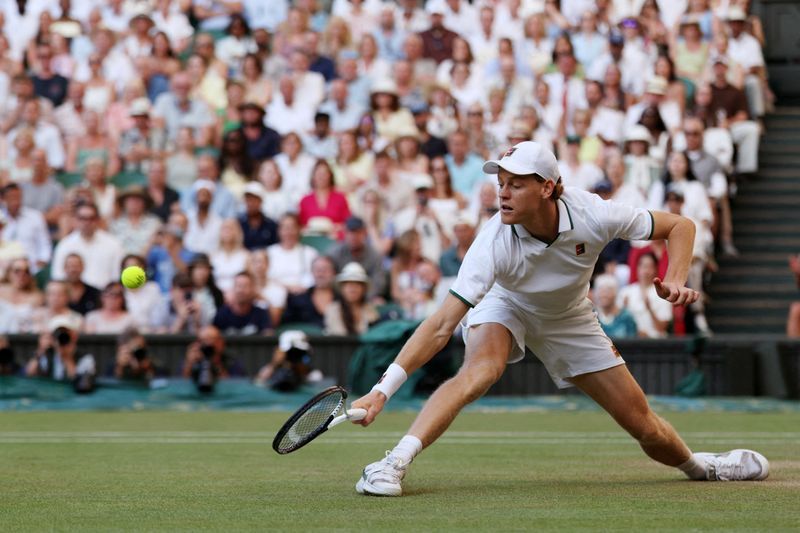
Jannik Sinner, the world's top-ranked tennis player, has withdrawn from the US Open following a right knee injury that has sidelined him for nearly three weeks. The 24-year-old Italian announced his decision on Friday, depriving the Grand Slam tournament at Flushing Meadows of one of its strongest contenders heading into the competition. This withdrawal marks a significant shift in the dynamics of the men's draw, particularly given Sinner's dominance throughout the season and his recent triumph at Wimbledon, where he claimed his fifth major title just weeks before the injury emerged.
Sinner's injury emerged earlier this month, forcing him to withdraw from two crucial hard-court preparation tournaments. The Cincinnati Open and Canadian Open are typically vital events for players to fine-tune their game and build match fitness before the US Open. His absence from both tournaments raised concerns about his ability to recover in time for the New York major, but Sinner's medical team and coaching staff held out hope for his participation. However, after returning to light training at Monte Carlo in recent days, the decision was made that more recovery time was necessary.
The Italian issued a statement through X, formerly Twitter, explaining that despite his intensive collaboration with his medical staff and support team, competing at the US Open would be inadvisable at this stage of his rehabilitation. He indicated that the knee issue required additional time to heal properly, suggesting that pushing for the tournament could risk exacerbating the injury or creating long-term complications. This measured approach to injury management reflects a broader trend among elite athletes who prioritise long-term career health over immediate competitive opportunities.
The timing of this withdrawal proves particularly consequential for Carlos Alcaraz, Sinner's fierce rival on the professional circuit. Alcaraz, currently ranked world number two, confirmed just a day prior that he would indeed compete at the US Open following a four-month absence from competitive tennis. The Spanish player had been dealing with his own injury setbacks but felt sufficiently recovered to make his return on one of sport's biggest stages. This announcement came as welcome relief to tournament organisers and tennis fans, as losing both top players to injury would have diminished the event's appeal considerably.
Alcaraz's path to potential victory now appears significantly clearer with Sinner's absence. The Spaniard, who defeated Sinner in last year's US Open final, heads to New York as the highest-ranked player in the draw and among the tournament favourites. His recent injury struggles had created uncertainty about his physical condition and readiness to compete at the highest level, yet his decision to return at the US Open suggests confidence in his recovery. With Sinner out of the picture, Alcaraz no longer faces his primary challenger for the title.
The removal of Sinner from the tournament also has broader implications for the overall quality of the men's draw. Beyond his recent Grand Slam success, Sinner has been remarkably consistent throughout the season, accumulating titles and demonstrating the kind of peak form that defines championship contenders. His absence will be felt not only by Alcaraz but by the entire field of competitors who now face slightly improved odds of advancing through the rounds. The US Open has built much of its recent marketing around contests between the tour's young elite, and Sinner versus Alcaraz rematches were heavily anticipated.
For Malaysian and Southeast Asian tennis enthusiasts, Sinner's withdrawal highlights the brutal realities of professional sports at the highest level. Injuries can derail seasons and alter career trajectories, even for the most dominant athletes. The injury also underscores the physical toll demanded by the modern tennis schedule, with its unforgiving calendar of back-to-back tournaments across multiple surfaces and climates. Players must navigate the delicate balance between competitive ambition and bodily preservation.
Sinner's decision to prioritise recovery over immediate competition reflects a shift in athlete management philosophy. Earlier generations of players often tried to push through injuries, resulting in chronic problems that followed them throughout their careers. Contemporary sports medicine and injury prevention strategies encourage a more conservative approach when significant damage is evident. By sitting out now, Sinner protects his ability to compete at full capacity throughout the remainder of the season and beyond.
The US Open, scheduled to run from August 23 through September 13, will proceed without its top seed for the first time in several years. This development opens opportunities for the second-tier contenders and unseeded players who might otherwise have faced nearly impossible odds of progressing far in the tournament. The draw now has a more open character, potentially leading to unexpected storylines and surprising breakthrough performances from players seeking to establish themselves among the elite.
Alcaraz's pursuit of his eighth Grand Slam crown now benefits from an unexpectedly advantageous draw composition. Should he perform to his capabilities and avoid injury during the fortnight, he stands an excellent chance of capturing the title. His return from four months away represents its own compelling narrative, adding intrigue to his campaign in New York. The storyline of a player overcoming serious injury to claim major trophies resonates powerfully with tennis audiences.
The broader tennis calendar implications of Sinner's withdrawal deserve consideration. His absence from major tournaments raises questions about his availability for the remainder of the season's critical events. The Masters 1000 tournaments and year-end championships still lie ahead, and his participation in these events will significantly impact rankings and seeding allocations. Depending on his recovery timeline, Sinner could miss several weeks or months of competitive play.

