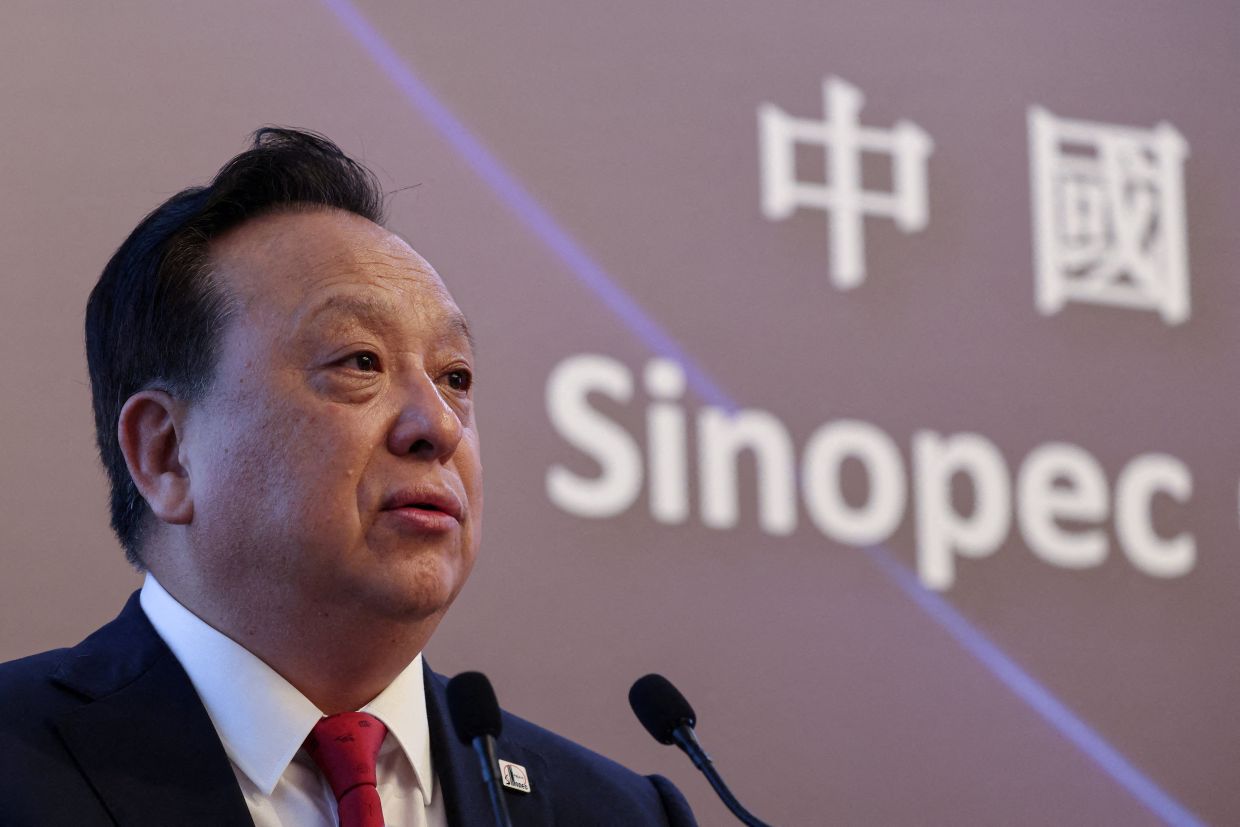
Hou Qijun, the recently promoted chairman of Sinopec, has embarked on an ambitious restructuring programme for the world's largest oil refiner at a time when many Chinese state enterprise executives would settle into their final years before retirement. Having assumed his role just over a year ago, Hou is confronting a fundamental challenge facing the global petroleum industry: the inexorable decline in demand for traditional transport fuels as vehicle electrification accelerates worldwide. This transition is particularly acute in China, where electric vehicle adoption has reached critical mass, rendering conventional gasoline and diesel production an increasingly precarious business model for a company of Sinopec's scale.
The structural overhaul Hou has implemented reorganises the sprawling conglomerate into four profit-generating divisions, each with distinct mandates and operational autonomy. These comprise an oil, gas and new energy segment; a refining and chemicals business; a finance and strategic innovation unit; and a combined global trading and marketing division covering fuel, liquefied natural gas and chemical products. This reconfiguration represents a deliberate effort to dismantle the bureaucratic rigidity that characterised Sinopec's previous structure, a challenge Hou addressed with striking candour in published remarks to China's State-owned Assets Supervision and Administration Commission in July. His acknowledgement that institutional inertia and what he termed the "big company syndrome" pose greater obstacles than technological or resource constraints reflects a rare degree of institutional criticism from a senior state enterprise leader.
The financial pressures confronting Sinopec are substantial and measurable. The company's domestic fuel sales have contracted to 2017 levels, a regression of nearly a decade that underscores the severity of the demand collapse. With approximately 3.6 million barrels per day of gasoline and diesel sold annually, predominantly within China, Sinopec faces a paradoxical predicament: its refining capacity, once a competitive advantage, has transformed into an albatross. Hou's vivid observation at a recent earnings briefing crystallises this dilemma: half of new car purchases in China no longer require fuel, rendering the expansion of refining capacity economically nonsensical. This demographic shift in transportation preference represents not a cyclical downturn but a fundamental structural realignment that demands strategic repositioning rather than marginal optimisation.
Central to Hou's transformation strategy is a significant reallocation of capital investment toward higher-value petrochemical production and nascent energy technologies. Sinopec plans to dedicate approximately 20 percent of its annual capital expenditure, exceeding 30 billion yuan (USD 4.46 billion), to new energy and advanced materials development throughout the 2026 to 2030 period. This represents a deliberate pivot away from volume-driven refining toward margin-driven specialised chemistry and renewable applications. The initiative encompasses over thirty discrete projects aimed at completion by 2030, including unconventional oil extraction, sustainable aviation fuel development, and refinery cost reduction programmes. For Malaysian observers, this restructuring carries particular relevance given the region's own energy transitions and the competitive implications for Southeast Asian refiners and petrochemical manufacturers.
The petrochemical segment presents both opportunity and formidable competition. Sinopec's ambitions to capture greater market share in high-value chemical products encounter stiff resistance from entrenched rivals including Wanhua Chemical, backed by local government interests, and the privately-managed Satellite Chemical. Furthermore, ethylene production, a foundational building block for plastics and synthetic fibres, faces chronic overcapacity across Chinese industry, constraining margin expansion. This competitive landscape means Sinopec cannot simply redeploy existing assets into petrochemicals and expect proportional returns; the company must achieve technological differentiation or cost superiority to establish viable competitive positions.
Unconventional oil development constitutes another pillar of Hou's strategy, with particular emphasis on shale oil extraction at the Jiyang trough, which forms part of Sinopec's Shengli oilfield complex. As conventional reserves within this formation deplete at accelerating rates, developing shale resources becomes commercially imperative. Hou's personal assumption of operational leadership for this project, which he described as placing himself "commander-in-chief" during discussions with media representatives in March, signals the strategic importance the company attaches to this initiative. His background as a geologist who spent formative years at China's flagship Daqing oilfield provides technical credibility for such complex developmental programmes.
Hou's career trajectory suggests a leader unusually positioned to navigate the intersection between conventional energy and emerging technologies. Before assuming the Sinopec chairmanship in June 2025, he served as general manager of China National Petroleum Corp, Asia's largest oil and gas producer, providing comprehensive exposure to upstream, midstream and downstream operations. More notably, he orchestrated the consolidation of pipeline assets belonging to China's three major oil corporations into PipeChina, a newly formed state enterprise, between 2019 and 2021. This accomplishment demonstrates both his capacity to execute complex organisational restructuring and his ability to operate within China's state enterprise governance framework while delivering measurable strategic outcomes.
Hou's leadership style appears to diverge markedly from stereotypical state enterprise management. Colleagues describe him as decisive, action-oriented and willing to deviate from scripted presentations, speaking with conviction on complex technical subjects. This personal dynamism, combined with his substantive energy sector expertise spanning the entire value chain, positions him to leverage governmental support for commercially challenging investments in hydrogen production and carbon capture technologies. Such programmes, which might struggle to achieve acceptable returns under purely commercial criteria, can proceed more readily within China's policy-driven investment framework, where long-term strategic objectives and national energy security considerations counterbalance conventional financial metrics.
The competitive challenge ahead extends beyond internal restructuring or even rivalry with domestic Chinese competitors. Hou and Sinopec must contend with the emergence of non-state actors increasingly dominating the new energy sector globally. Private enterprises, multinational corporations and emerging technology companies are capturing disproportionate share of investment, innovation capacity and market opportunity in renewable energy, battery manufacturing, hydrogen production and related fields. Sinopec's state-enterprise structure, while facilitating access to concessional capital and regulatory support, simultaneously constrains the agility, risk tolerance and entrepreneurial culture that characterise successful new energy enterprises elsewhere. Whether centralised planning and government backing can compensate for these structural disadvantages remains an open strategic question.
For the broader region, Sinopec's transformation signals the beginning of profound adjustments within China's energy sector that will reverberate across Southeast Asia. Reduced Chinese demand for imported petroleum and refined products will reshape regional refining economics and investment patterns. Simultaneously, Sinopec's expanding new energy footprint, particularly in chemicals and specialised materials, will intensify competition for Southeast Asian producers across multiple industrial segments. Malaysian stakeholders—whether in petroleum, petrochemicals, or energy trading—must anticipate these strategic shifts and calibrate their own positioning accordingly within an evolving Asian energy landscape.
The ultimate measure of Hou's tenure will be whether Sinopec successfully translates strategic intention into operational reality. Ambitious restructuring plans frequently founder during implementation, encountering entrenched interests, technological challenges, market resistance or simple execution failure. At sixty years old, Hou is departing from the typical retirement trajectory of Chinese state executives, suggesting either exceptional commitment to this transformational agenda or significant pressure from political leadership to deliver results. Either motivation underscores the gravity with which Beijing views Sinopec's challenges and the criticality of achieving successful transition from twentieth-century energy giant to twenty-first-century diversified advanced materials and energy technology company.

