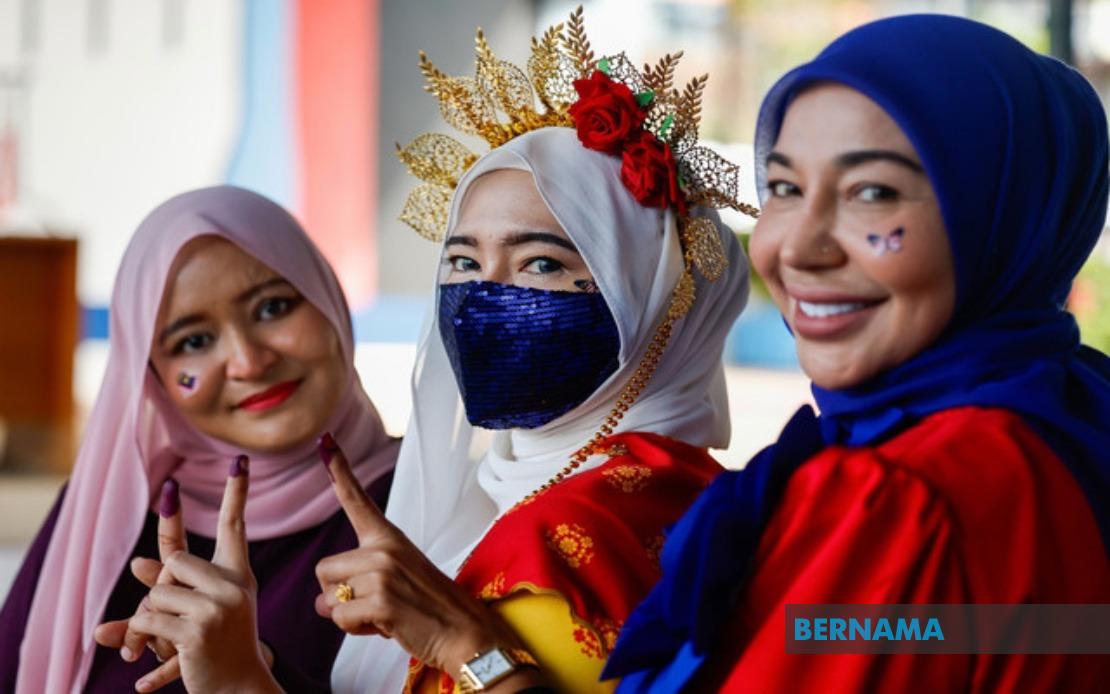
At a quiet moment during voting for the Negeri Sembilan state election, three sisters from Rantau captured the attention of fellow voters by arriving at Sekolah Jenis Kebangsaan Cina Chung Hua dressed in eye-catching outfits adorned with Malaysia's national flag motifs and patriotic colours. The decision to dress in such coordinated Jalur Gemilang-themed attire reflected a deliberate choice to intertwine their participation in the electoral process with the approaching celebrations for National Day, transforming an ordinary voting experience into a visible expression of national pride.
Zamzarina Basiron, the eldest at 45 years old and a practising teacher, initiated the idea as a natural extension of how her family marks August each year. Her explanation offered insight into a household tradition where National Day preparations typically begin early in the month, well before official festivities commence. Rather than viewing the state election as a separate civic exercise, she recognised the timing as an opportunity to amplify the patriotic atmosphere at the polling station itself, inviting her younger siblings to participate in what became an impromptu display of communal spirit.
The teacher's perspective reveals how ordinary Malaysians sometimes blur the lines between different occasions and celebrations, using personal milestones and civic responsibilities as occasions for expressing national sentiment. For Zamzarina, voting and National Day observance were not compartmentalised events but interconnected expressions of belonging and identity. Her decision to expand the tradition by inviting her sisters transformed what might have been an individual gesture into a family affair, demonstrating how patriotic expression can be both intimate and public simultaneously.
Bahirah Basiron, the second sister at 39 years old and a food entrepreneur, brought practical logistics to the endeavour. The preparation process consumed approximately two days, during which the siblings sourced appropriate clothing items and accumulated various accessories bearing the national flag design. This investment of time and effort underscores how such patriotic displays, while spontaneous in conception, require meaningful preparation and coordination. As someone running her own food business, Bahirah's willingness to dedicate two days to outfit preparation speaks to the significance the sisters attached to their unified presentation at the polling centre.
The youngest sibling, Nadzifah Basiron, aged 36 and employed as a staff member at Hospital Rembau, faced practical constraints that prevented her from assembling a complete patriotic outfit. Despite work commitments making it impossible to acquire appropriate clothing in time, she still made the effort to appear at the polling station to demonstrate solidarity with her sisters. Her presence, even without the full coordinated look, illustrated how family participation in civic and patriotic activities extends beyond identical external appearances to encompass shared values and intentions.
The sisters' coordinated effort attracted favourable attention from other voters present at the Sekolah Jenis Kebangsaan Cina Chung Hua polling station, with numerous observers responding positively to their patriotic presentation. Rather than appearing ostentatious or out of place, the outfits seemed to resonate with the broader mood of the occasion, particularly given the proximity to National Day celebrations. Their willingness to stand out visually while performing a fundamental civic duty suggested a confidence in combining personal expression with community participation.
For Malaysian voters, particularly in Negeri Sembilan, the state election represented a significant electoral exercise. The 16th Negeri Sembilan state election drew upon a registered voter base of 859,760 individuals, encompassing both those casting votes in person and the 7,391 citizens participating through postal voting. These figures reflect the substantial democratic participation infrastructure that underpins state-level elections in Malaysia, with voting centres across constituencies accommodating diverse segments of the population throughout the polling day.
The Election Commission had established ambitious targets for voter turnout, anticipating between 72 and 75 per cent of registered voters would participate in the election. Such projections reveal official confidence in public engagement with the electoral process, suggesting that the election campaign had generated sufficient interest and awareness to drive substantial participation. Achieving turnout within these ranges would represent solid democratic engagement, particularly for a state-level election where voter motivation sometimes differs from federal-level contests.
The administrative machinery supporting the election operated according to carefully choreographed timelines designed to deliver results efficiently while maintaining transparency. Preliminary results were scheduled for release by 10 pm on election day, with comprehensive final results expected before midnight. This compressed timeline reflects the refinement of electoral administration processes in Malaysia, enabling rapid result tabulation without compromising accuracy or public confidence in the process. The speed with which results would be available underscores the logistical sophistication required to manage simultaneous voting across numerous polling stations while coordinating data collection and verification.
The story of the three sisters from Rantau encapsulates broader themes within Malaysian civic culture regarding how citizens express national identity during electoral participation. Rather than viewing voting as a purely transactional exercise divorced from cultural expression, these siblings demonstrated how personal style and patriotic sentiment can be integrated into the voting experience. Their approach suggests that democratic participation and national pride are not competing impulses but complementary dimensions of civic engagement that can be expressed simultaneously and visually.
The Rantau polling centre, specifically the Sekolah Jenis Kebangsaan Cina Chung Hua, served as the backdrop for this demonstration of coordinated patriotism during a significant moment in Negeri Sembilan's political calendar. As a Chinese vernacular school, the venue itself represents Malaysia's multicultural educational landscape, adding another layer of significance to the sisters' patriotic display. Their presence and presentation reinforced the inclusive nature of democratic participation in Malaysia, where citizens from diverse backgrounds contribute to electoral processes while expressing shared national identity.
The timing of the election, occurring in August when National Day anticipation builds within Malaysian society, created a natural resonance between the electoral exercise and patriotic sentiment. The sisters' choice to formalise this connection through their clothing choices offered a small but visible reminder that civic duties and cultural celebrations need not remain separate in Malaysian public life. Their example, captured in local reporting, contributed to the broader narrative of how Malaysians navigate the intersection between their constitutional responsibilities and their affective ties to national symbols and traditions.

