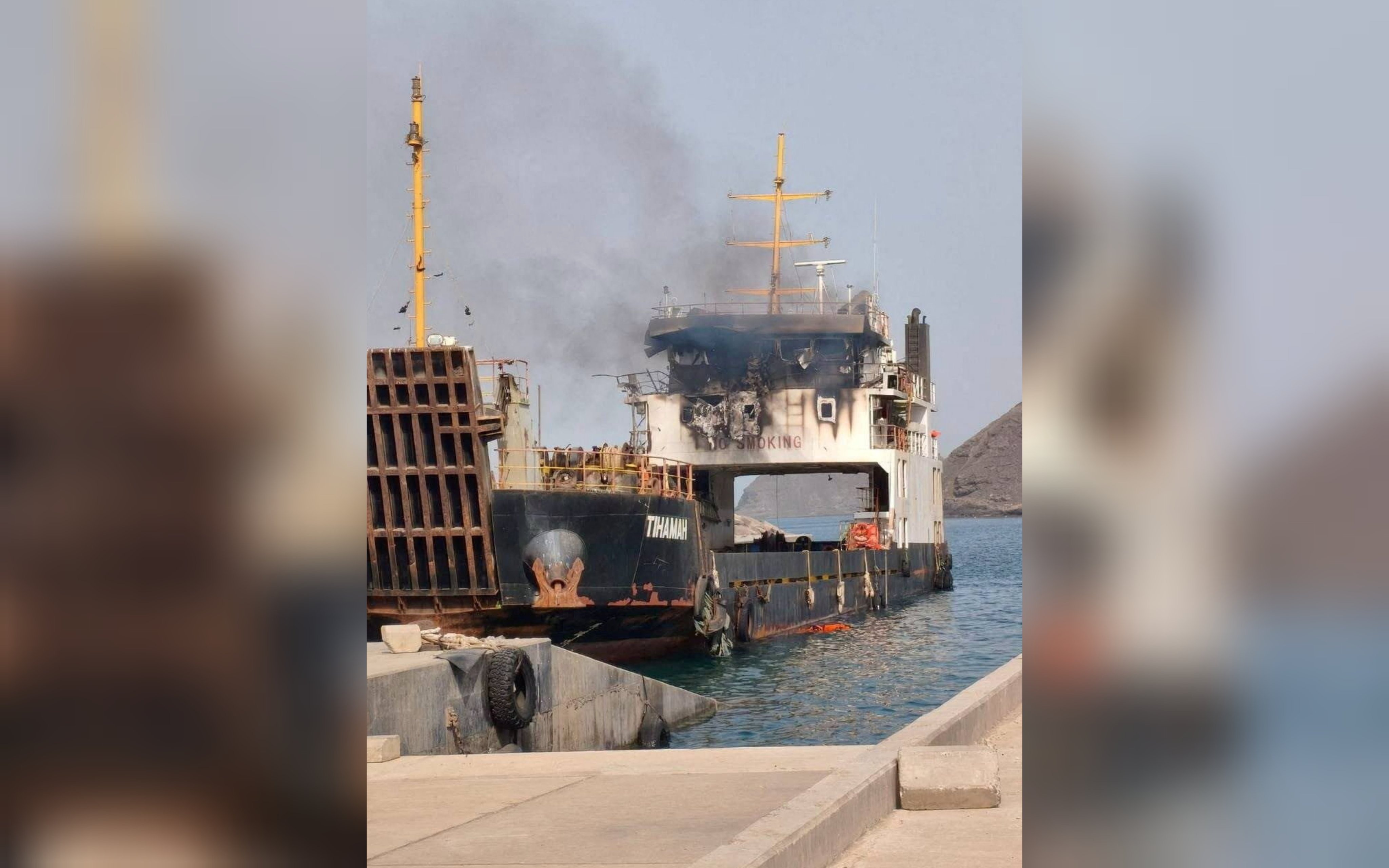
Yemen's Houthi group claimed responsibility for a deadly maritime assault this week when they targeted a commercial vessel transiting through Bab al-Mandeb, one of the world's most critical shipping corridors. According to Yemen's Coast Guard, the attack on Tuesday killed six individuals and wounded ten others, while resulting in the rescue of eleven sailors from Pakistan and Indonesia. The incident underscores the mounting peril facing merchant shipping in the Red Sea and the broader implications for regional stability and global commerce.
The vessel under attack, the Yemeni-flagged Tihamah, suffered catastrophic damage when the Houthis struck it with three ballistic missiles while it navigated the strategic waterway separating Yemen from Africa. The strikes ignited fires aboard the ship and caused extensive material damage. Yemen's Transportation Ministry provided additional details about the assault, indicating that the militant group launched a fourth missile even as rescue operations were underway—a deliberate attempt to impede efforts to save survivors and inflict maximum casualties among those already in distress.
Casualties included four crew members, three of whom held Pakistani nationality and one Indonesian, alongside two servicemen from Yemen's 2nd Naval Brigade. The wounded comprised seven crew members, two coast guard personnel, and one additional member of the 2nd Naval Brigade. This mixed composition of victims reflects the international dimensions of maritime operations in the Red Sea, where crews frequently originate from South Asian nations including Pakistan, Bangladesh, and the Philippines, making them particularly vulnerable to regional conflicts.
Yemen's Transportation Ministry formally condemned the operation as a "terrorist crime," emphasizing that such attacks directly jeopardize freedom of navigation and legitimate international commerce. The ministry characterized the Tihamah strike as representative of an intensifying Houthi campaign that has progressively expanded in scope and sophistication. Rather than limiting operations to military or government installations, the Iranian-aligned group has systematically targeted ports, civilian infrastructure in territories controlled by Yemen's internationally recognized government, and commercial shipping serving those population centres.
The targeting of a vessel explicitly carrying foodstuffs carries particular significance within Yemen's humanitarian context. The country remains mired in a prolonged civil conflict that has generated widespread food insecurity, with millions dependent upon maritime-delivered supplies regardless of territorial affiliation. By attacking cargo vessels laden with provisions, the Houthis create compounding damage: immediate loss of life and injury to international mariners, destruction of essential commodities, and the chilling effect that discourages commercial shipping from transiting the waterway. Both government-controlled zones and Houthi-administered territory rely upon functioning seaborne supply chains, yet these attacks jeopardize the viability of maintaining adequate food distribution.
Bab al-Mandeb represents a chokepoint of extraordinary geostrategic importance, functioning as the principal gateway connecting the Indian Ocean to the Red Sea and onward to the Suez Canal. Nearly all maritime traffic between Europe and Asia navigates this narrow passage, making it comparable in significance to the Strait of Hormuz, which lies on the Arabian Peninsula's opposite flank. Disruptions to shipping through either waterway ripple across global supply chains and elevate fuel and commodity prices worldwide. The Houthis have demonstrated capacity and willingness to interdict this traffic systematically, forcing international shipping companies to recalculate risk assessments and insurance costs.
The absence of an immediate Houthi statement regarding this specific incident is noteworthy, though the militant organization has previously claimed responsibility for attacks within this region. The group has framed its maritime operations as retaliation for Israeli actions in Gaza and broader regional geopolitical grievances. However, the indiscriminate nature of attacks on civilian cargo vessels—particularly those carrying humanitarian supplies—undermines such justifications and has drawn condemnation from international maritime authorities and humanitarian organizations.
For Malaysian and Southeast Asian observers, these developments carry consequential implications. The region's maritime industries, including substantial shipping and logistics sectors, face elevated risk when operating through or servicing Red Sea routes. Malaysian companies involved in international trade, particularly those exporting petroleum products, palm oil, and manufactured goods to European markets, must increasingly factor in the costs of transit through conflict zones or pursue longer alternative routes around southern Africa. This adds expenses that ultimately burden consumers across the region.
Furthermore, the security implications extend to Southeast Asian maritime security more broadly. The tactics and technologies demonstrated by the Houthis—ballistic missile attacks on commercial vessels, deliberate interference with rescue operations, systematic targeting of supply chains—are studied by other non-state actors and could establish precedents for maritime disruption elsewhere. Regional navies, including Malaysia's, maintain heightened vigilance regarding potential proliferation of similar capabilities or tactics that could threaten shipping lanes closer to Southeast Asian shores.
The incident also highlights the vulnerability of multinational maritime crews, including substantial numbers of Pakistanis, Bangladeshis, and Indonesians who serve aboard commercial vessels. These workers, often selected for cost-efficiency in global shipping, operate in increasingly hazardous environments with limited military protection. Insurance costs, hazard pay, and recruitment challenges in these sectors will likely escalate, with human costs borne disproportionately by workers from developing economies who depend upon such employment.
Yemen's broader humanitarian crisis provides the underlying context for these maritime attacks. With infrastructure devastated by years of conflict and millions facing food insecurity, the targeting of supply vessels creates additional suffering among civilian populations. The attack represents not merely a tactical military gesture but a deliberate strategy to maintain siege-like conditions and maximize suffering among populations dependent upon sea-delivered provisions.
International responses to Red Sea shipping disruptions have remained limited, with most maritime powers pursuing deterrence through naval patrols rather than direct confrontation with Houthi capabilities. This reflects the complexity of addressing non-state maritime threats and the reluctance of major powers to escalate involvement in Yemen's internecine conflict. For the foreseeable future, commercial shipping will navigate these waters with heightened risks and costs, while humanitarian supplies to Yemen face mounting obstacles that will compound the nation's already severe deprivation.

