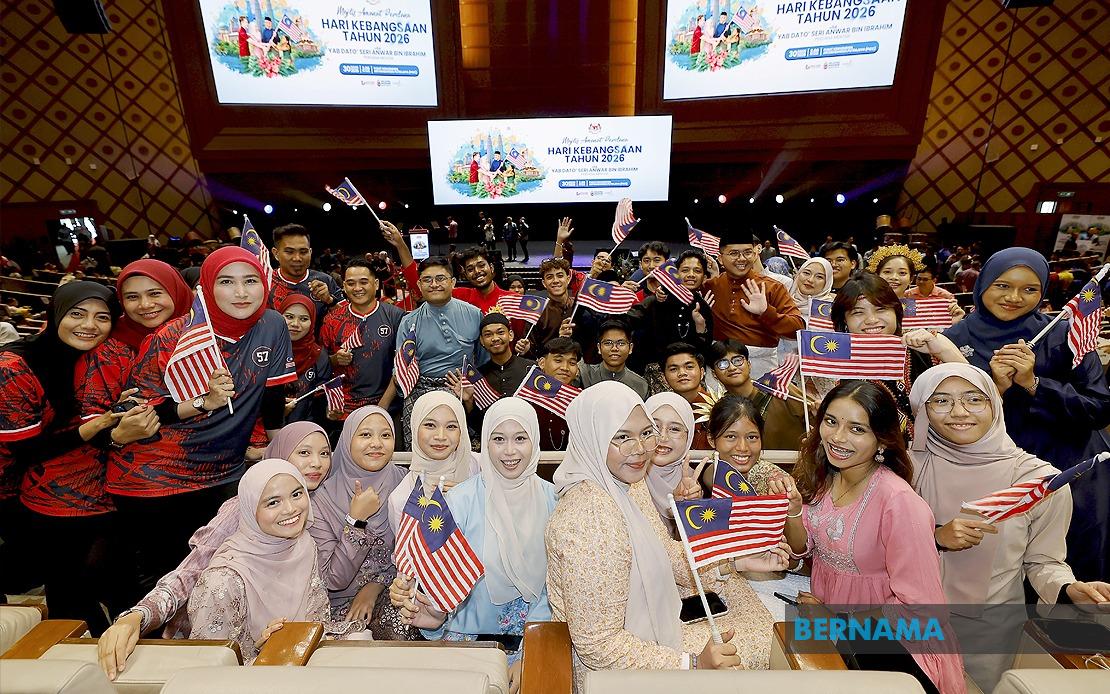
Prime Minister Datuk Seri Anwar Ibrahim has unveiled six strategic initiatives designed to benefit working families, entrepreneurs, and young Malaysians across multiple sectors of the economy. Delivered during the National Day Prime Minister's Address at the Putrajaya International Convention Centre, the package represents a comprehensive policy response intended to address immediate cost-of-living pressures whilst building human capital in critical areas. The announcements underscore the government's focus on inclusive economic support that reaches beyond wealthier segments to prioritise those managing household finances with greater constraints.
Central to the initiative is an expansion of the Budi MADANI RON95 fuel subsidy programme, restoring the monthly allocation from 200 litres back to 300 litres per month. This represents a tangible relief measure for ordinary Malaysians who depend on personal vehicles for commuting to work and conducting daily errands. The restoration addresses cumulative frustration among lower to middle-income vehicle users who faced tighter monthly budgets following the previous reduction. For workers in the M40 demographic—those earning between RM3,000 and RM10,000 monthly—such fuel cost fluctuations directly impact household spending power and financial planning capacity, making the increased allocation particularly significant for families already stretched across housing, education, and food expenses.
Parallel to fuel subsidy expansion, the government simultaneously increased the Budi Diesel quota from 300 to 400 litres monthly, acknowledging the distinct transportation needs of commercial operators, delivery drivers, and those relying on diesel vehicles for business purposes. This dual approach demonstrates recognition that subsidy policy must accommodate different vehicle segments and usage patterns. Unlike petrol-dependent private motorists, diesel-dependent commercial operators face accumulated costs that directly influence business viability and competitiveness, particularly for small logistics and transport enterprises that form the backbone of Malaysia's informal economy.
The artificial intelligence training initiative represents a longer-term human capital investment targeting the 18 to 30 age cohort. By providing 100,000 youths with free three-month subscriptions to three AI applications through the AI for the People programme, the government acknowledges that technological literacy increasingly determines employment prospects across sectors. Young Malaysians entering the workforce must navigate economies where artificial intelligence reshapes traditional job functions, creates new skill requirements, and determines competitive advantage in professional markets. Early exposure through subsidised access removes financial barriers that might otherwise restrict technology familiarisation to wealthy households with disposable income for premium software subscriptions.
Educational infrastructure receives substantial investment through a 50 per cent funding increase for school maintenance across all institution types, raising the allocation to RM1.5 billion in 2027. This commitment addresses chronic infrastructure challenges that Malaysian schools face, from ageing facilities requiring continuous repair to inadequate maintenance budgets that compromise teaching environments. Deteriorating school infrastructure disproportionately affects students in lower-income areas where institutional resources remain scarce, making the increase a targeted equity measure alongside universal benefit.
The Geran Sejahtera MADANI programme allocates RM200 million specifically supporting hawkers, night market traders, and mothers operating home-based enterprises. This segment represents Malaysia's substantial informal economy where millions generate household income outside formal employment structures. Night market traders and home-based entrepreneurs often operate with minimal capital reserves and face irregular income streams, making targeted cash assistance particularly impactful for business continuity and household stabilisation. The allocation signals government recognition that economic security requires supporting informal sector participants who lack employee benefits, pension schemes, or unemployment insurance.
Microfinancing capacity expansion by RM1 billion—bringing 2026 total funding to RM6 billion—addresses small business growth constraints that plague Malaysian entrepreneurs. Access to affordable credit remains a critical bottleneck for small and medium enterprises seeking to expand operations, hire additional staff, or invest in equipment and technology. Microfinance plays an essential role for businesses too small to access traditional bank lending yet too ambitious for informal money-lending relationships that carry exploitative terms. The funding increase directly translates into more entrepreneurs accessing capital for growth investments.
Small business administrative burden reduction occurs through raising the e-Invoice exemption threshold from RM1 million to RM3 million annual revenue. Digital invoicing systems impose real compliance costs on small enterprises through software subscriptions, staff training, and system integration, particularly for businesses with limited administrative capacity. By exempting businesses below RM3 million annual revenue, the government recognises that compliance costs consume disproportionate resources for smaller operators whilst remaining negligible for larger enterprises already maintaining sophisticated accounting systems. The threshold adjustment provides genuine operational relief for the countless small businesses forming Malaysia's entrepreneurial base.
Observer responses to the announcement package highlight how diverse policy initiatives address differentiated needs across Malaysian society. Working professionals in their twenties appreciate immediate fuel subsidy expansion that reduces routine household expenses, whilst simultaneously valuing AI training access that enhances future employment competitiveness. Younger Malaysians recognise that artificial intelligence exposure increasingly determines professional trajectory in technology-intensive sectors, making the subsidised access programme strategically important for equitable technological capability development.
The announcement reflects broader policy philosophy prioritising support for ordinary Malaysians navigating economic pressures through multiple simultaneous interventions. Rather than concentrating resources on single initiatives, the package addresses fuel costs, education infrastructure, entrepreneurial access to capital, administrative burden reduction, and future-skills development. This multifaceted approach acknowledges that household and business financial stress involves interconnected challenges—fuel expenses, school facility adequacy, working capital availability, compliance costs, and technology access simultaneously affect economic participants across demographic and sectoral boundaries.
For Southeast Asian context, Malaysia's package demonstrates how middle-income democracies balance competing demands across diverse constituencies with limited fiscal resources. The measures prioritise visible cost-of-living relief alongside longer-term human capital investment, reflecting political and economic realities facing governments across the region. As neighbouring economies face similar pressures from uncertain global conditions and technological disruption, Malaysia's approach offers a template for inclusive policy packages targeting multiple constituencies with coherent, integrated initiatives rather than disparate, disconnected programmes.

