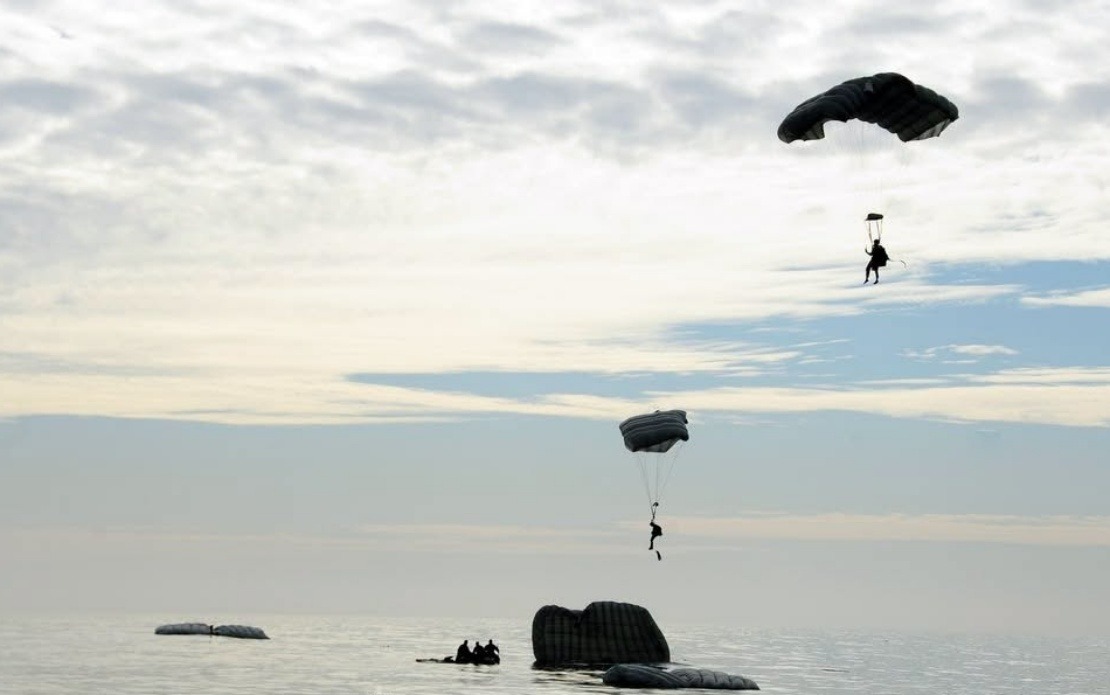
Six personnel from Malaysia's elite Naval Special Warfare Forces, commonly known as PASKAL, have been safely recovered after becoming separated from their intended landing zone during a free-fall parachuting exercise in the South China Sea. The incident occurred yesterday, with all six commandos found floating in the waters and subsequently retrieved by a Royal Malaysian Navy vessel, according to a statement released today by the RMN.
The operation demonstrates the inherent risks associated with advanced military training in open ocean environments, where weather patterns and visibility conditions can change rapidly and unpredictably. Sudden atmospheric shifts played a critical role in the incident, with the Navy noting that dramatic weather changes severely compromised the personnel's ability to navigate to their target landing area. Despite the unintended deviation from the planned exercise parameters, the swift recovery operation highlighted the robust safety protocols and coordination mechanisms that the RMN maintains during high-risk training activities.
The Royal Malaysian Navy framed the incident as a validation of PASKAL's demanding training regime rather than a failure. Officials emphasized that the unit's continuous exposure to realistic operational scenarios—including unexpected environmental challenges—cultivates the mental fortitude and practical survival skills essential for personnel operating in unpredictable maritime conditions. The Navy's statement suggests that such exercises, while potentially uncomfortable, serve a vital function in preparing commandos for genuine operational demands where perfect conditions are rarely guaranteed.
PASKAL, one of Southeast Asia's most respected special operations forces, maintains a rigorous training schedule designed to test personnel across multiple disciplines including aquatic operations, close-quarters combat, and advanced weapons handling. The unit's ethos, encapsulated in its motto "Sentiasa yang Terbaik" (Always the Best), reflects a commitment to operational excellence that extends beyond conventional military training. The incorporation of unpredictable environmental factors into exercises ensures that personnel develop adaptive problem-solving abilities and resilience when standard procedures cannot be followed.
The incident also underscores the critical balance that modern militaries must maintain between pushing operational readiness and preserving personnel safety. The RMN stated that it remains committed to reconciling these sometimes competing objectives, ensuring that training exercises strengthen combat capabilities while maintaining safeguards against unnecessary loss of life or injuries. This balance becomes increasingly important as armed forces operate in expanding operational theaters and face evolving security challenges requiring higher levels of readiness.
For Malaysia's maritime security posture, maintaining a capable special operations force is particularly significant given the nation's extensive exclusive economic zone and the geopolitical complexities of the South China Sea. PASKAL's competence directly impacts the country's ability to conduct sophisticated operations across the maritime domain, from counter-terrorism to maritime interdiction and search-and-rescue missions. Regular training exercises, despite occasional incidents, are essential for maintaining the unit's operational edge in an increasingly contested region.
The rescue operation itself demonstrates the integration of maritime surveillance and rapid-response capabilities within the Royal Malaysian Navy. The fact that all six personnel were located and retrieved within a reasonable timeframe reflects effective communication systems, trained personnel stationed at appropriate locations, and contingency planning that accounts for exercise deviations. These support systems operate continuously during training activities, enabling quick responses when situations diverge from planned parameters.
Weather-related incidents during military training are not uncommon across global armed forces, and most militaries factor such occurrences into their risk assessment and training design protocols. The South China Sea, while strategically vital for regional commerce and security, presents particular environmental challenges including seasonal monsoons and unpredictable maritime conditions that require operators to maintain heightened situational awareness. PASKAL personnel training in this region gain practical experience managing these real-world variables rather than conducting exercises in benign, controlled environments.
The incident reflects broader trends in military training philosophy that emphasize learning from unexpected occurrences and incorporating feedback into future operations. The RMN's decision to publicly acknowledge the incident and frame it constructively suggests institutional confidence in the unit's capabilities and a transparent approach to discussing training outcomes. This openness can enhance public understanding of military operations while reinforcing the message that even advanced training sometimes produces unplanned situations requiring effective response.
Looking forward, the incident will likely inform discussions within the Royal Malaysian Navy regarding exercise parameters, weather monitoring, and recovery procedures. Military organizations typically conduct after-action reviews following significant training events to identify improvements and refine protocols. The seamless recovery of all personnel suggests that existing systems functioned effectively, though refinements to early warning systems or exercise planning might emerge from formal analysis of the incident.
For Malaysian defense observers and regional security analysts, such incidents provide insight into the operational standards and capabilities of the country's special forces. The fact that PASKAL maintains the discipline and training standards necessary to recover effectively from unexpected situations during complex exercises reinforces the unit's reputation as a credible, professional force capable of managing sophisticated maritime operations. The incident, while noteworthy, ultimately demonstrates the resilience and competence that characterize Malaysia's naval special operations community.

