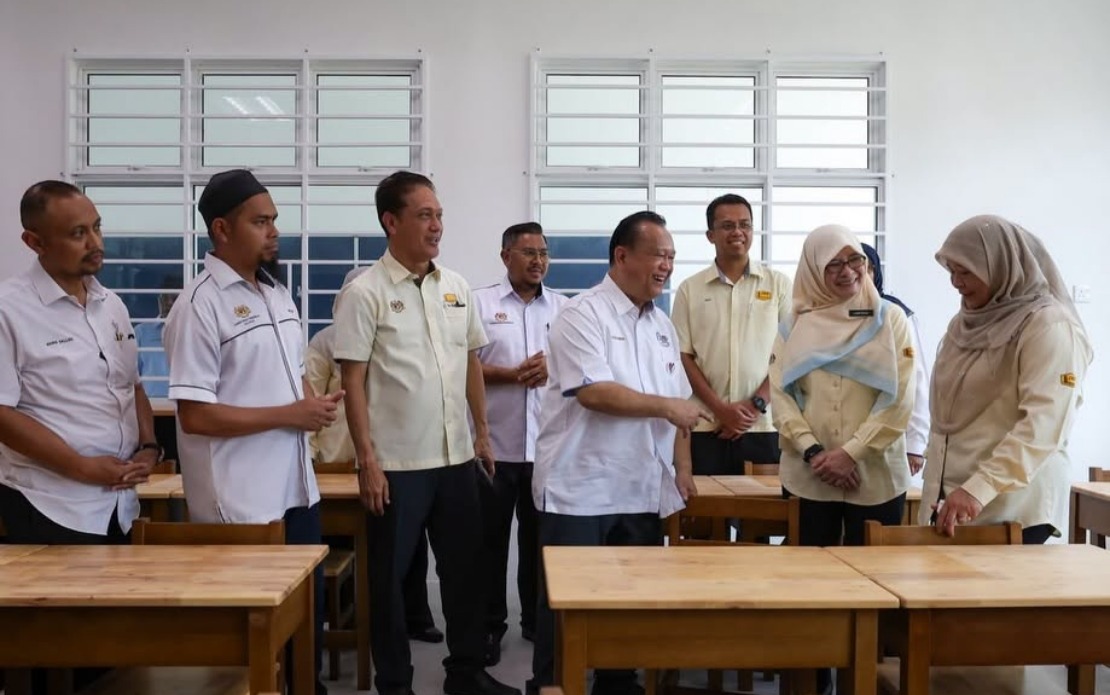
The reconstruction of a dilapidated building at Sekolah Kebangsaan FELDA Kota Gelanggi 1 in Jerantut, Pahang, has been completed nearly a year ahead of its original deadline, marking a significant achievement in government infrastructure delivery. The RM7.998 million project was handed over on June 26, substantially beating the initial May 2, 2027 completion target. Works Minister Datuk Seri Alexander Nanta Linggi highlighted the acceleration during the handover ceremony, emphasizing that completing such substantial educational facilities ahead of schedule demonstrates effective project management and contractor performance.
The accelerated completion is particularly notable given the project's scope and complexity. Work commenced on January 13 of the previous year, meaning the entire reconstruction process was executed in fewer than 18 months—a testament to coordinated planning and efficient execution. Nanta characterized the 310-day advancement as evidence of superior performance in implementing government initiatives, setting a positive precedent for similar infrastructure projects across the country. The completion without any extension of time (EOT) further underscores how well the project was administered and resourced throughout its lifecycle.
The reconstructed facility comprises two distinct building blocks designed to serve different educational functions. A new academic wing houses three standard classrooms alongside specialized spaces including a dedicated science laboratory and health room. These additions significantly expand the school's teaching capacity and enable more effective delivery of science-based subjects, addressing infrastructure limitations that many rural schools across Malaysia continue to face. The investment in proper laboratory facilities demonstrates a commitment to ensuring that students in areas like Jerantut have access to equipment and spaces comparable to their urban counterparts.
Equally important is the Special Education Integration Programme (PPKI) block, which represents a targeted effort to support students with diverse learning needs. The facility has been equipped with specialized amenities designed to accommodate approximately 17 pupils with special educational requirements currently enrolled at the school. This focused infrastructure investment acknowledges that inclusive education requires more than policy commitments—it demands dedicated physical spaces and properly designed facilities. For these students, the availability of purpose-built learning environments can significantly enhance their educational experience and integration within the broader school community.
The construction initiative reflects ongoing government efforts to address the backlog of deteriorating school infrastructure across Pahang. Nanta indicated that multiple additional projects targeting dilapidated educational facilities remain active throughout the state. By prioritizing the rehabilitation of aging school buildings, the government is addressing a fundamental prerequisite for quality education delivery. Many rural and semi-rural schools struggle with aging infrastructure inherited from earlier decades, and systematic reconstruction addresses both safety concerns and pedagogical limitations imposed by outdated facilities.
Beyond the physical completion, Nanta emphasized the importance of sustained quality oversight. He instructed contractors to address all defect liability period complaints expeditiously and comprehensively, ensuring that minor issues discovered during initial occupation do not accumulate into larger maintenance problems. The Public Works Department has been tasked with continued monitoring following handover to verify that facilities remain secure, properly maintained, and compliant with established technical standards. This post-completion vigilance reflects learning from past instances where infrastructure handovers have been followed by rapid deterioration due to insufficient maintenance protocols.
The accelerated timeline offers valuable insights into government project execution capabilities. When projects are completed substantially ahead of schedule without time extensions, it suggests that proper initial planning, adequate resource allocation, and effective contractor management have been aligned. For Malaysian policymakers and project administrators, the Kota Gelanggi experience provides a working model for how infrastructure timelines can be realistic while remaining achievable. The project demonstrates that setting ambitious but attainable targets, combined with professional oversight, can deliver tangible results that benefit communities.
For the Jerantut community and broader Pahang education sector, the completion represents immediate and tangible improvements in learning conditions. Students transitioning to the new academic spaces gain access to modern facilities designed according to current educational standards. The specialized PPKI block signals institutional commitment to inclusive education, ensuring that students with special needs are not marginalized to substandard environments. Such investments contribute to more equitable educational outcomes across socioeconomic and geographic divides.
The successful completion also holds implications for future infrastructure planning in Malaysia's education sector. As the government continues addressing the substantial maintenance backlogs affecting many schools nationwide, projects like Kota Gelanggi provide evidence that ambitious timelines coupled with proper management can succeed. Nanta's public recognition of the early completion and his expression of hope that other Pahang projects might similarly advance ahead of schedule indicate that the Ministry views this as a replicable success model rather than an isolated achievement.
Looking forward, the early completion allows resources originally budgeted for extended project timelines to be redirected toward other pressing infrastructure needs. In Malaysia's education system, where competing demands for facilities, equipment, and maintenance constantly strain available budgets, efficiency gains in one project create fiscal flexibility for additional initiatives. The Kota Gelanggi project thus yields benefits extending beyond the immediate beneficiaries—the students and teachers at this particular school—to the broader education infrastructure agenda across Pahang.

