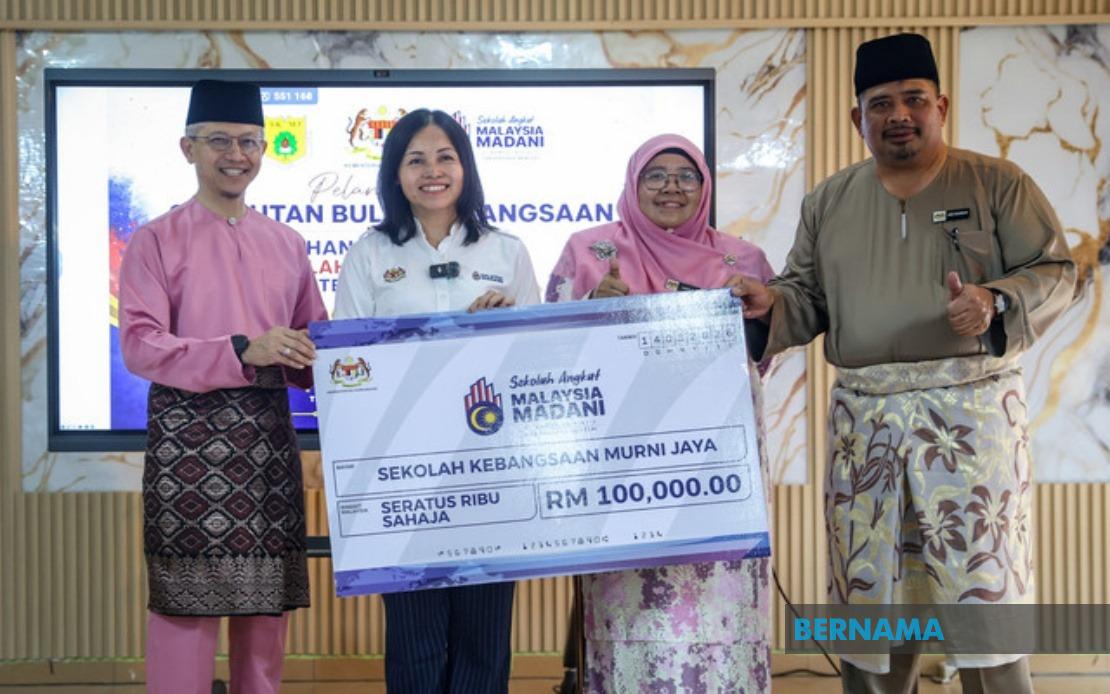
SK Murni Jaya in Layang-Layang, Kulai, has secured RM100,000 in development funds through the Ministry of Communications' MADANI Adopted School initiative, marking a significant investment in the institution's educational infrastructure and learning environment.
Deputy Communications Minister Teo Nie Ching presented the grant during a funding handover ceremony at the school, emphasising the ministry's commitment to enhancing facilities at adopted educational institutions across the country. The allocation represents targeted government support aimed at modernising school amenities and integrating contemporary learning tools into classroom and co-curricular activities.
The comprehensive funding plan prioritises both physical infrastructure and technological advancement. School signboards will be renewed to improve campus visibility and identity, while two Smartboards destined for the hall and resource centre will enable interactive teaching methodologies and multimedia presentations. Lighting systems throughout the campus will undergo upgrading to create safer, more conducive environments for students during extended school hours and evening activities. The hall beautification component addresses the aesthetic and functional aspects of the school's central gathering space, crucial for assemblies, performances, and community events.
Audio-visual capabilities receive particular attention through installation of a new public address system, essential for effective communication across the sprawling campus and during school-wide announcements. Climate control improvements through two additional air-conditioning units will enhance comfort in learning spaces, particularly important in Malaysia's tropical climate where heat can impede concentration and learning outcomes. The investment in educational technology extends to the computer laboratory, which will receive 10 iPads to diversify learning resources and facilitate digital literacy development among younger learners.
Vocational and technical education garners explicit support through the inclusion of a Robot Sumo set specifically designated for STEM and TVET activities. This equipment reflects growing national emphasis on science, technology, engineering, and mathematics education alongside vocational training pathways, preparing students for emerging career opportunities in technology-driven sectors. Such hands-on robotics programmes cultivate problem-solving skills, computational thinking, and practical engineering knowledge essential for 21st-century employment.
Teo Nie Ching outlined implementation timelines during the ceremony, indicating that facility upgrades at SK Murni Jaya should reach completion by October. This accelerated schedule reflects coordination with the Ministry of Finance's guidelines, which mandate that recipient schools complete all funded projects within the calendar year. Such structured timelines ensure accountability, prevent protracted delays, and allow institutions to benefit from improvements promptly.
Supplementary funding of RM20,000 has been specifically designated for canteen infrastructure, with allocations covering 19 sets of tables and chairs. This component addresses student welfare and facility adequacy during meal periods, recognising that properly equipped dining spaces contribute to student nutrition management and social interaction outside classroom settings.
The MADANI Adopted School programme represents a broader governmental strategy to systematically strengthen educational institutions throughout Malaysia. By linking specific government ministries to individual schools, the initiative creates direct accountability relationships and enables targeted investments aligned with each ministry's mandate and resources. In this instance, the Communications Ministry's adoption of SK Murni Jaya underscores recognition of how communication infrastructure and technological competency intersect with quality education delivery.
For schools in Kulai and surrounding areas, this funding injection provides tangible evidence of central government investment in local education quality. SK Murni Jaya's improvement trajectory may also influence other institutions seeking similar adoption arrangements or government partnerships. The project demonstrates how systematic capital allocation, when coupled with clear implementation frameworks, can meaningfully upgrade facilities that directly impact student learning experiences and educational outcomes.
The investment arrives amid broader national conversations about digital divide mitigation in Malaysian education, particularly in suburban and semi-urban contexts. Provision of Smartboards, iPads, and robotics equipment helps narrow technological access gaps that might otherwise disadvantage students from schools in less affluent areas compared to their counterparts in premium private institutions.
Implementation success will depend on complementary investments in teacher training and curriculum alignment to ensure educators can effectively utilise new technologies and facilities. School leadership will need to develop maintenance protocols and sustainability plans extending beyond the initial grant period, ensuring that upgraded equipment remains functional and relevant to evolving educational standards. The October completion target provides reasonable timeframe for construction and installation works, though coordination with multiple vendors and contractors requires careful project management.

